One thing we didn’t plan on for our summer in Europe was a visit to Fürstenau, the small town where my family moved in 1971 and where I lived for 15 years, ages 5 to 20, until I went off to the university of Hamburg in 1986 with the goal of becoming a literature professor (spoiler alert: that DID happen). Mark has visited my hometown with me several times already and there is really only so much you can do in a town of 9,500 people (7,500 when I lived there) when friends and family are no longer there. But true to this trip’s mission, I had been wondering about the history of the small Jewish community that the Nazis wiped out in Fürstenau. I knew a little bit, but had intended to find out more from a retired teacher from my high school, a man named Bernd Kruse. I knew had spent decades researching this history, getting in touch with survivors and their descendants, combing through the city archives, and interviewing non-Jewish residents who were willing to talk about what they saw. Since my parents both worked at my high school as well, I figured this would not be hard, but my mom was not able to ferret out a phone number or email address. Then, a fortuitous google search turned up a press release about an upcoming presentation he’ll be giving at the Osnabrück History Museum. Even though I won’t be here when that happens on the 17th, I emailed the contact address for the event and asked that they pass on a message. I figured “Tell him I am Imke Schaum’s daughter” would be an ok credential, since as our school librarian she worked alongside him to create the annual book exhibits that we always had for Kristallnacht, November 9, 1938. The museum wrote me back on Monday to say they passed on the message, and the best I thought I could hope for is that I would hear from him before our departure and ask him some questions by email or in a phone call. But then he called late last night with some urgency: He had just gotten the email after coming home from a road trip, and TODAY, June 10, he was going to give a presentation in Fürstenau to a group of descendants of a Jewish family who had come from the US to visit the town. Did I want to come join the public presentation? 100% yes! We threw all our original plans for the day out the window and set aside a day for Fürstenau.
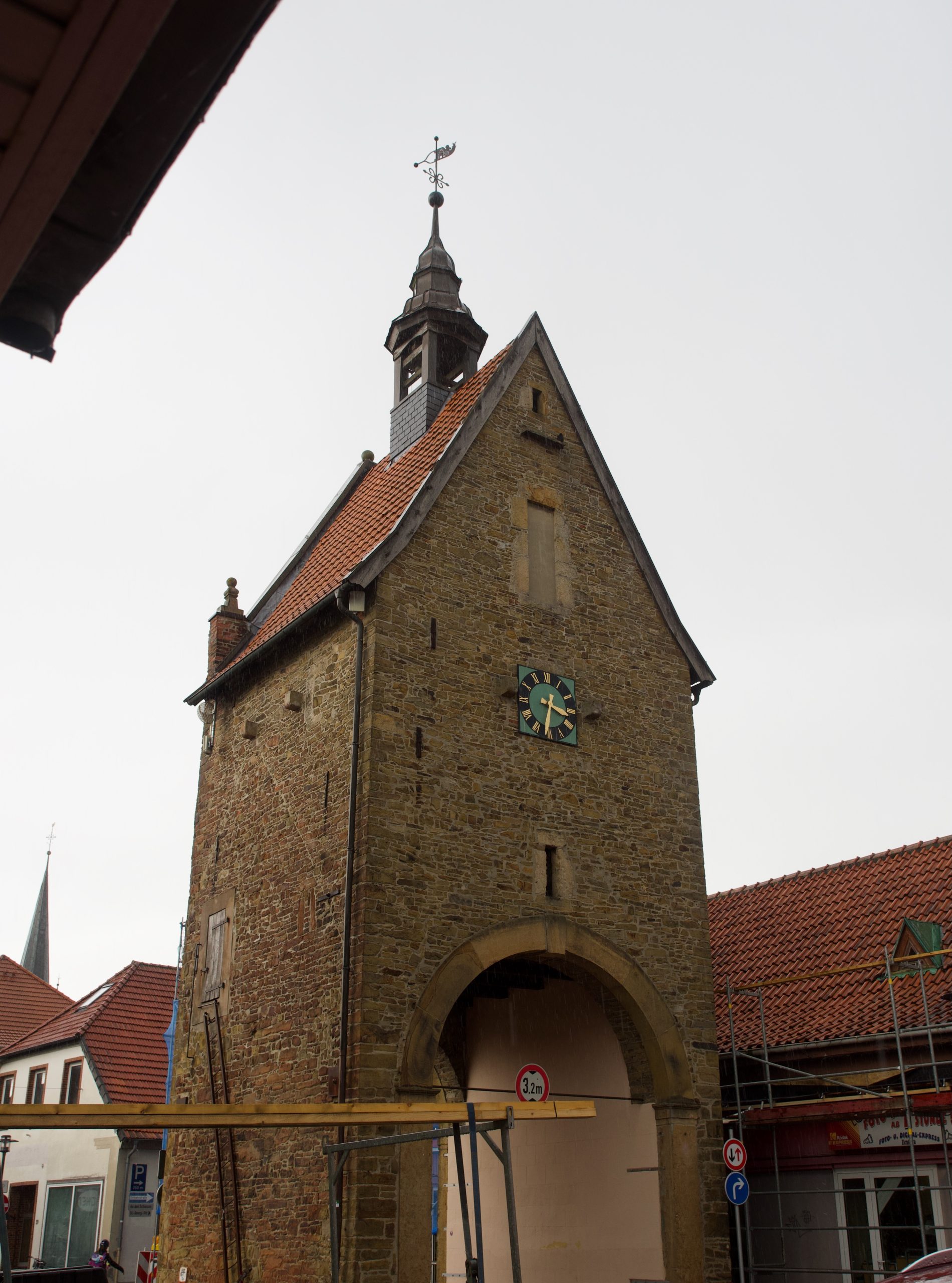
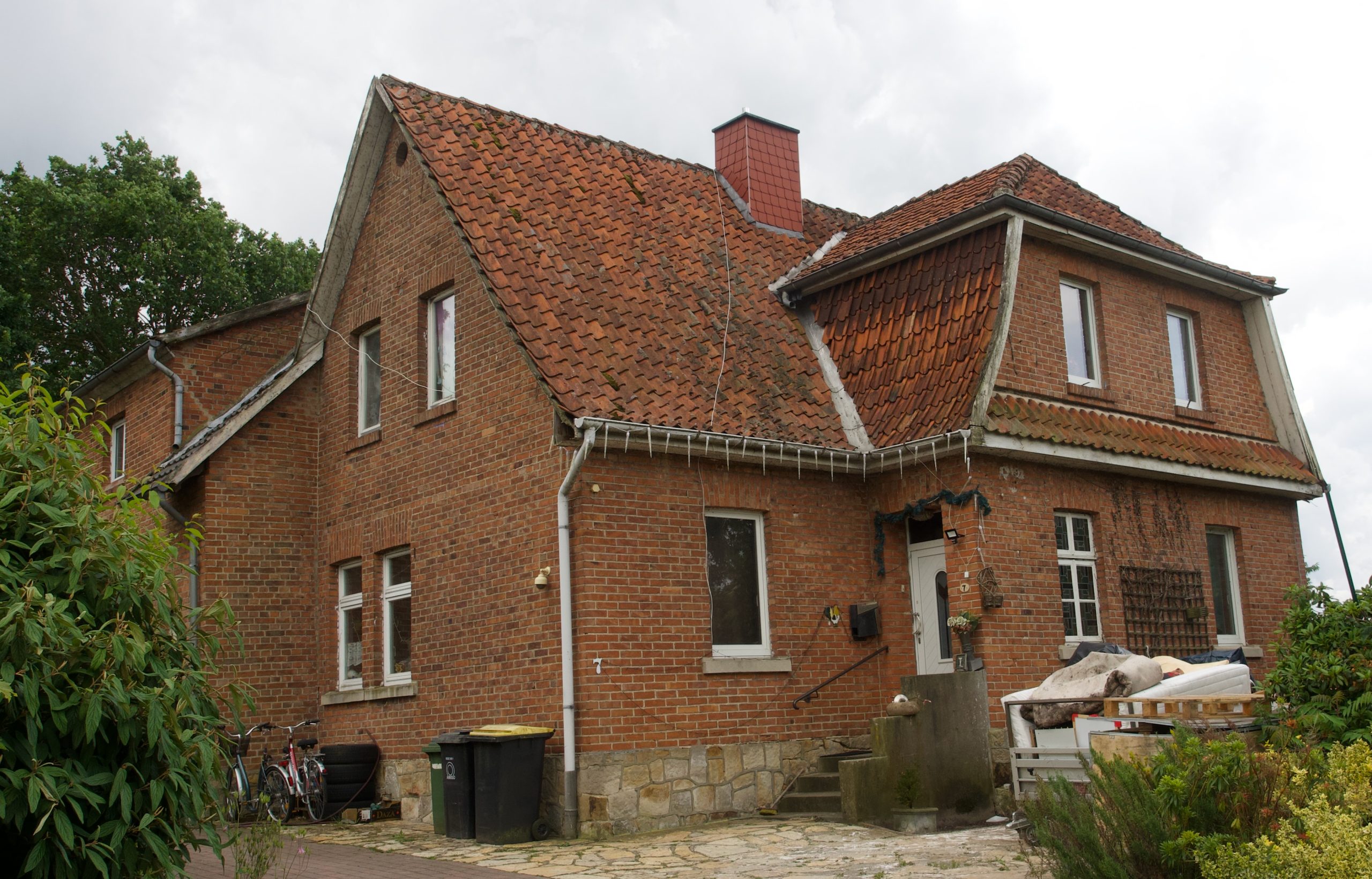
It took a little bit of transportation finagling, but ended up on a LOOOONG but at least direct bus ride (54 stops and almost 1 1/2 hours, for a 45 km / 28 mile route) after a fairly leisurely morning at Imke’s. Fürstenau shares a classic problem with Midwestern small towns: box stores and large out-of-town shopping malls have depleted the traditional historic downtown, which felt almost deserted, with many empty storefronts and a few buildings that were torn down and had never been replaced with anything new. So even though it has some cute nooks and crannies (it has a “castle,” which now functions as a church and a city administration building, but complete with moat and pictureseque park, and also a surviving city gate from the 1600s), there is nothing going on. We found ourselves a fast-food place with French fries and Currywurst (which wasn’t really recognizable as such, since they unexpectedly doused it in pizza sauce), and then visited a few spots that have relevance to me and my family: the house I grew up in, neighborhood streets, the home of my highschool boyfriend to whom I was briefly married, and the gelateria that has been open since the 70s (with changing owners) and where I excitedly bought waffle cones with tiny scoops of ice cream that were initially 10 Pfennig (1/10 of a German Mark) so you could get 5 flavors for your 4th-grade allowance. A glorious memory. I also stopped by my dad’s and my grandmother’s grave in the local cemetery, but that is not very meaningful to me).
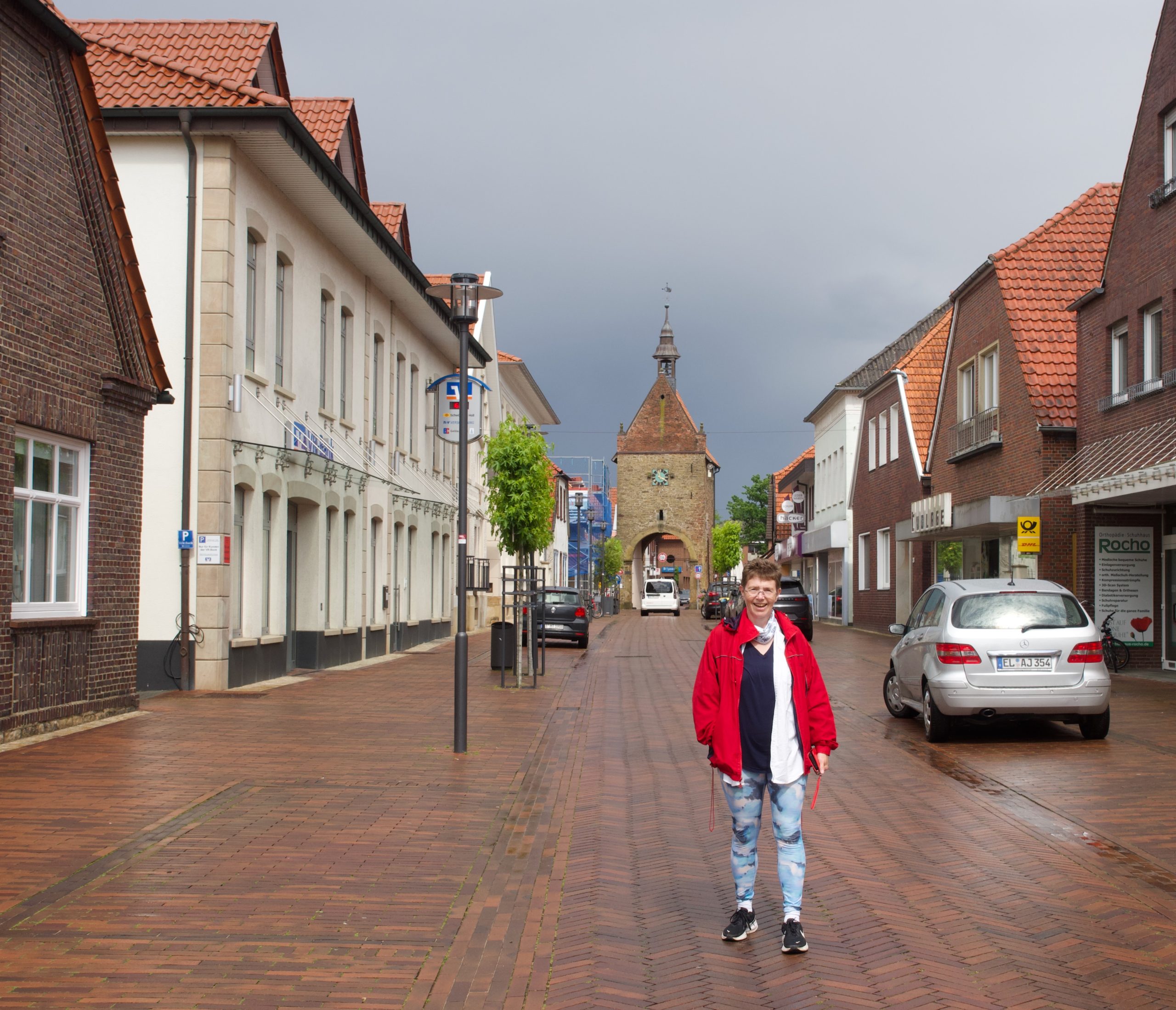
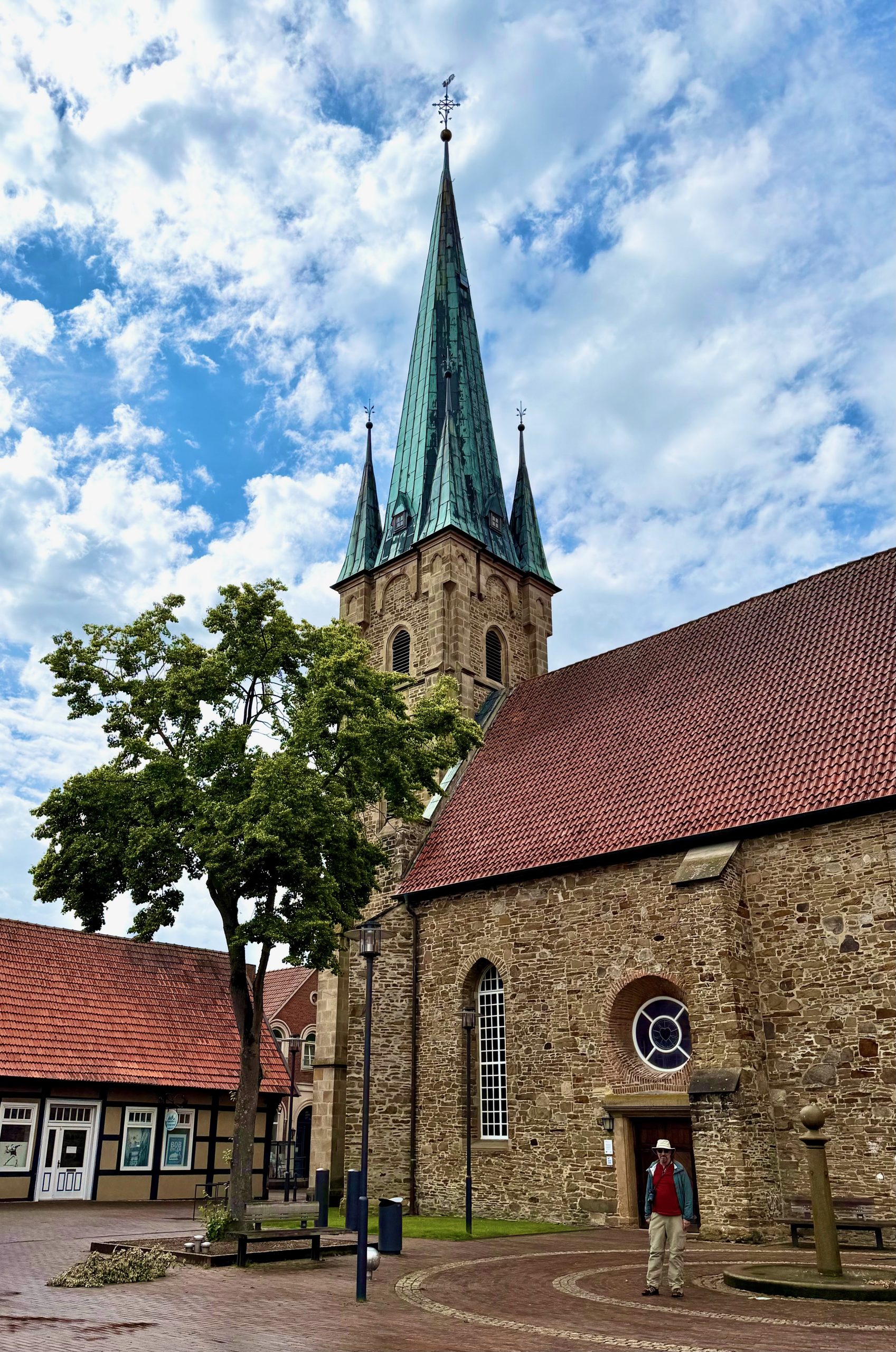
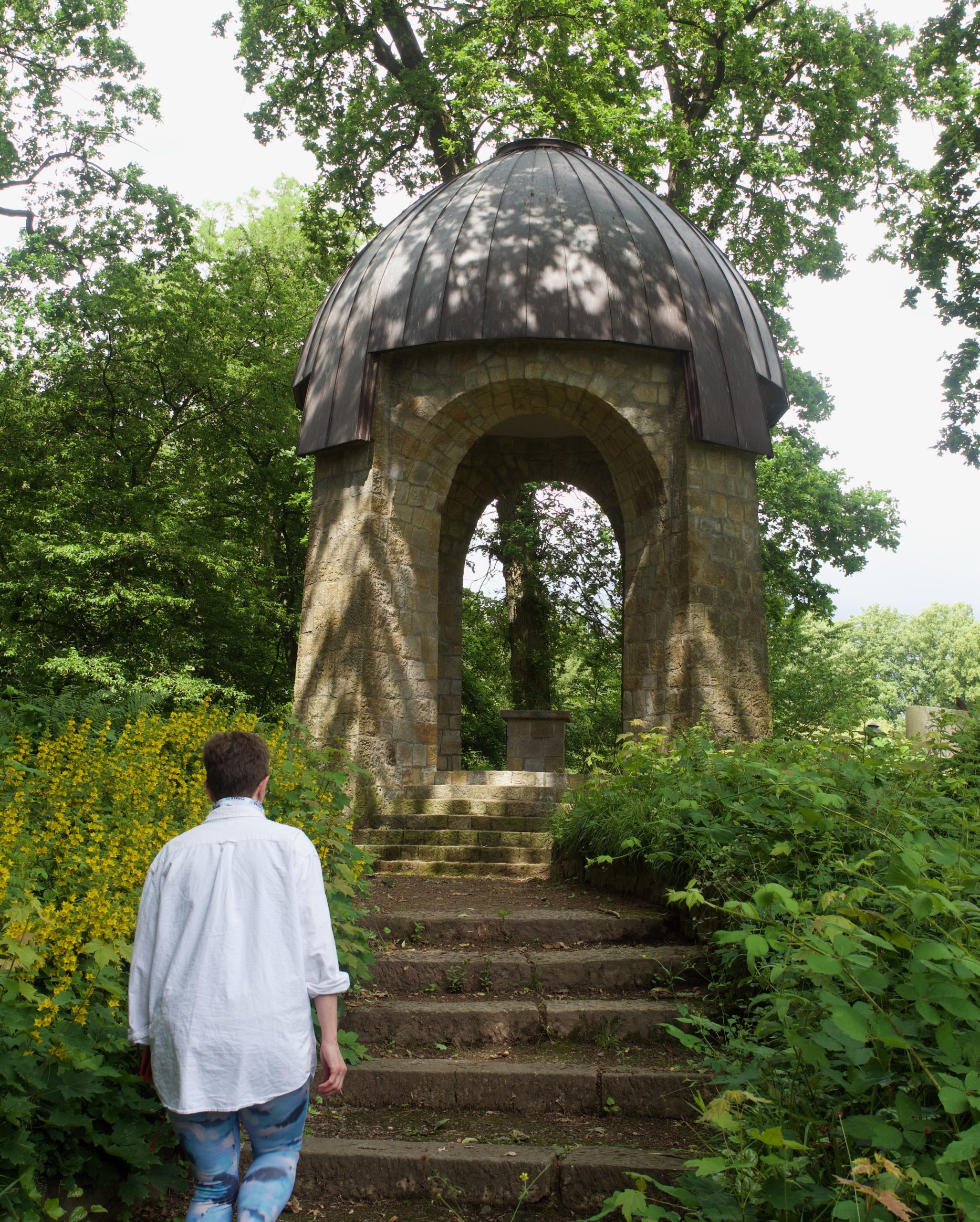
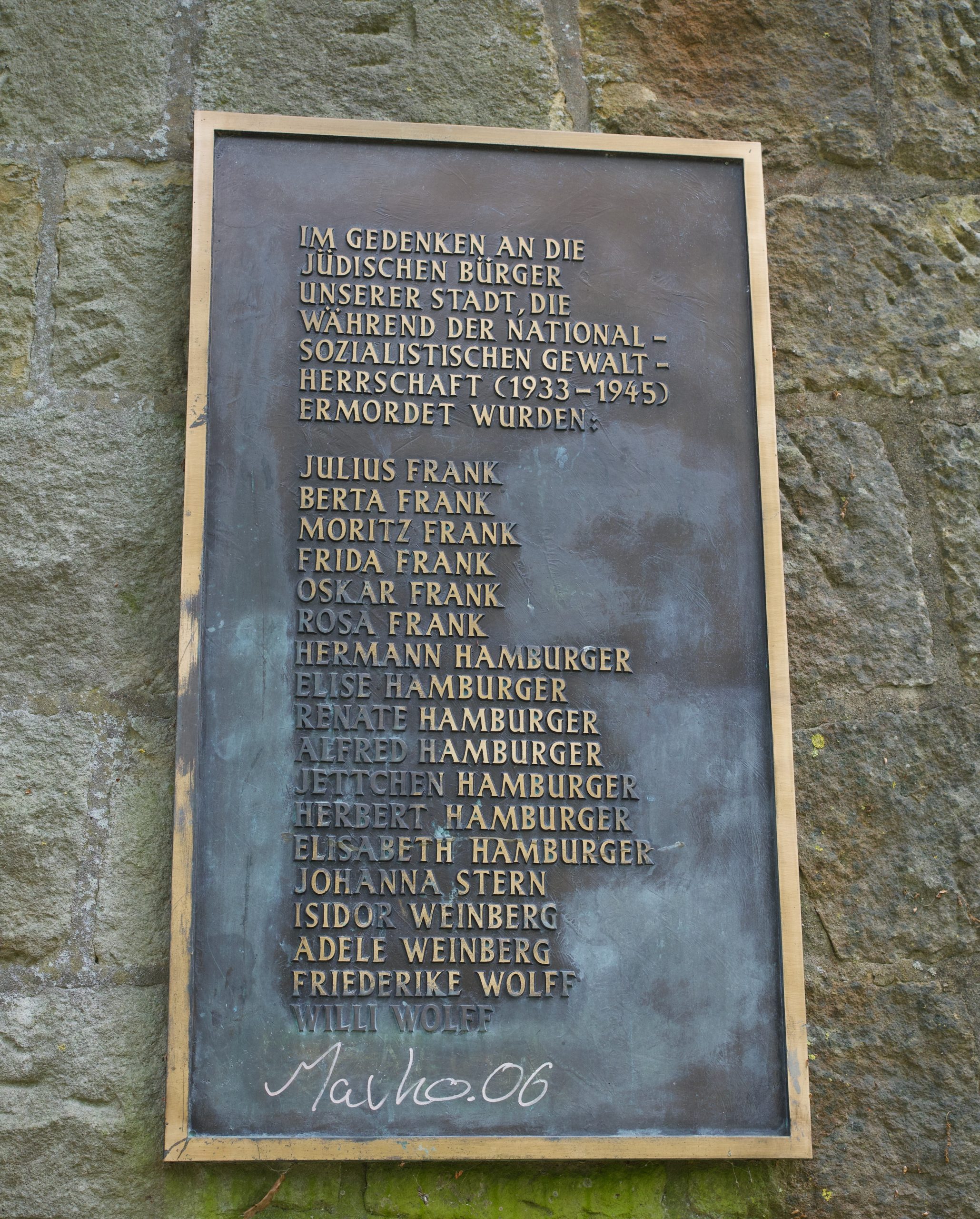
Mostly, though, we used our walk to prepare for our get-together with Bernd and the American visitors (from California) who had come to meet him: We went to various places that commemorate the Jews that used to live here, including most of Fürstenau’s 50 stumbling blocks / Stolpersteine (I have written about these before and we have photographed them everywhere we spot them on this trip). Unusually for a town this size, there is one of for EVERY ONE of the 50 Jewish residents of Fürstenau who were either murdered or forced into exile or into hiding. We also went to two spots where other plaques serve as reminders of what happened here (as it did everywhere in Germany) during the Third Reich–one that was installed at the WWII memorial in the early 1980s, the other in front of former home and business of the Franks, a family of cattle traders and kosher butchers. Since there was no synagogue, their home housed the prayer room for the 10 families who lived here in 1930 (in 1900, there had only been 14 Jewish citizens, the most the city had ever documented): The Franks, the Neuhoffs, the Sterns, the Stoppelmanns, the Süskinds, the Weinbergs, the Wolffs and three interrelated families called Hamburger: the cattle trader Alfred, the horse trader Dietrich, and the pig trader Hermann with their families. We photographed almost all the Stolpersteine for all the families. One had lived on Schwedenstrasse, where my father and my stepmother later lived.
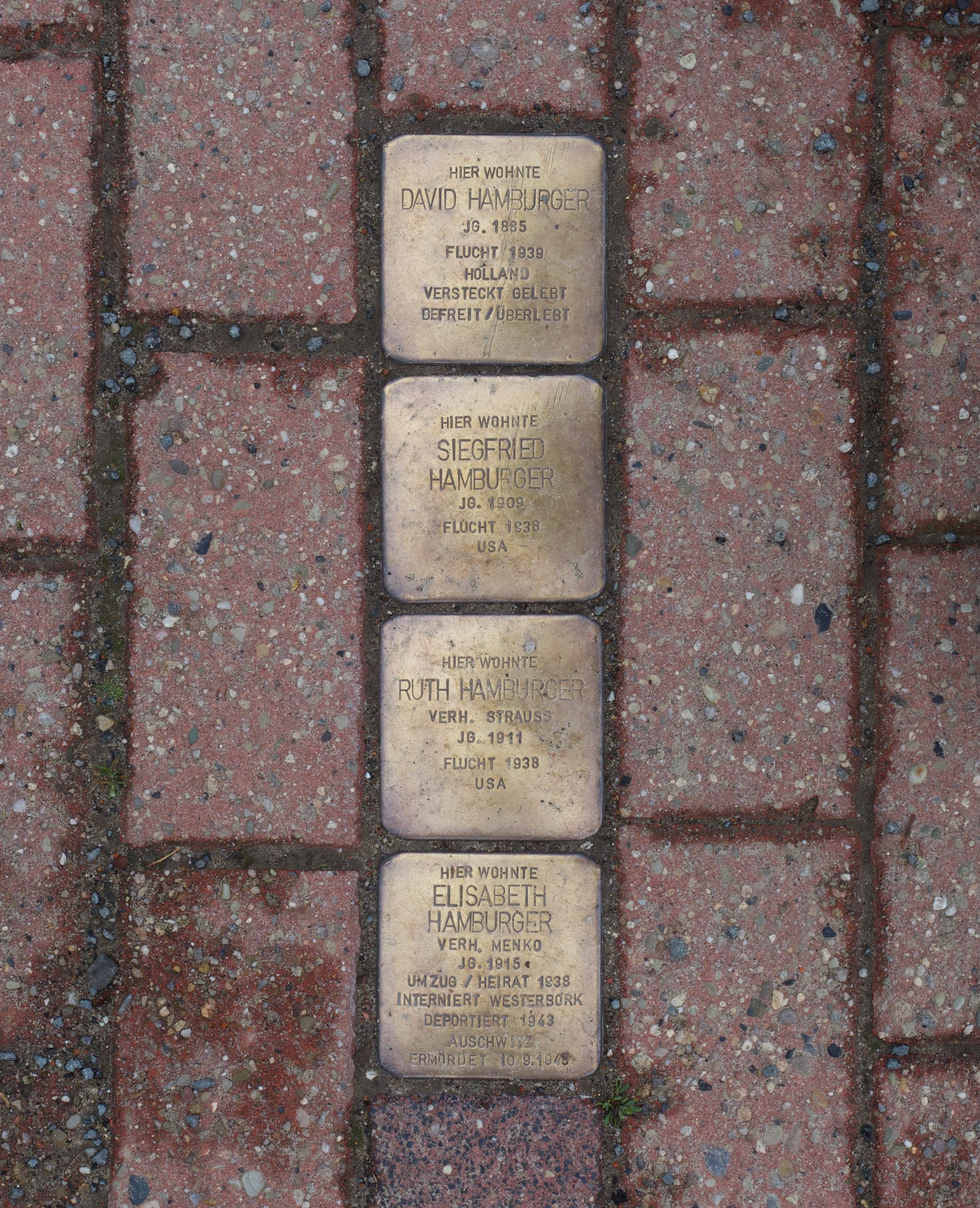
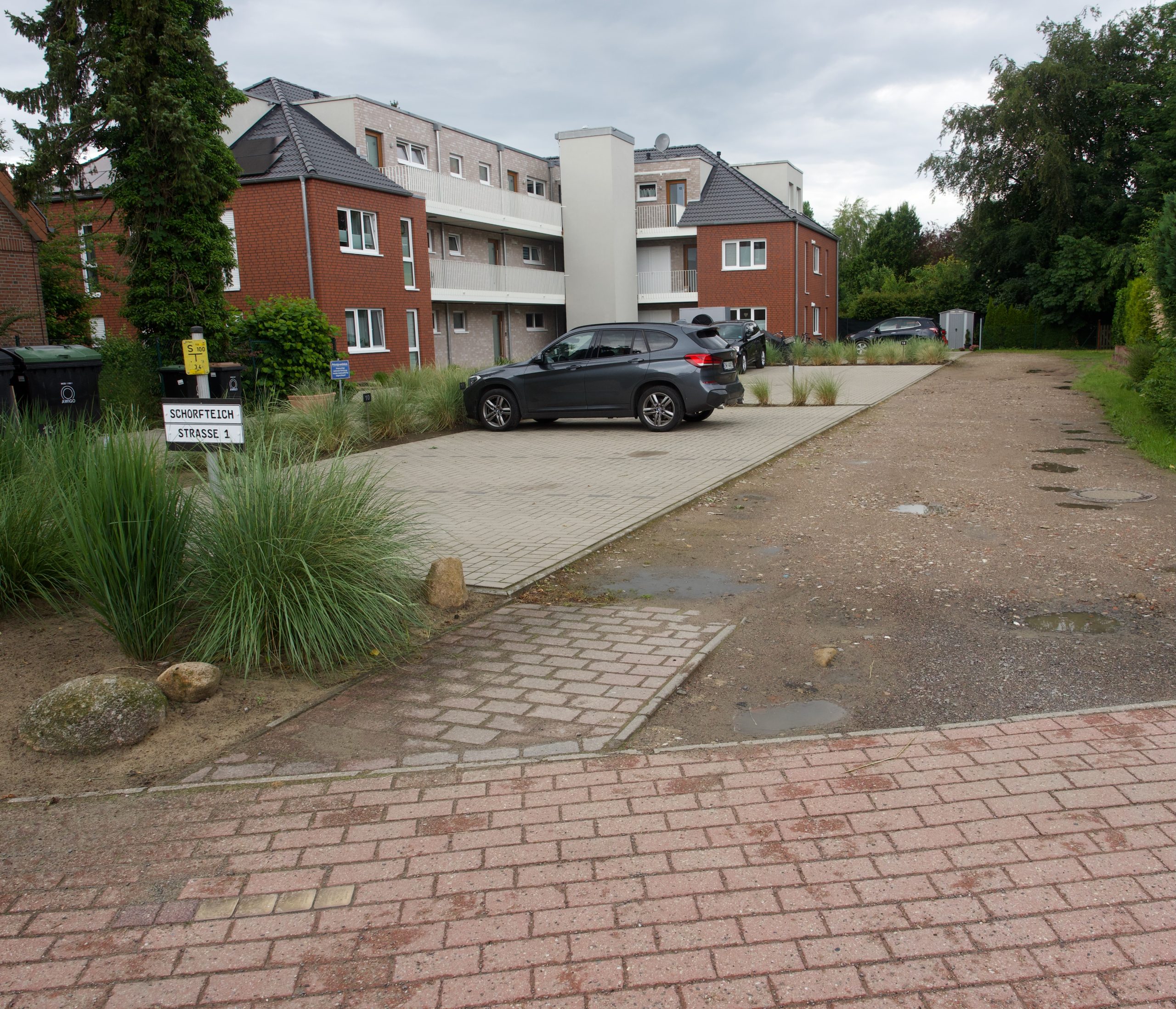
Then, when we joined Bernd, several people from the city and the Fürstenau community, and the granddaughter and great-granddaughter of Ruth Strauss, née Hamburger, who was able to emigrate to the US alongside her husband, her little daughter, and her brother Siegfried, while her sister Betty and her husband, who had left for Holland, were murdered, as were their 3-year old twins. Amazingly enough, their father David (“Dirk”) Hamburger was able to go into hiding in Holland, and survived the war, only to be killed in a motorcycle accident around 1951. Bernd, with the help of an excellent local translator, Nicole, told us in great detail about the two families at two different sites. First, we stopped by the lot where the house of this branch of the Hamburger family had stood (torn down in 2022 to make room for the parking lot of a new apartment building). Four Stolpersteine are located here.
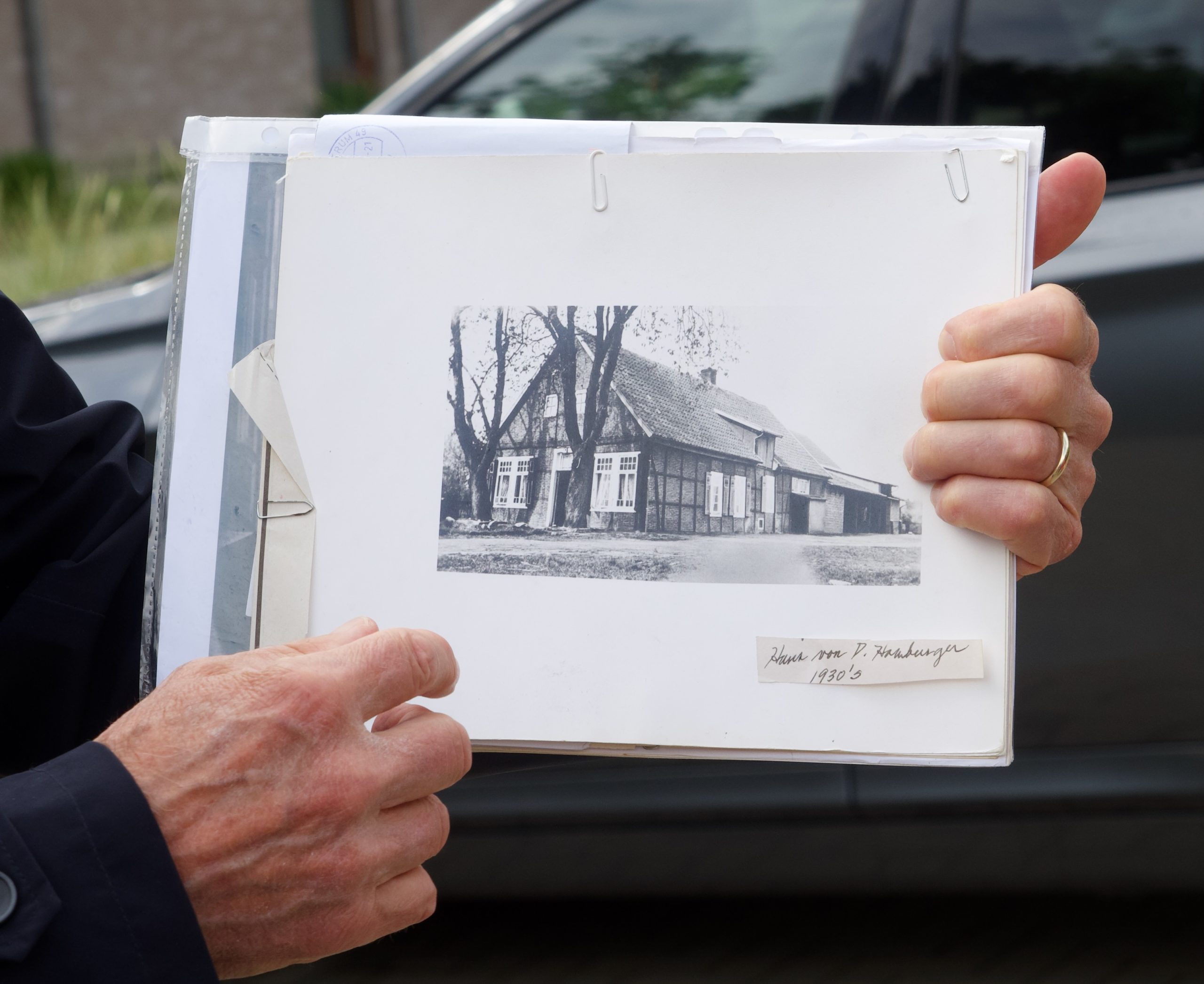
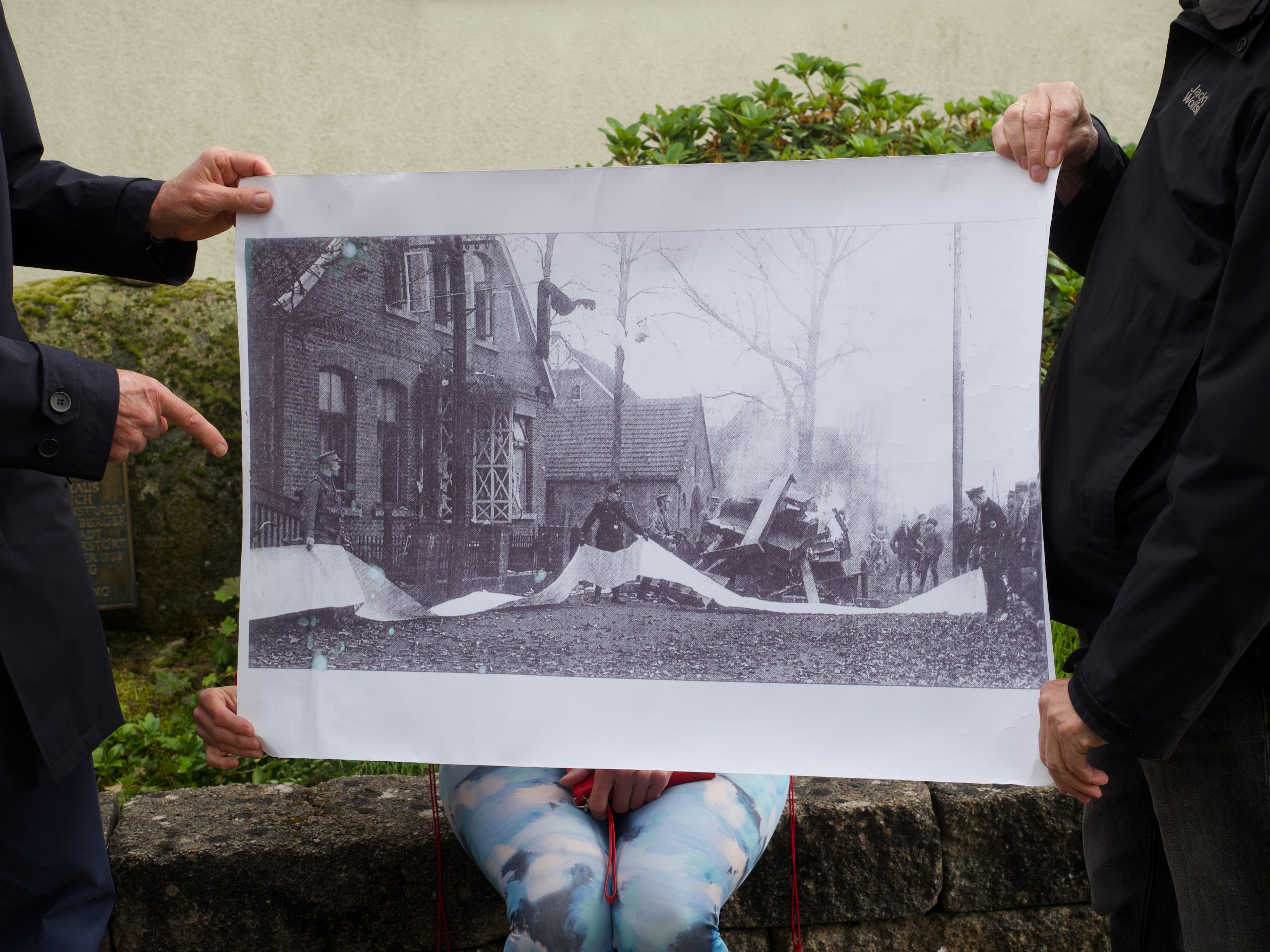
After this part of the presentation, we went the house of the Franks, where the prayer house was located. He showed us many reproductions of photos, including one of the desecration of the prayer room on Kristallnacht, and a young man who works with him sometimes brought an object that I did not know existed–the original enamel sign that hung at the local headquarters of the Nazi party, encouraging everyone to come seek “help and advice” from the NSDAP. I am not posting it (no swastikas on my site, thank you very much) but I am glad he showed it because I knew where it must have hung. Even when I was a kid in the 70s, I knew the house that had been the NSDAP headquarters, right by the city “moat.” For a time, it was a bar with a disco, and as teenagers, we would sometimes hang out there. Unlike the cosy house where the Hamburgers lived, it still stands, and is now a small apartment complex.
Bernd’s goal is always to provide a large context, so he went into much detail about the changes that the Nazis brought about, in a town where the Jewish community was fairly well integrated and celebrated the annual folk festival (Schützenfest) with everyone as late as the summer of 1933. He had enlargements of photos from the folk festival, from a Nazi parade, and from the desecration of the prayer room that he showed on site, as well as photos from the Hamburger family, including one that showed the sister and father who remained in Europe saying goodbye to Ruth and Siegfried on board of the ship going to Bremerhaven.
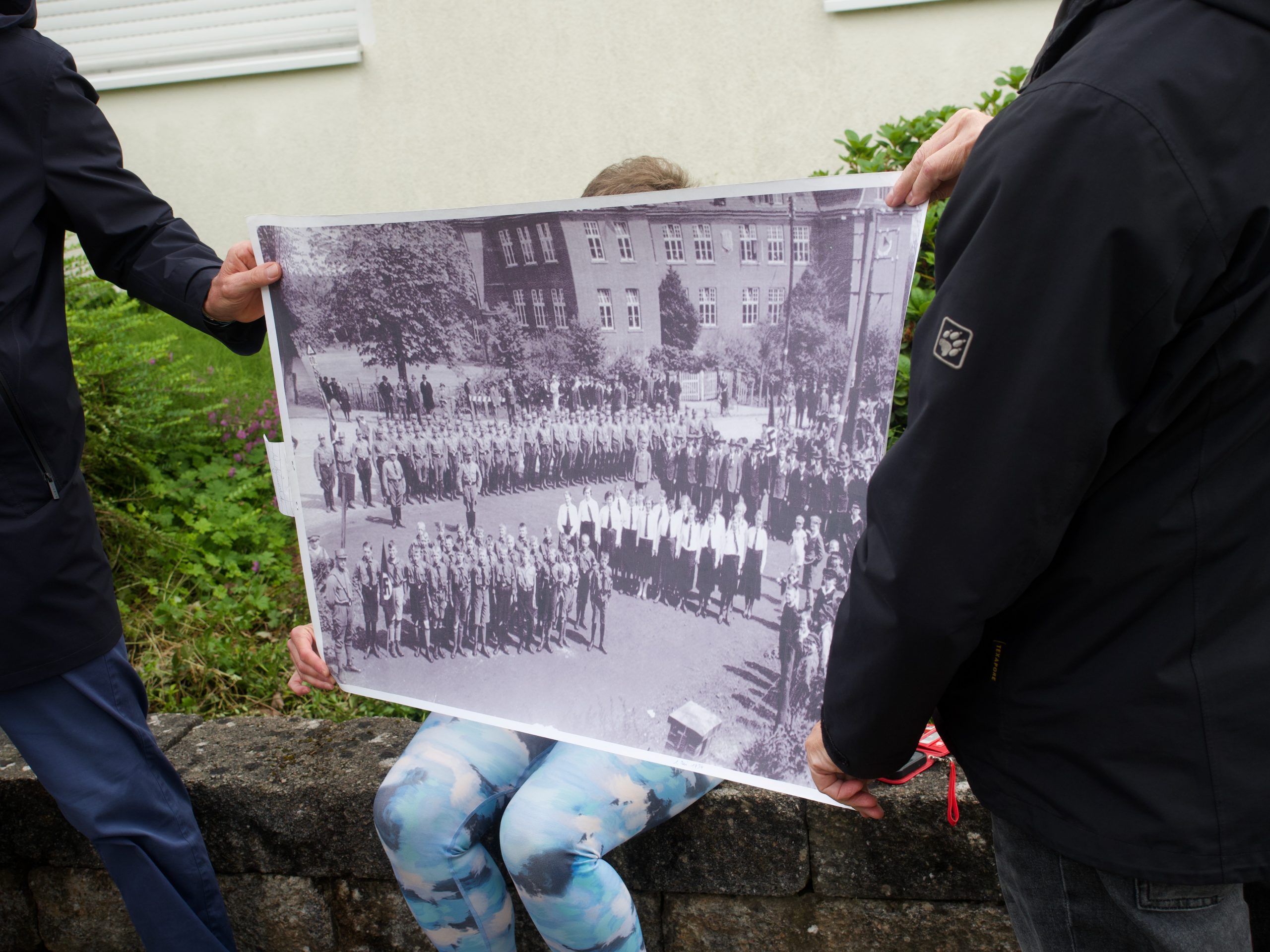
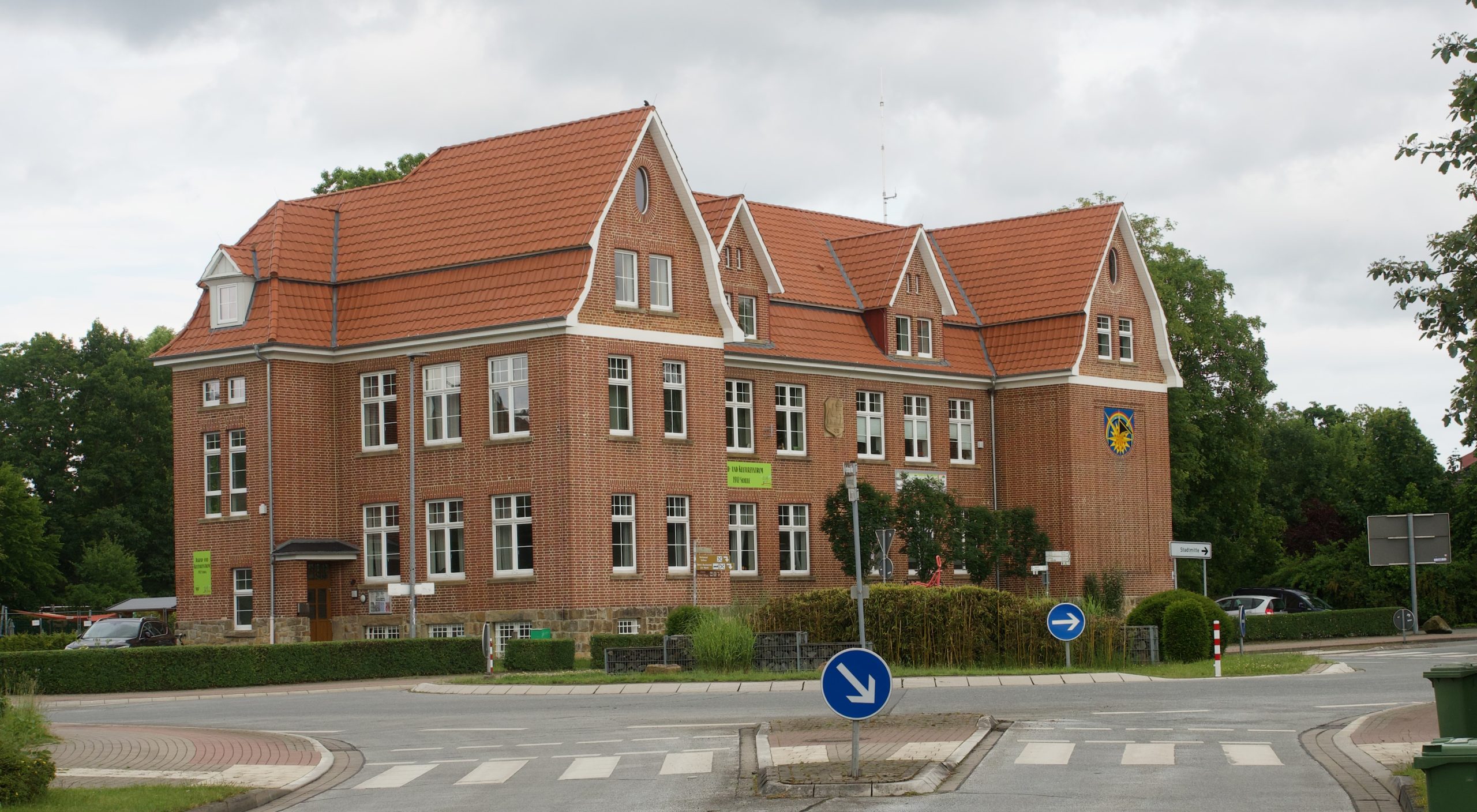
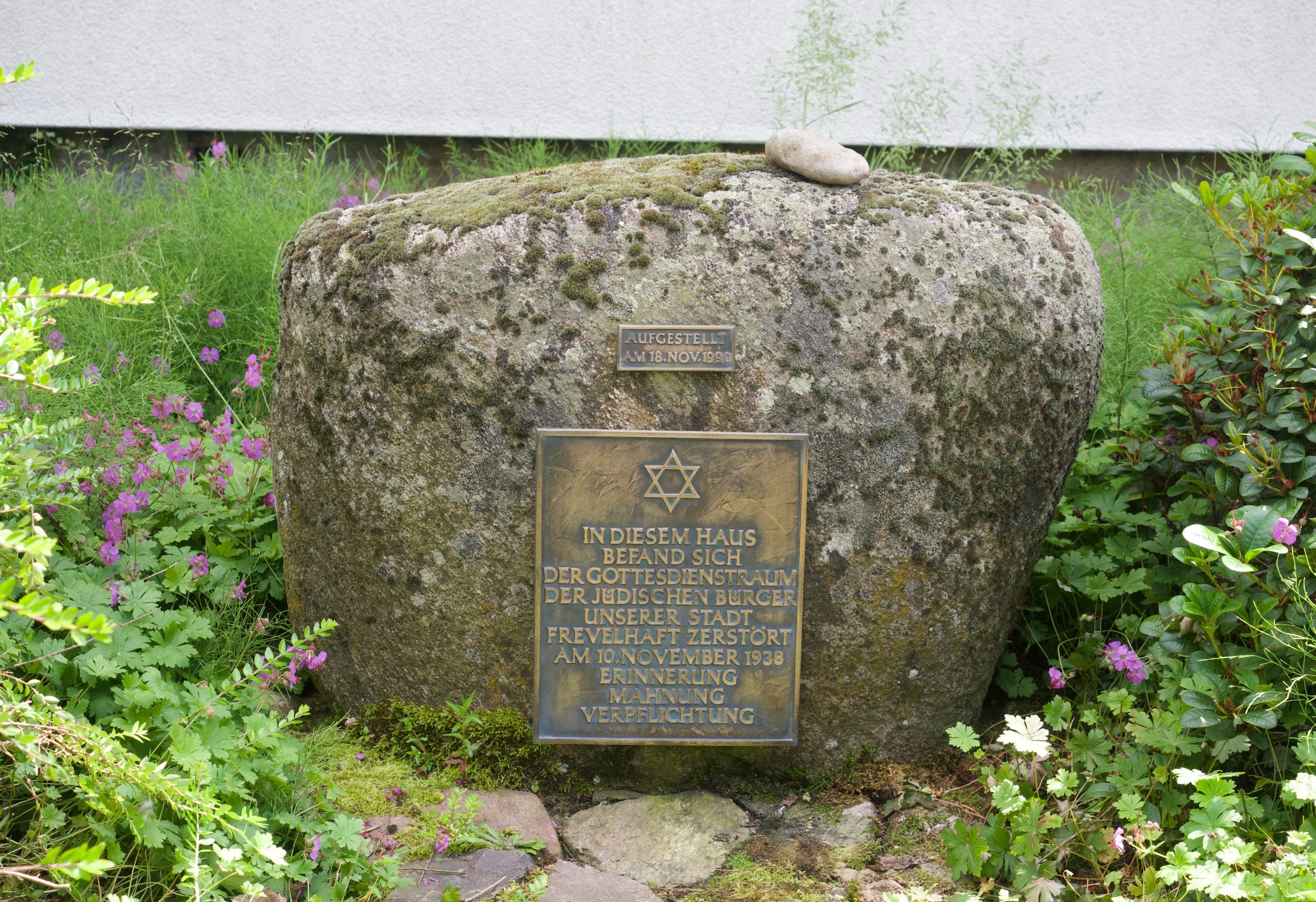
I want to stress that the sole reason the Stolpersteine and the plaques are here and that all this history was unearthed is Bernd Kruse, whose unceasing efforts to research the local events of the Nazi era and the Holocaust and educate people about them since the early 1980s made this an incredible difference in how Fürstenau progressed from “talk to the hand” to coming to terms with its past, at least to the point of not trying to hide it. In the early 1980s in particular, this was an uphill battle for him and the few others who stood by him, because many people who would have been implicated or at least known about what happened were still alive and would have liked to see this recent past buried deeper than the medieval past of the town.
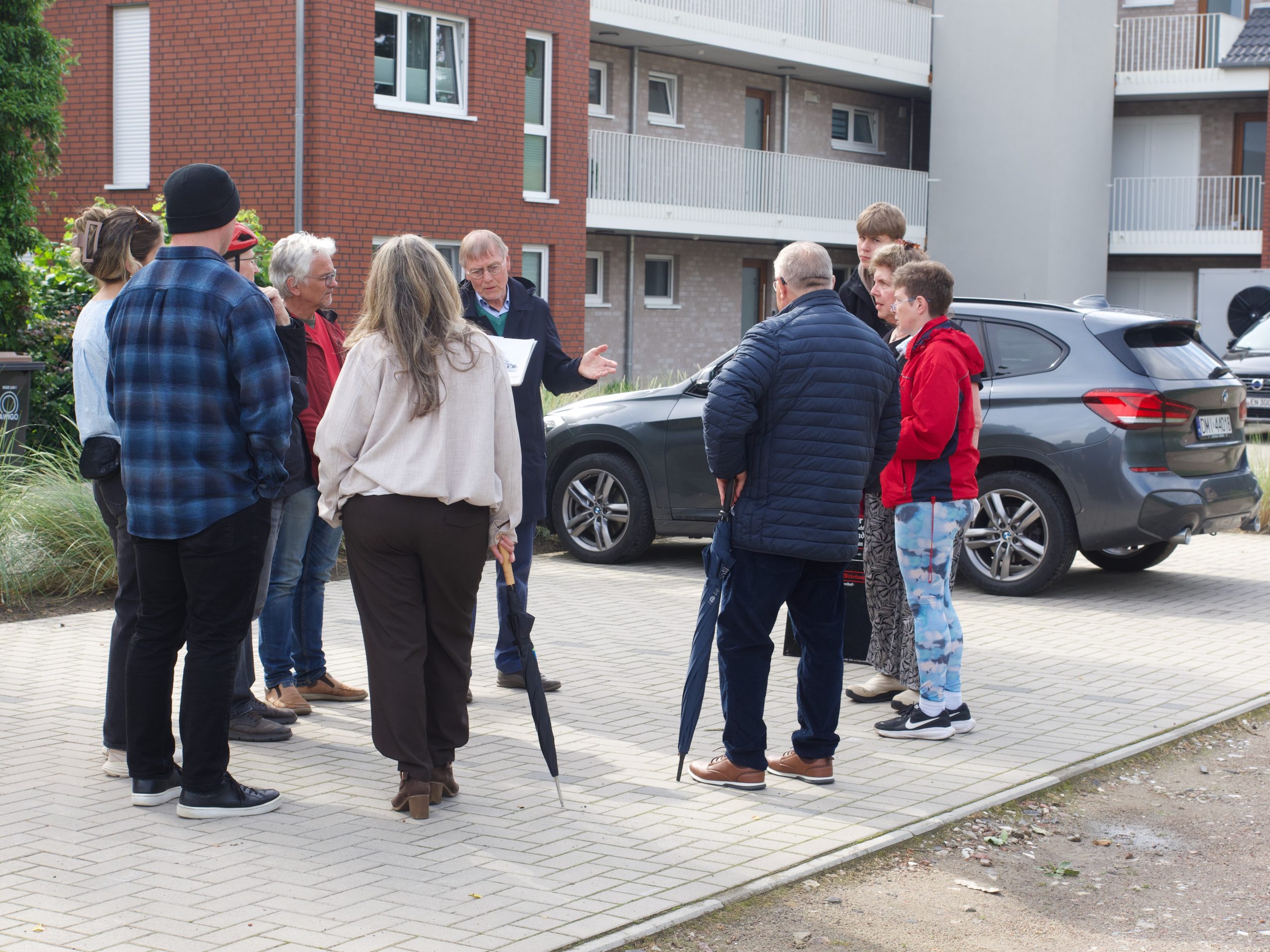
Bernd’s was a very moving presentation and I was able to help a little bit by holding the posters and by occasionally translating something or answering questions while we were walking from place to place. When we wrapped up shortly after 6 pm, the family headed to dinner with Nicole and Bernd, but we had to catch our bus back to Osnabrück (the return trip was a bit shorter–fewer stops). We were home by about 8 pm, ate a quick dinner, and fell into bed after what felt like a long and important day.