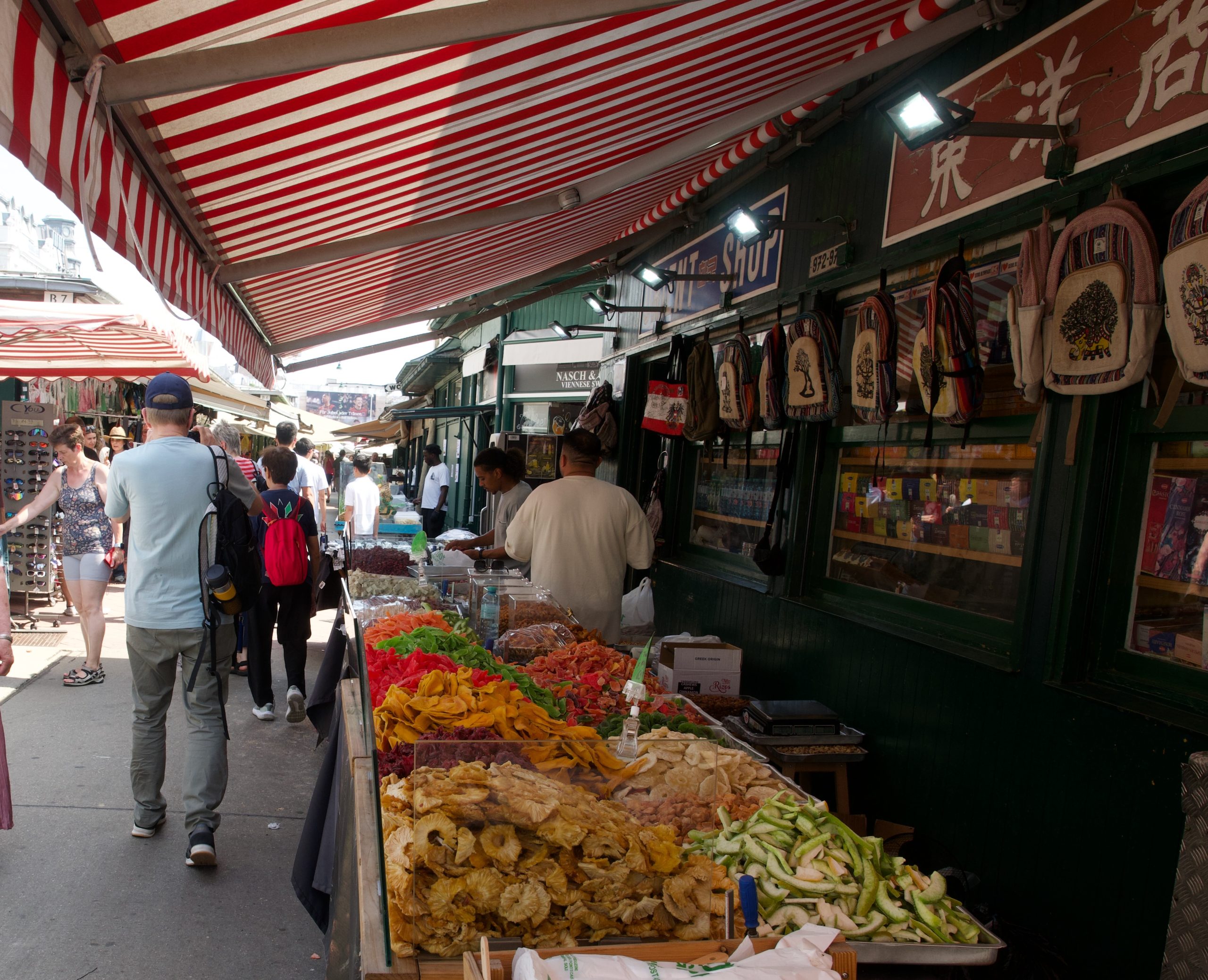
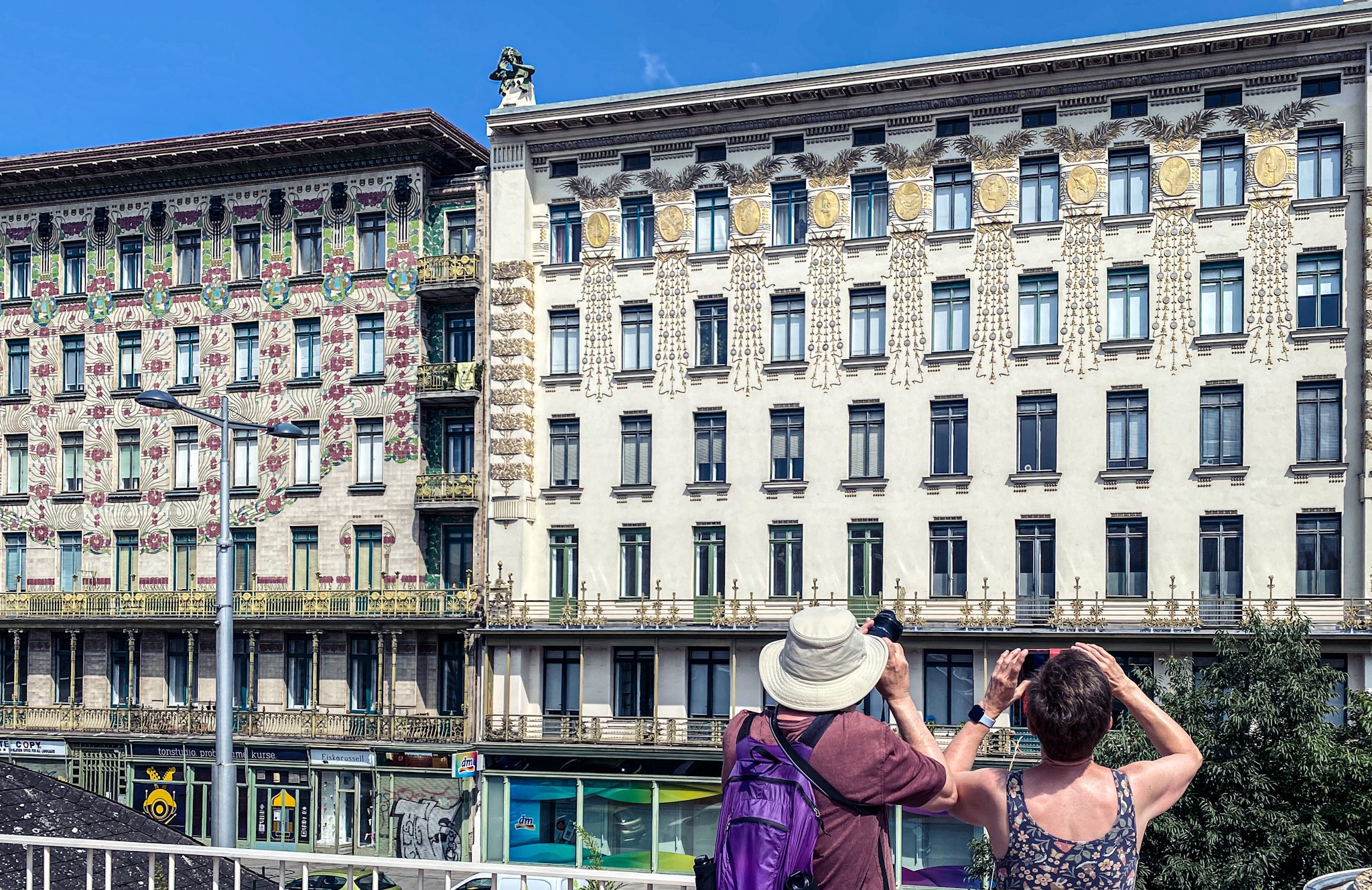
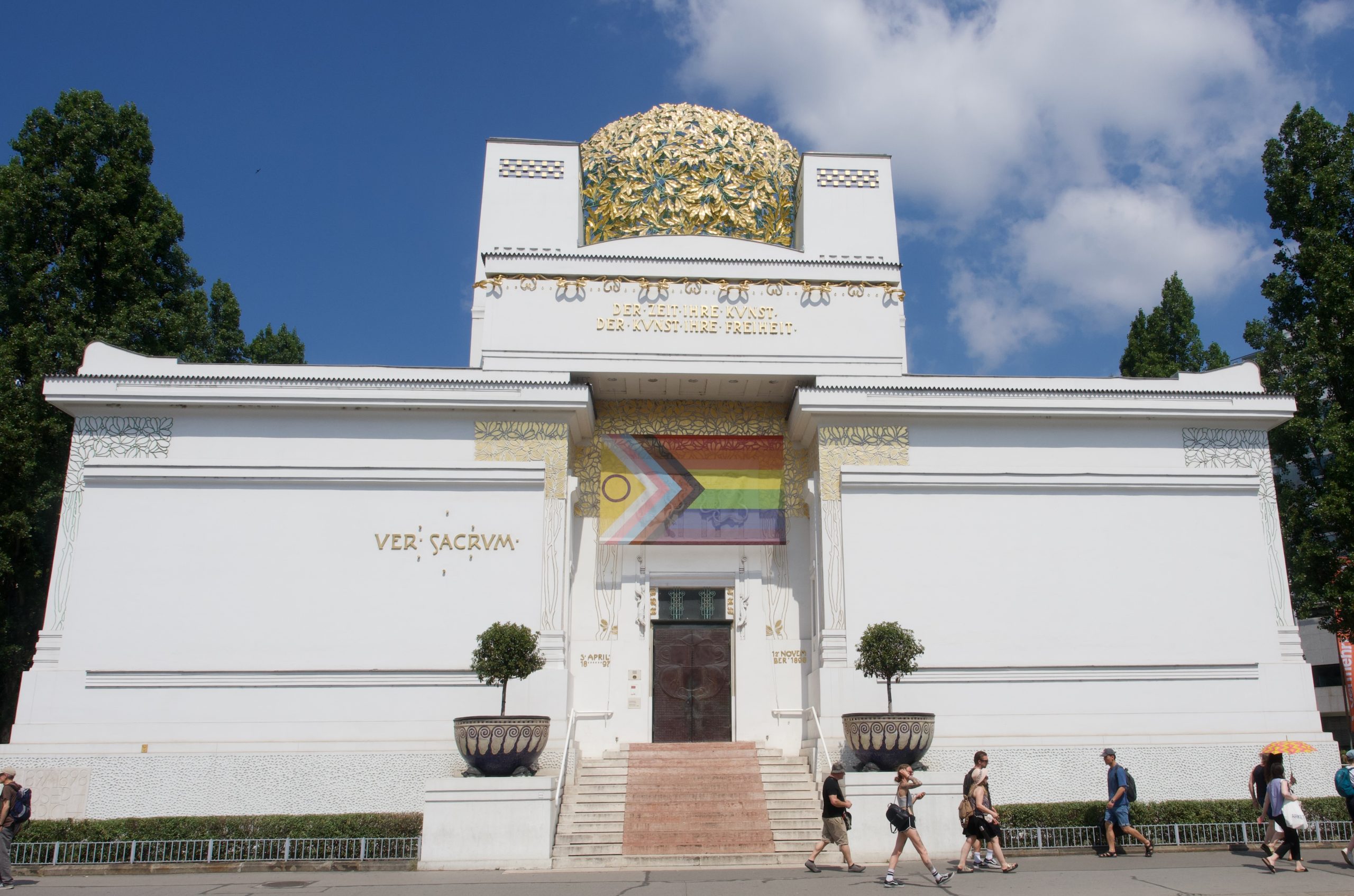
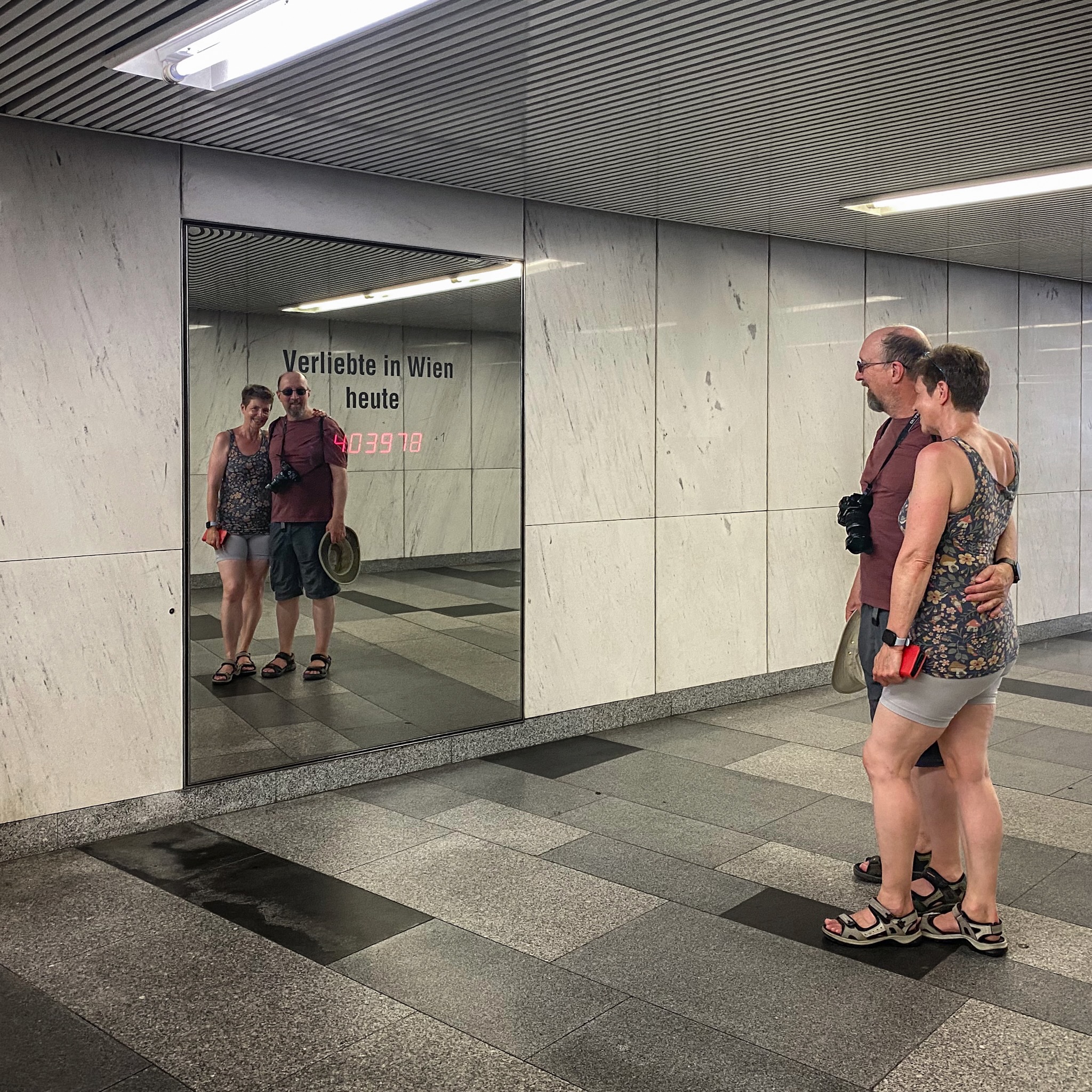
Our last full day in Vienna–and we decided to cram as much as we could in, since we don’t know when we’ll be back. We started out, after a breakfast for which I got more yogurt since we ran out yesterday morning, around 10 am and headed to the adorably named “Naschmarkt”–a daily market along Wienzeile, a long street leading to the Karlsplatz, where you can get some fresh fruit, fish, meats and cheese, but in particular exotic spices, ready-made middle eastern foods, Asian dried fruit, and sundry non-food items like incense, clothes, and of course some inevitable souvenirs. Many vendors practically force samples on you (hence “Naschmarkt,” although “sampling” is not nearly as fun and cheeky as “naschen,” a word which can also be used for the act of sneaking cookies or other tastes. The problem was that because it was so hot, none of us felt much like tasting, much less buying, roast almonds or falafel or cheese! We stayed for a much shorter time than anticipated because we were uncomfortably hot and sticky. But we also took in the fantastic Otto Wagner apartments at the start of the market near Kettenbrückengasse, and then, at the end, the fabulous and famous art nouveau Secession art building. Then we ducked into the subway to get cool again, and looked at a modern art/statistics display that purported to live-count (among many other things) how many people in love there are at any given time in Vienna.
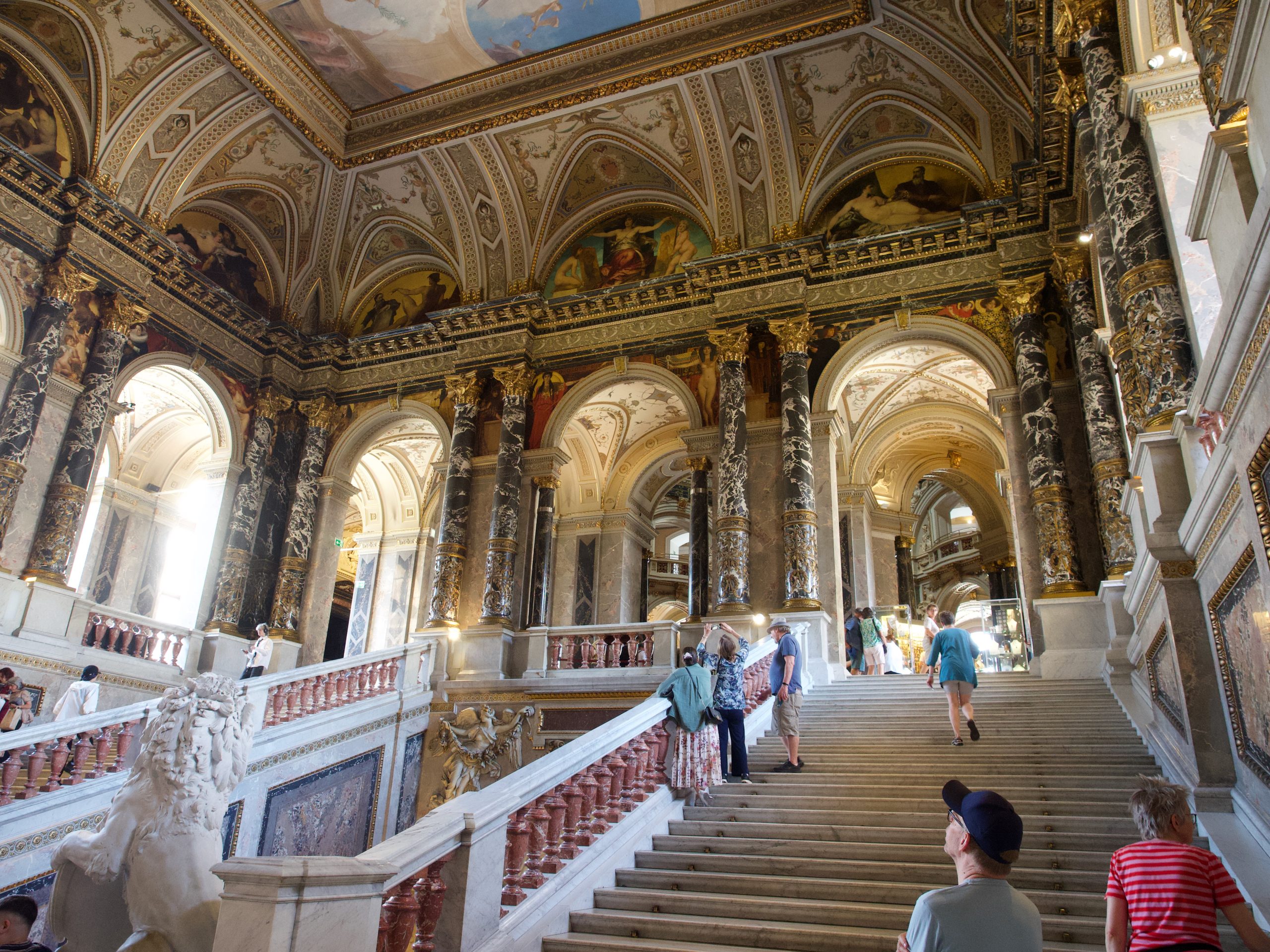
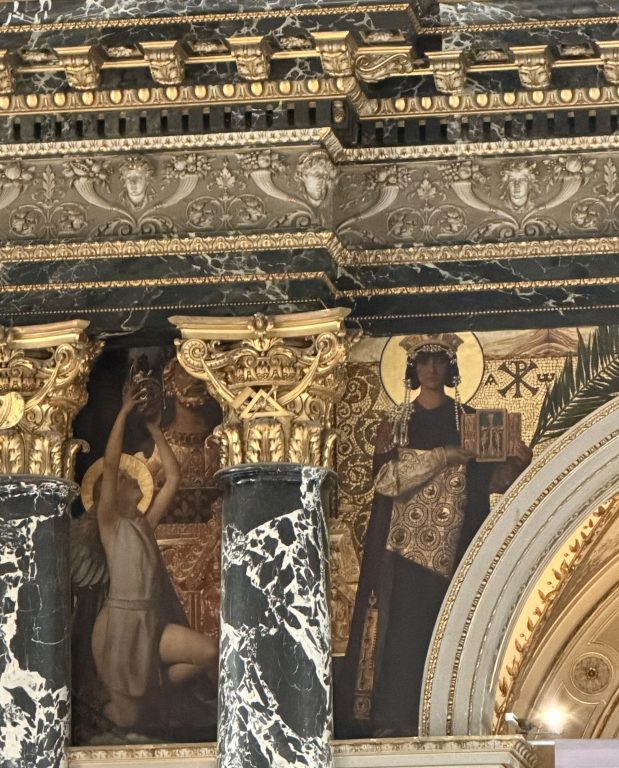
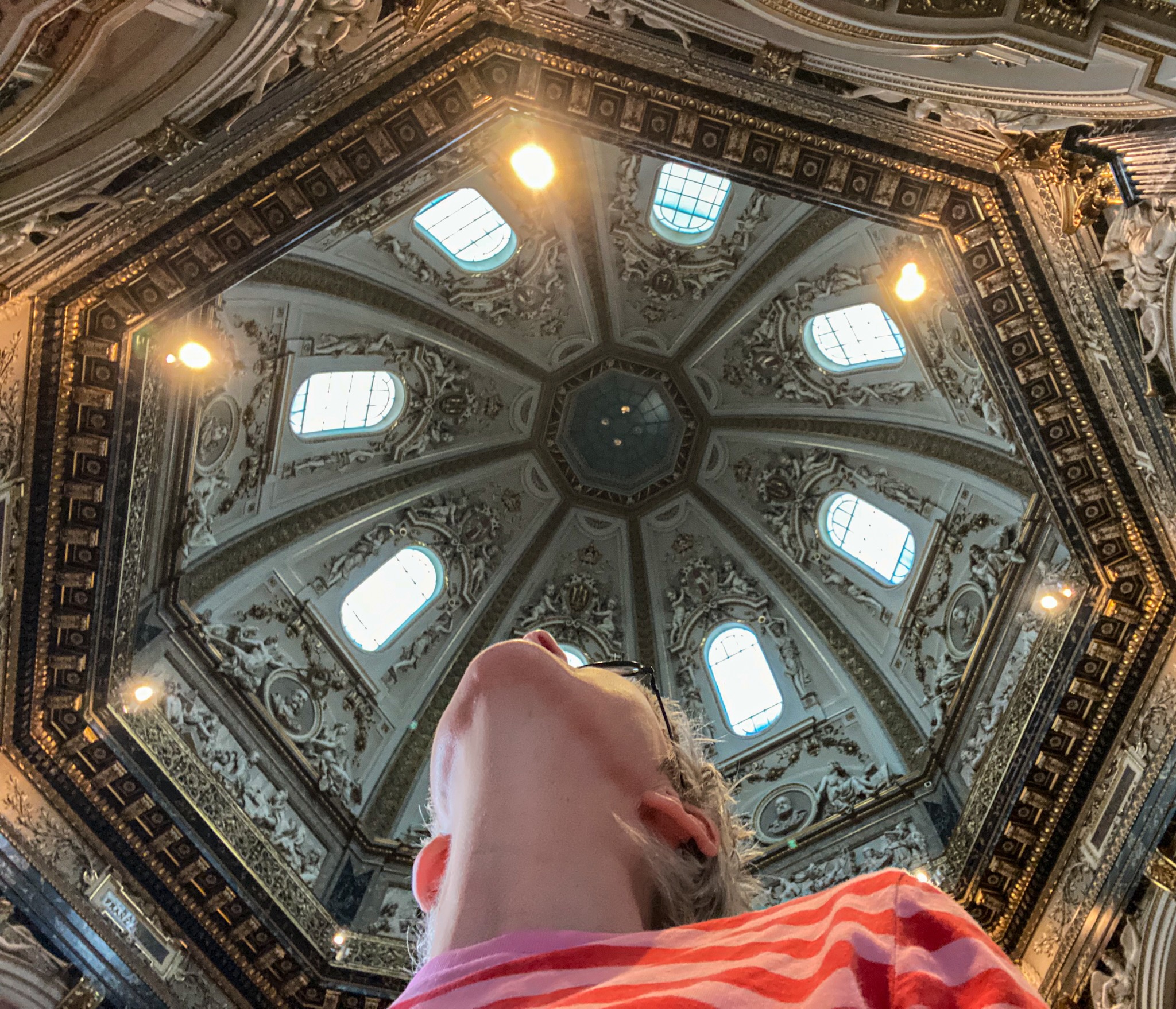
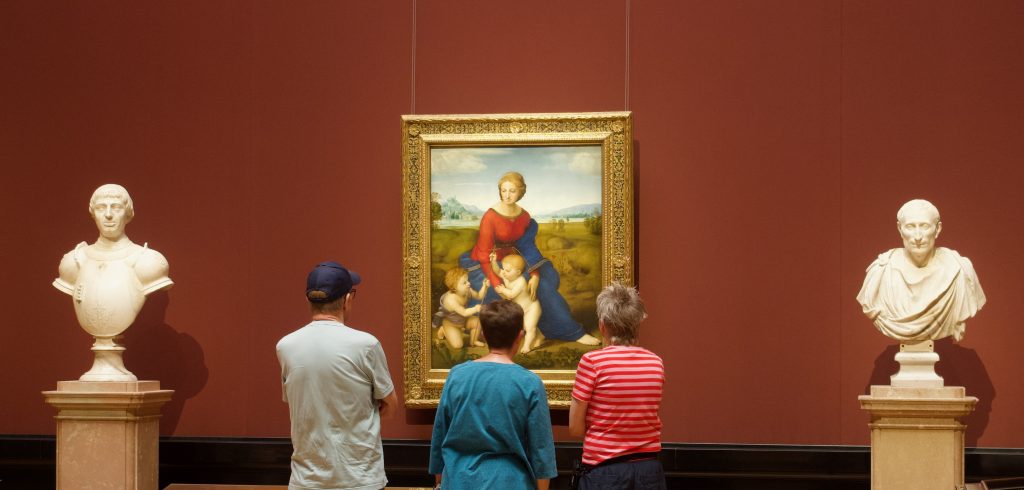
Then, we headed to the Kunsthistorische Museum (Museum of Art History), which we had discovered was open on Mondays (though only in June, July and August), so we had gotten online tickets for Vienna’s largest art museum, which has the classic Louvre/Pinakothek/Met problem that there is simply too much to look at–even though its actually stops about 1800 and you have to go to other spaces in Vienna to see 19th or 20th century art. The museum itself is an enormous, bombastic, and ubiquitously decorated and decked out space with a huge domed entrance staircase. There are paintings between elaborated decorated and gilded columns which are part real and part fake (stucco) marble, which especially fascinated Andrea, since she has been playing with marbling techniques. We had read that some of the “intercolumnar” paintings were by Klimt, but guessed rather than looked up which.
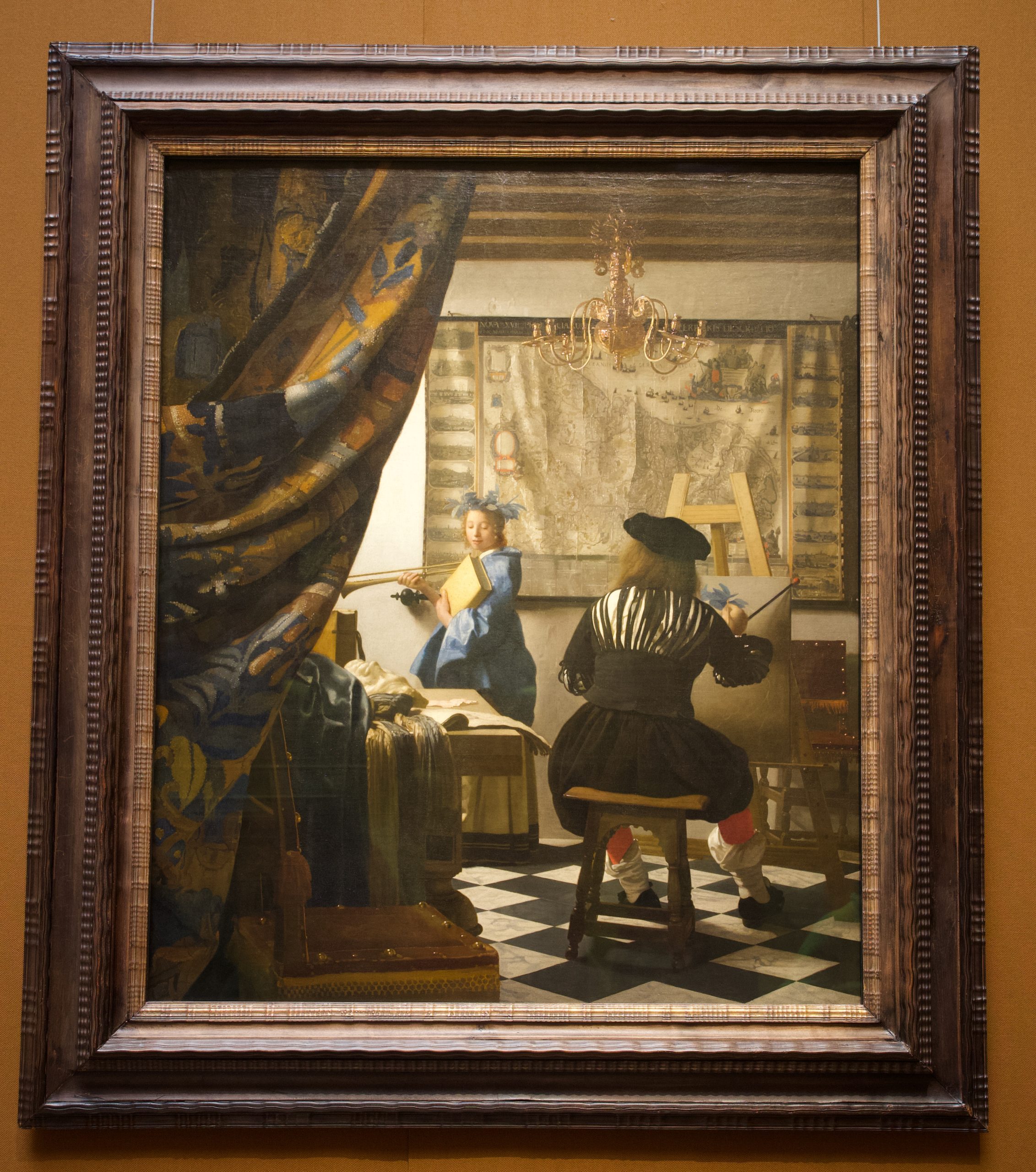
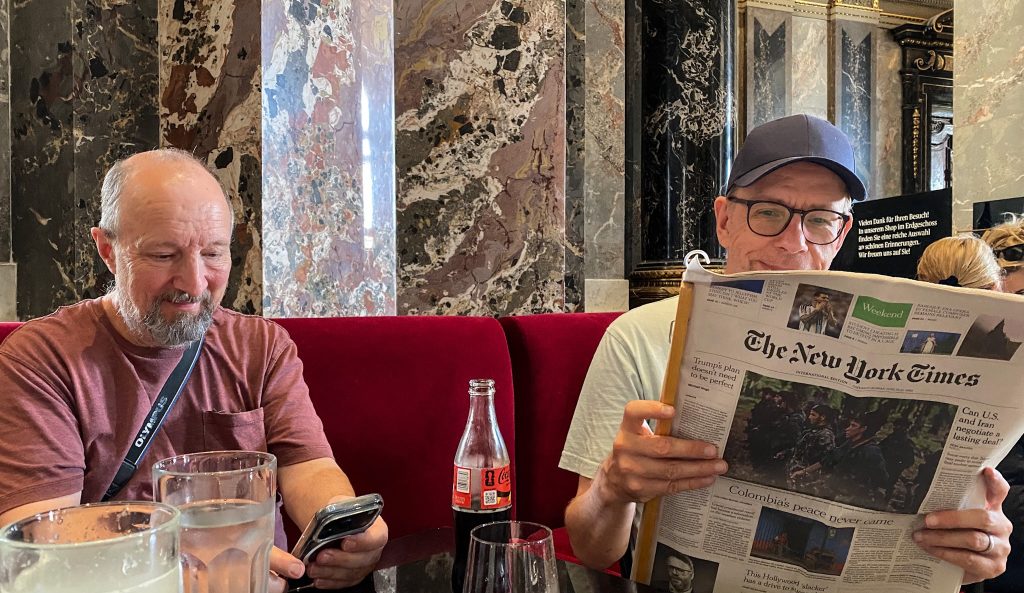
We spent several hours looking at both Dutch / Flemish / French / German paintings and Italian / Spanish ones, and found some favorites, both famous (Breughel in particular) and a little less famous–but none of them NOT famous. We skipped much, by necessity, since the collection of the Austrian kings and emperors was enormous. I had not realized how many Breughels the museum had (many more than in Brussels!), and had forgotten if I ever knew, that a Vermeer awaited us. We were good and tired when we finally took a break about 3 hours in and had a light but pricy lunch at the museum cafe, for which we waited in line for about 20 minutes. But our waiter was charming, and sitting, eating, and talking over what we saw did us good. Mark and Peter even zoned out for a while to read the news.
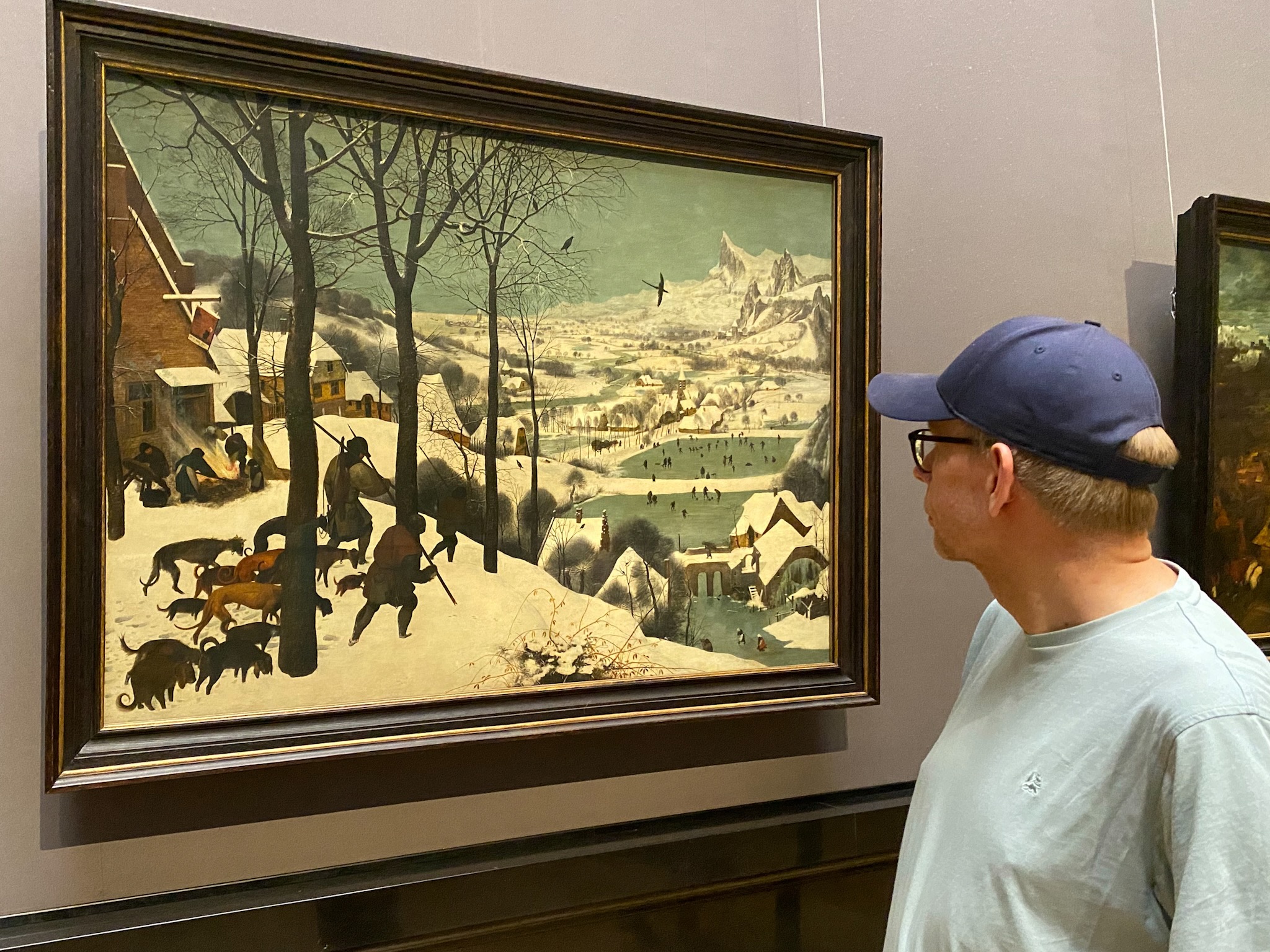
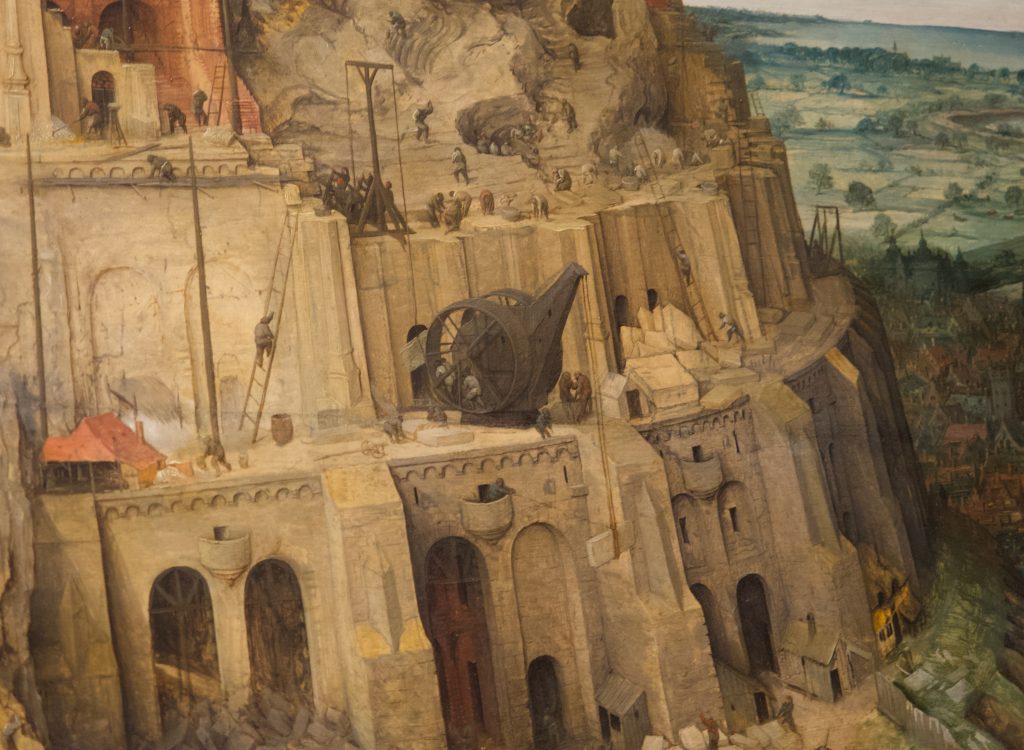
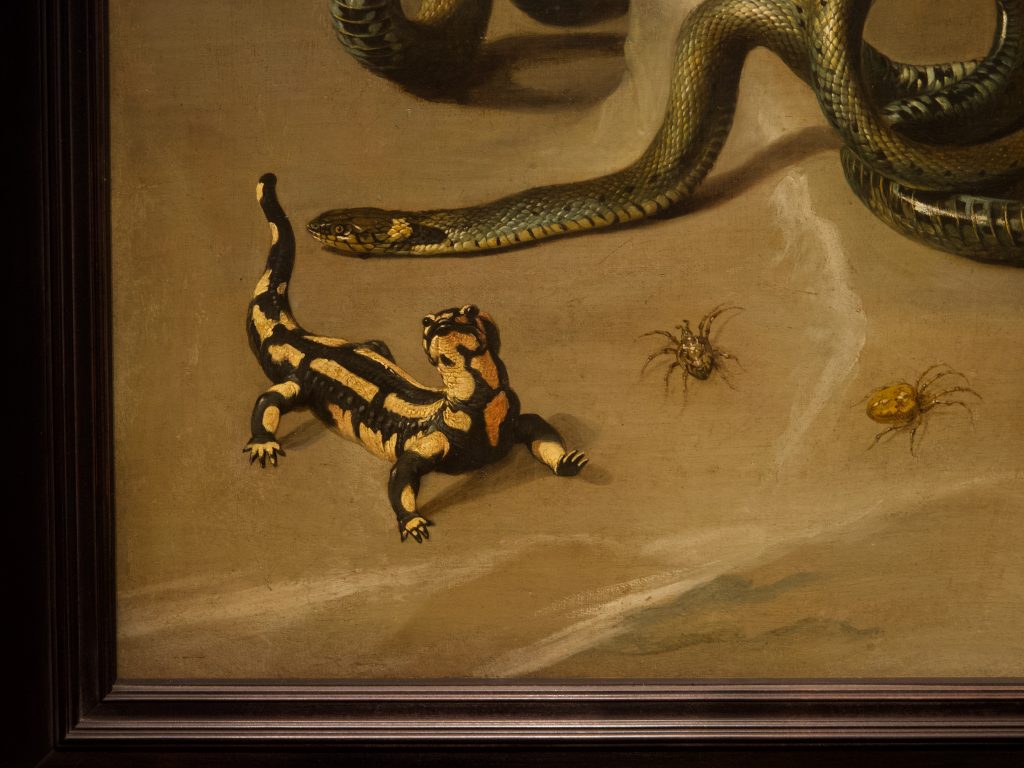
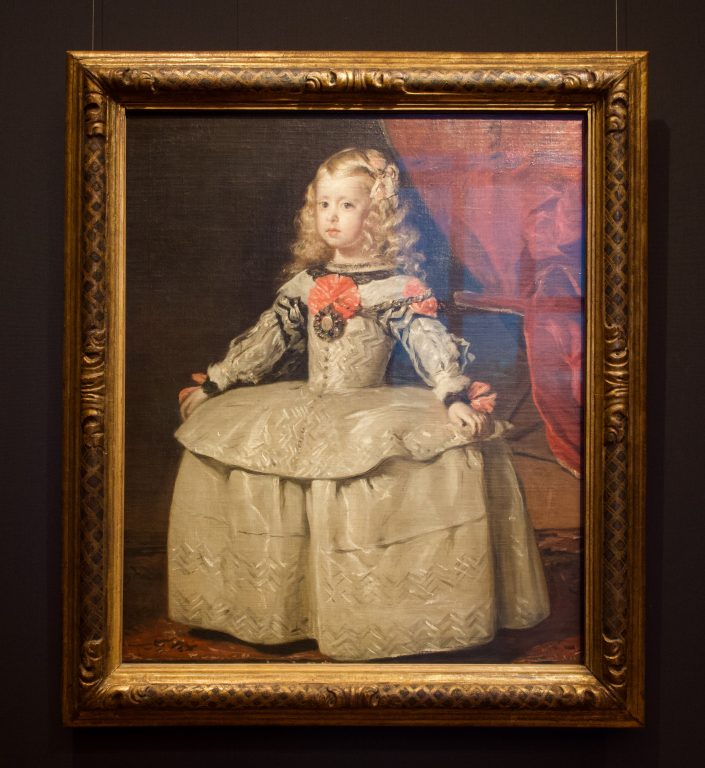
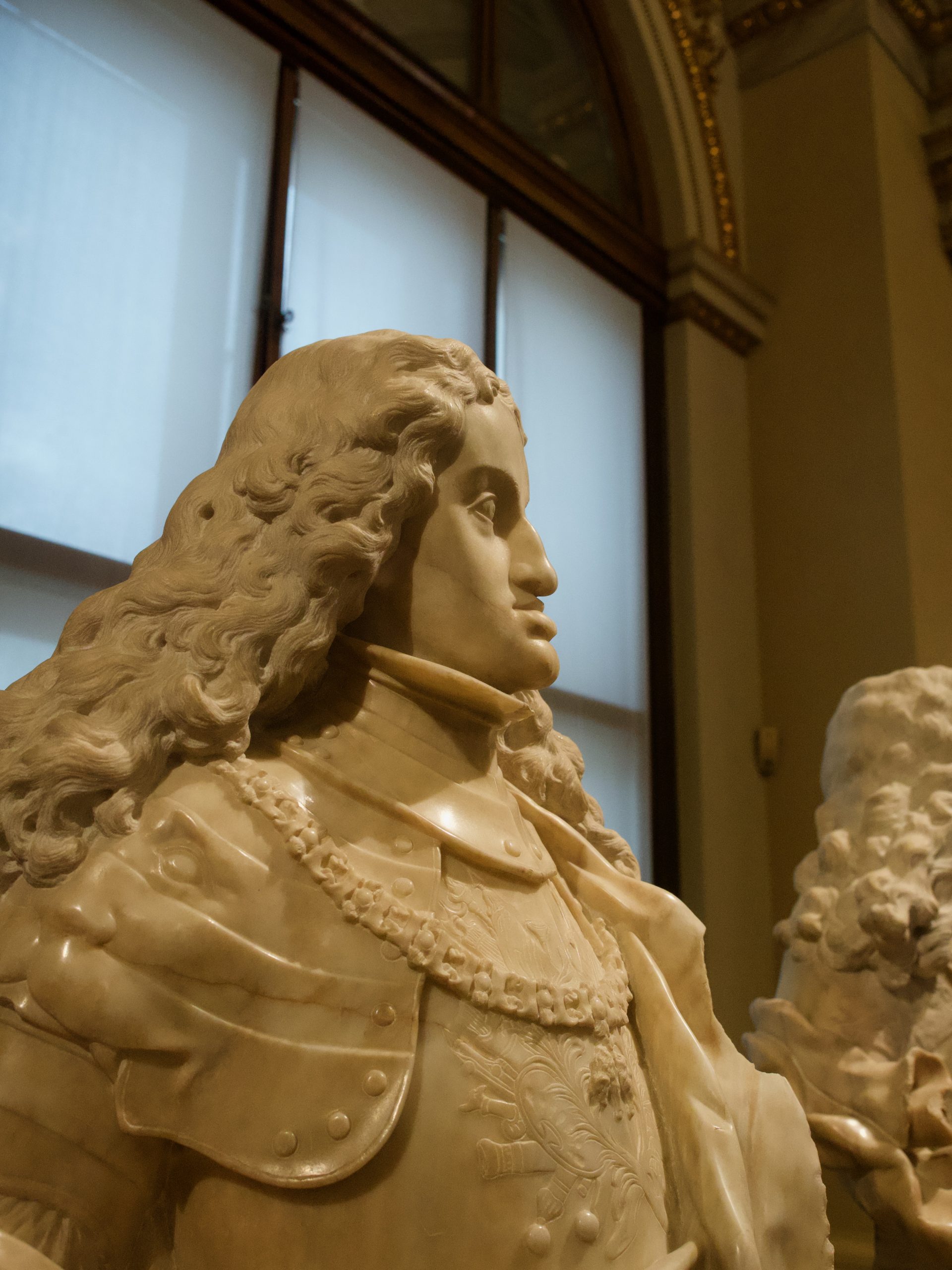
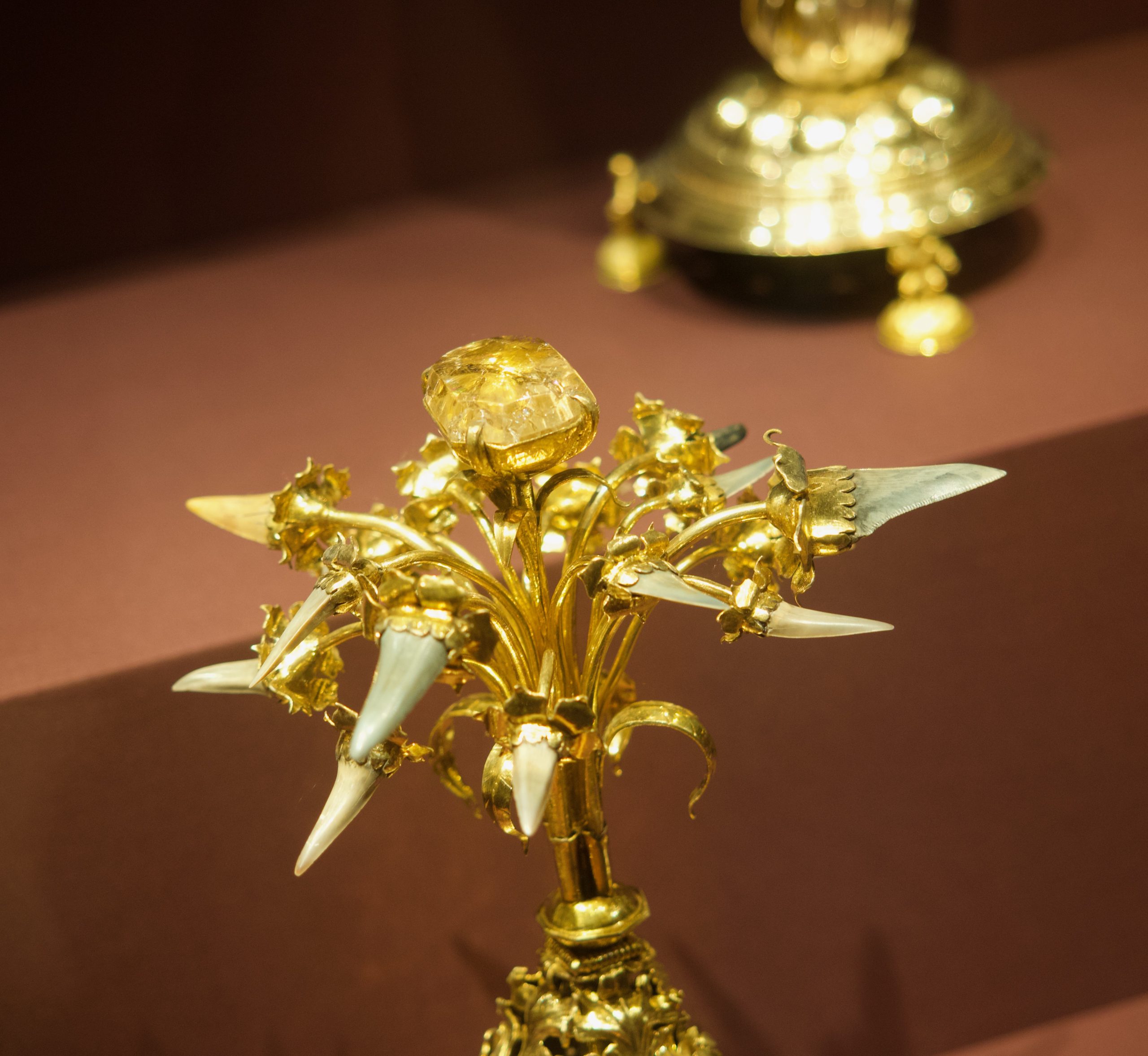
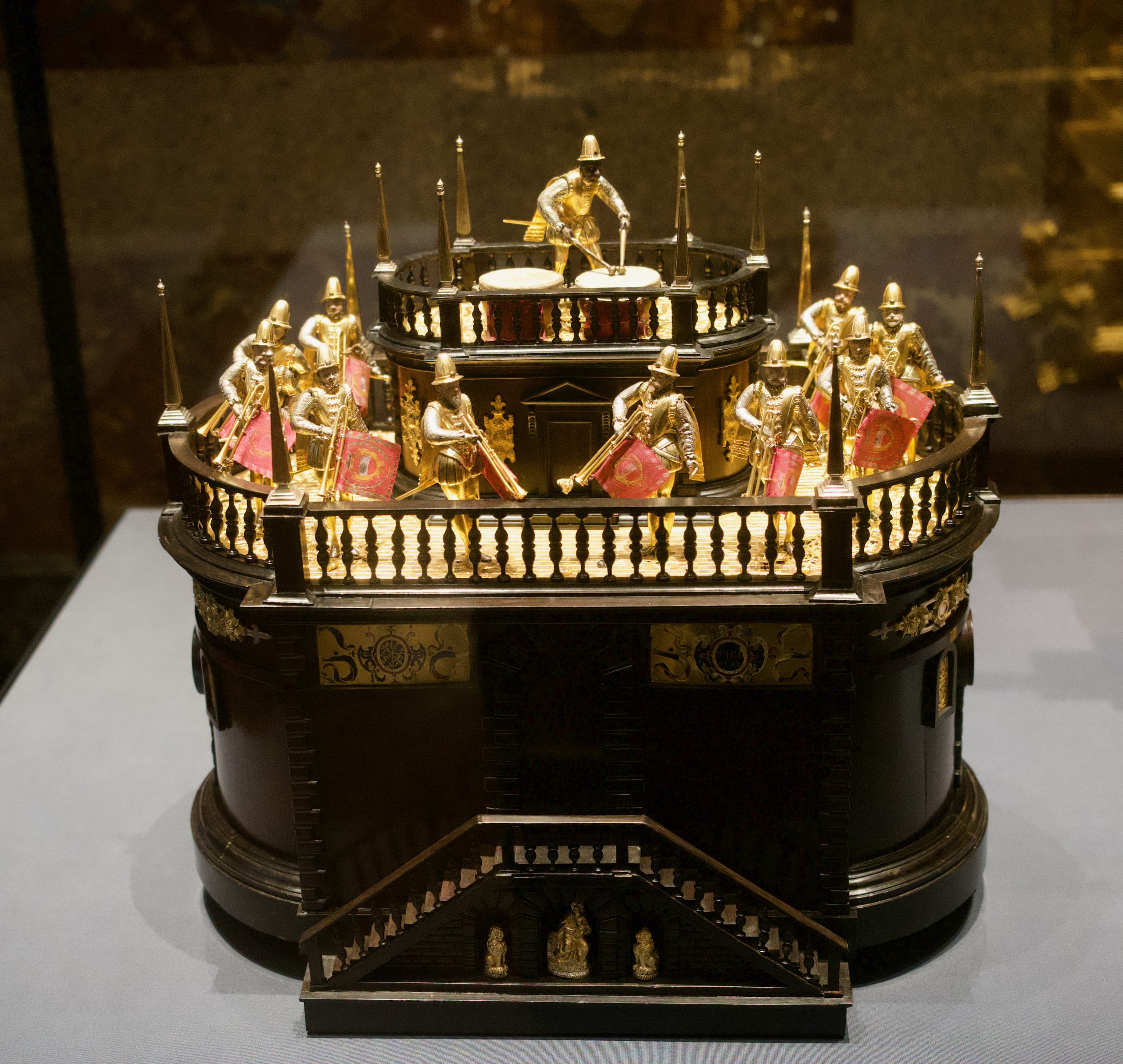
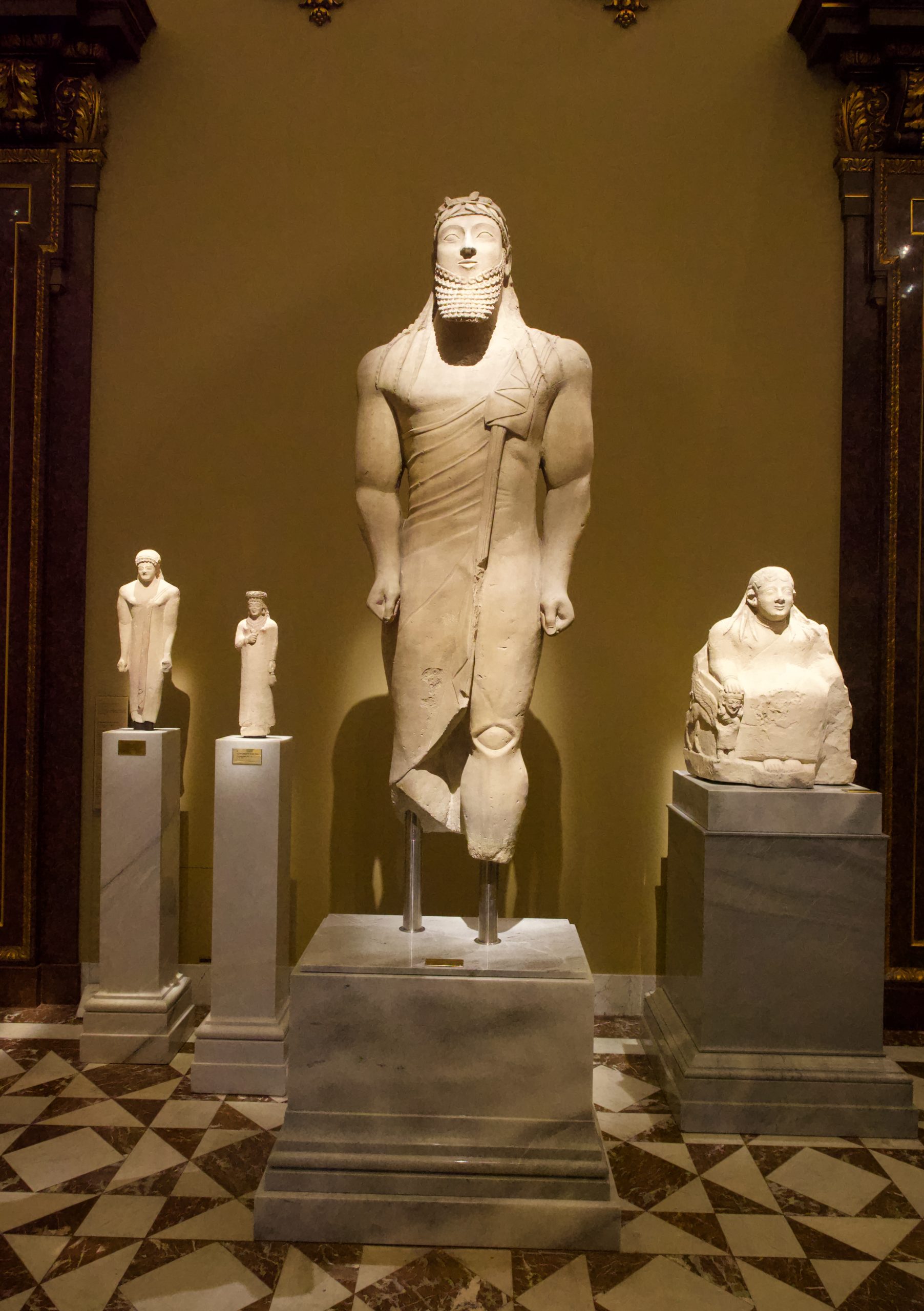
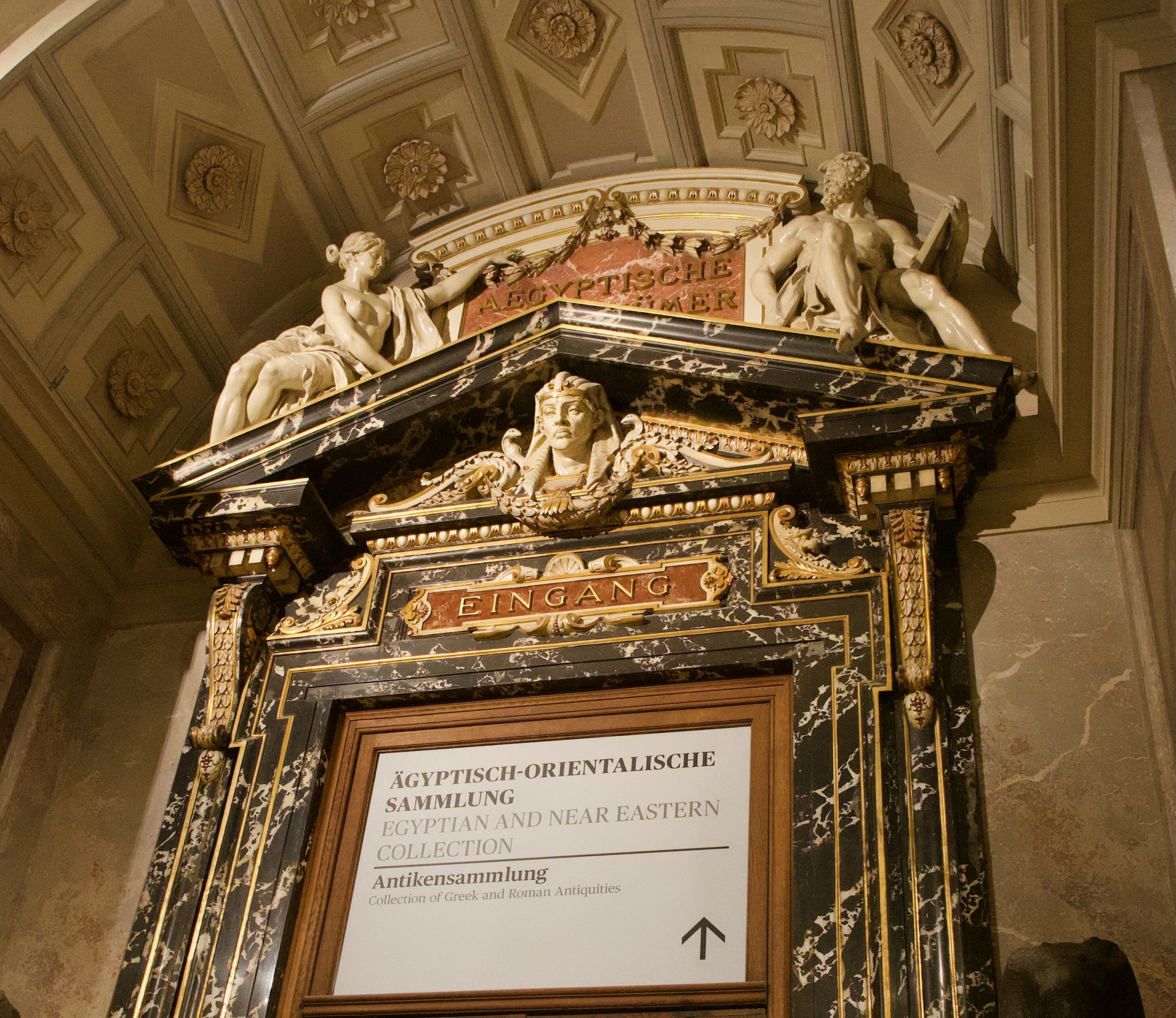
After lunch, we checked out the “Kunstkammer,” the art collection of the Austrian rulers (the Hapsburg royal family), although the “chamber” part of “Kunstkammer” was a bit of an understatement, since there were dozens of rooms with a hodgepodge of priceless and meticulously crafted high-end royal tchotchkes: automata, clocks, gemstones but also nautilus shells and even coconuts decked out in gold, ivory miniatures, intricately carved wooden games, and everything else that struck some ruler or another as precious, unique or otherwise desirable. There were some of the remaining objects from the famous Kunstkammer of Rudolph II, one of the earliest collectors of art and unique natural objects in the Renaissance. Eventually we just all felt like we couldn’t take everything in anymore and tried to escape the endless flights of showrooms with their glass cabinets. But the only way out was through, that is, through the Graeco-Roman and Egyptian collections, and even just the 15-minute walk through with an occasional dead halt when something struck us as exceptionally beautiful made clear that you could spend days exploring those collections as well.
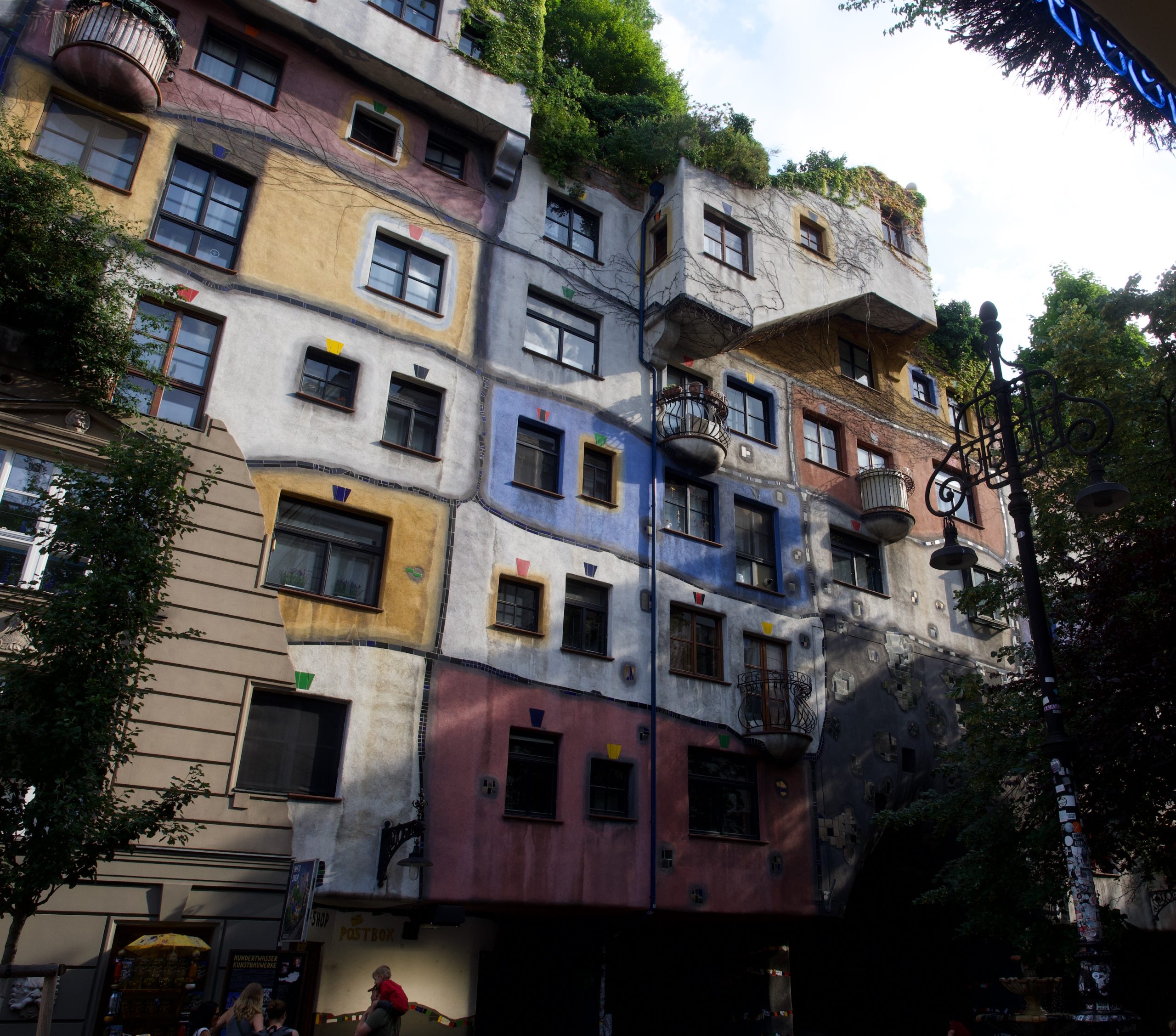
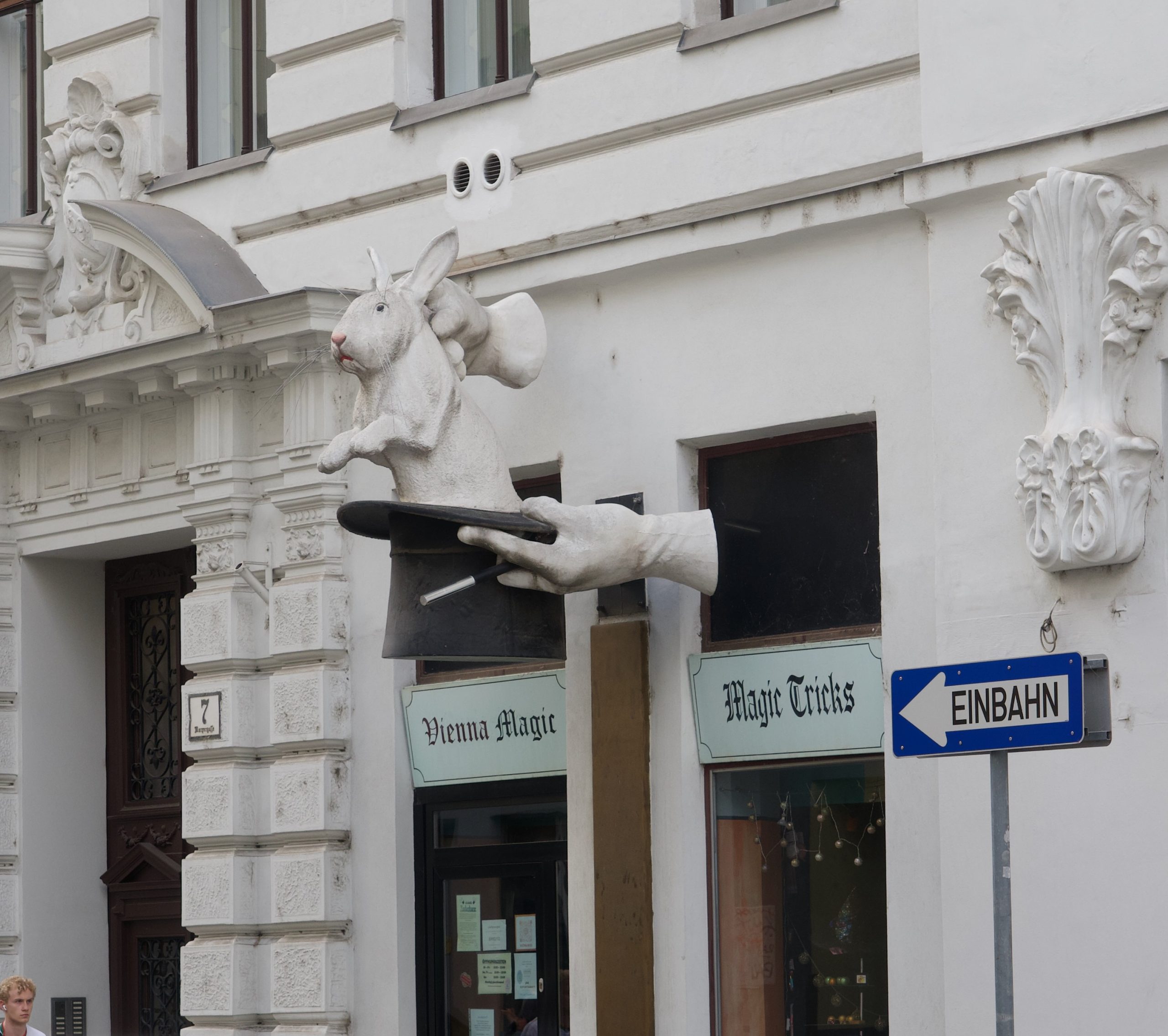
Instead, we made our way outside, were we discovered that it had THANKFULLY clouded over, and cycled back to the Naschmarkt neighborhood to head to one of the cafés that Monika had recommended to us. It is called Café Vollpension (a complicated pun since “Pension” means both retirement and a boarding house, so this means both “fully retired” and “a room with all meals paid”) and all cakes are baked at home by retired people (although the staff was clearly on the young side). We had coffee, lemonade, and delicious cake–I had a poppyseed cake with red currant topping; Mark had an apple-walnut cake for which I scored some whipped cream; Andrea and Peter had Linzer Torte, which is a tart-like cake with cranberry jam. We loved it and were also very happy to be off our feet for a while! We even took the tram to take one more short walk, just to nurse our sore feet–we wanted to see some of the famous (but somewhat overhyped) buildings created by the artist Friedensreich Hundertwasser, which celebrate organic, playful, colorful architecture with lots of plants in a city that is just packed with apartment buildings from the late 19hth century. On the way we also caught glimpses of other interesting sights. But we were also very much DONE with walking and headed home for an evening of packing and getting ourselves ready for our departure tomorrow.
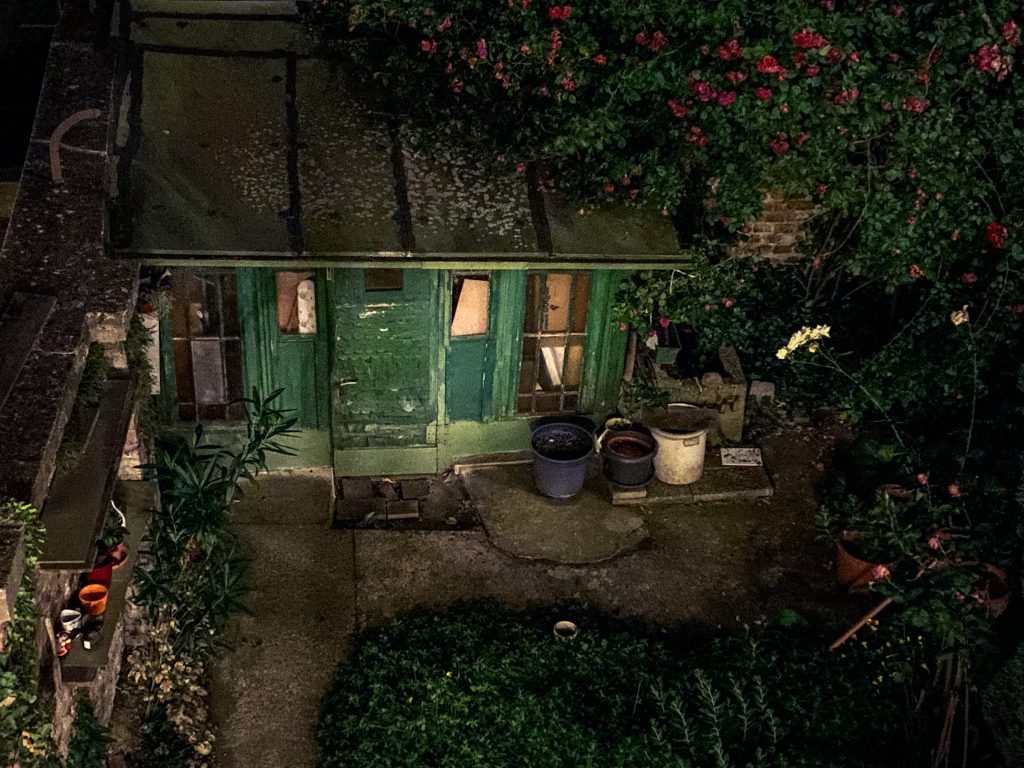
We made it home about 7, had all of our remaining things from the fridge for dinner and also made ourselves “Reisebrote” (rolls with butter, cheese, and whatever else was still on the table) for the 4-hour trip to Prague tomorrow. Andrea took a farewell shot to remember our apartment by: the quaint inner courtyard they could see from their bedroom.