This was the most low-key day in quite a while! We all slept in (until 7 / 7:3o, at any rate), after a thunderstorm had thankfully lowered the temperatures for a while and blown some cool air into the apartment. Mark and I went for an early walk through the Eichtal park and listened to the usual array of birds (chiff chaffs, robins, tits, and the Eurasian Black Cap were prominent, and we also head a thrush, but it was impossible to spot. We saw the heron in the same spot where it’s been before, but also spotted one of the cute European red squirrels with the little tufted ears (much more shy than the American variant).
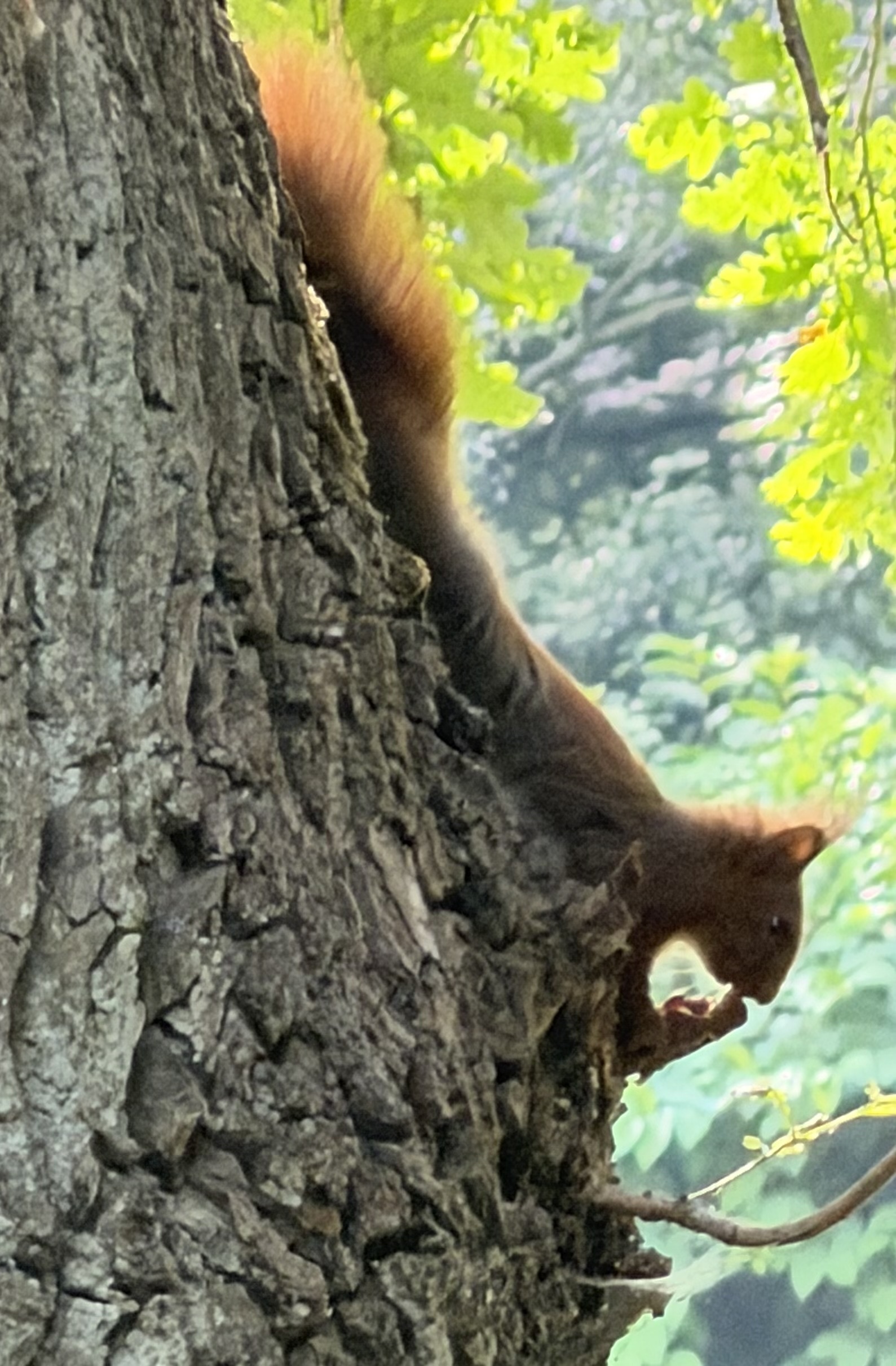
The walk was a perfect thing to do before it got toasty again (although it was not nearly as bad as yesterday–the high was 88, but humidity and lack of wind made it feel quite uncomfortable in the afternoon. Up until that time, the apartment was still bearable, and we sat and talked, comparing “boomer slang” in Germany and the US with what we know about current German teen speak. Just to keep a record, I took some notes. We had a good time.
Aside for the linguistically curious: German “Boomersprache” as vetted by Andrea, Peter and Antje as words we actually used and that struck us as slang rather than as old-fashioned stuff from the previous generation: cool and geil for “great, excellent;” Fressalien for things to eat and schnabulieren for eating/snacking; unheimlich/unwahrscheinlich as intensifying adverbs (“incredibly”). Also na logo for “of course.” On the other hand, using Juno/Julei for the months “Juni” and “Juli” did not strike us as slang, but as a very traditional way of making the distinction between the months audible, since otherwise sound very similar, especially on the phone. I am also convinced that Quatsch mit Soße (“complete nonsense”) goes way, way back and struck us as old-fashioned in the 80s. For an American equivalent of this generation of slang terms, compare Mark’s use of “that’s neat” “yikes” and “zilch” (for zero). German Generation Alpha slang, strikes us all as very strange, especially since it often uses English, but more likely than not with meanings that have shifted in ways that we haven’t caught up to yet. So while cringe, slay, and low-key are used just like in contemporary American slang and random often replaces the German equivalent, other words are a bit more removed from their English origins: das crazy (Youth Word of the Year, 2025) started as “that’s crazy,” checkst du or checkste? means “get it?, “safe means “sure thing;” and lost is used for “clueless.” Fun stuff. Our friend Karsten told us a while back that he thinks the excess English (remember we already used cool, and various other American words, from Jeans to Computer) has begun to pronounce extremely old-fashioned German phrases with an American accent to make teenagers think they’ve missed something. (Prime example: Rabenaas, an old word for a very despicable person, literally “raven’s carrion,” pronounced as “Ray-Ban Ass”)
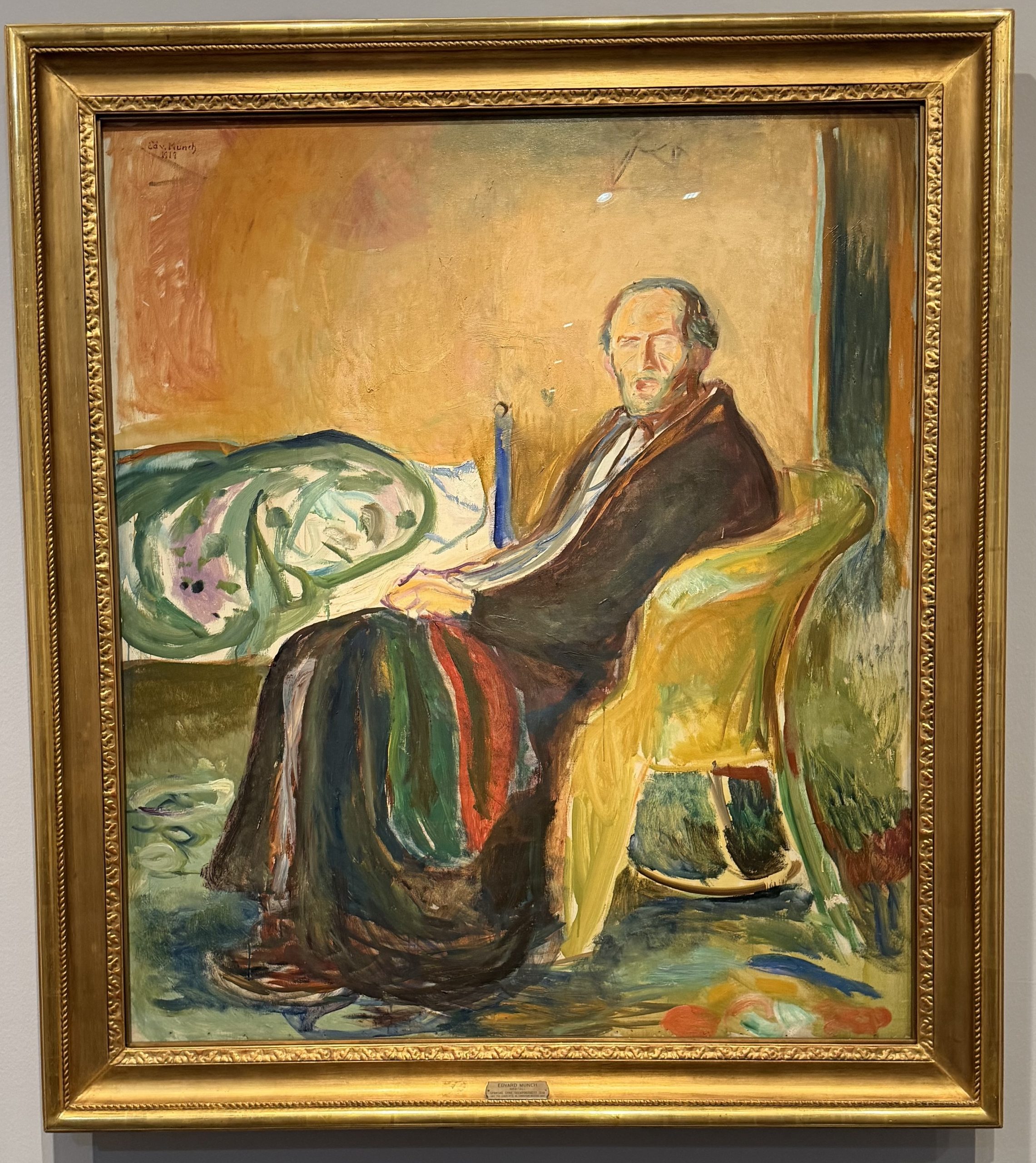
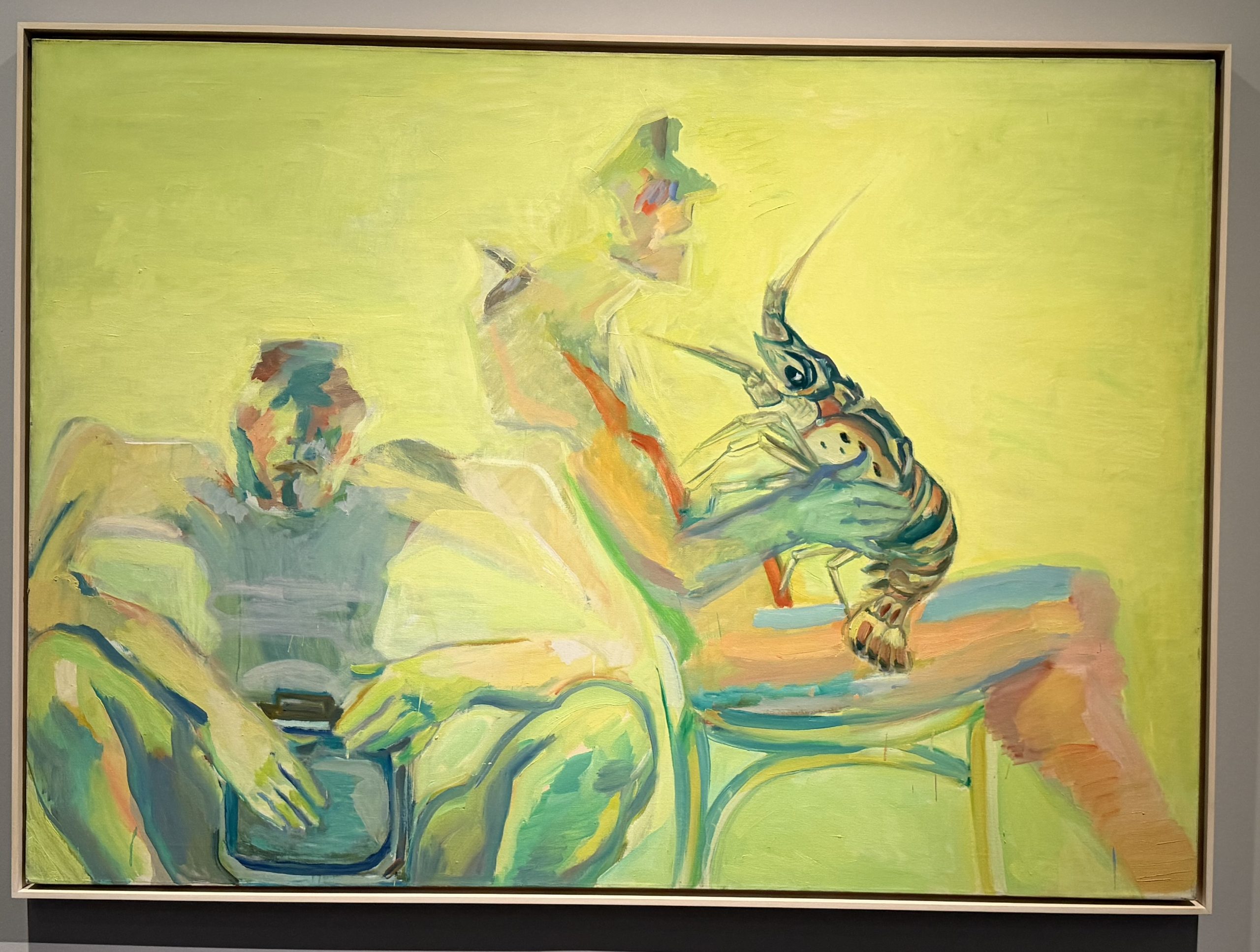
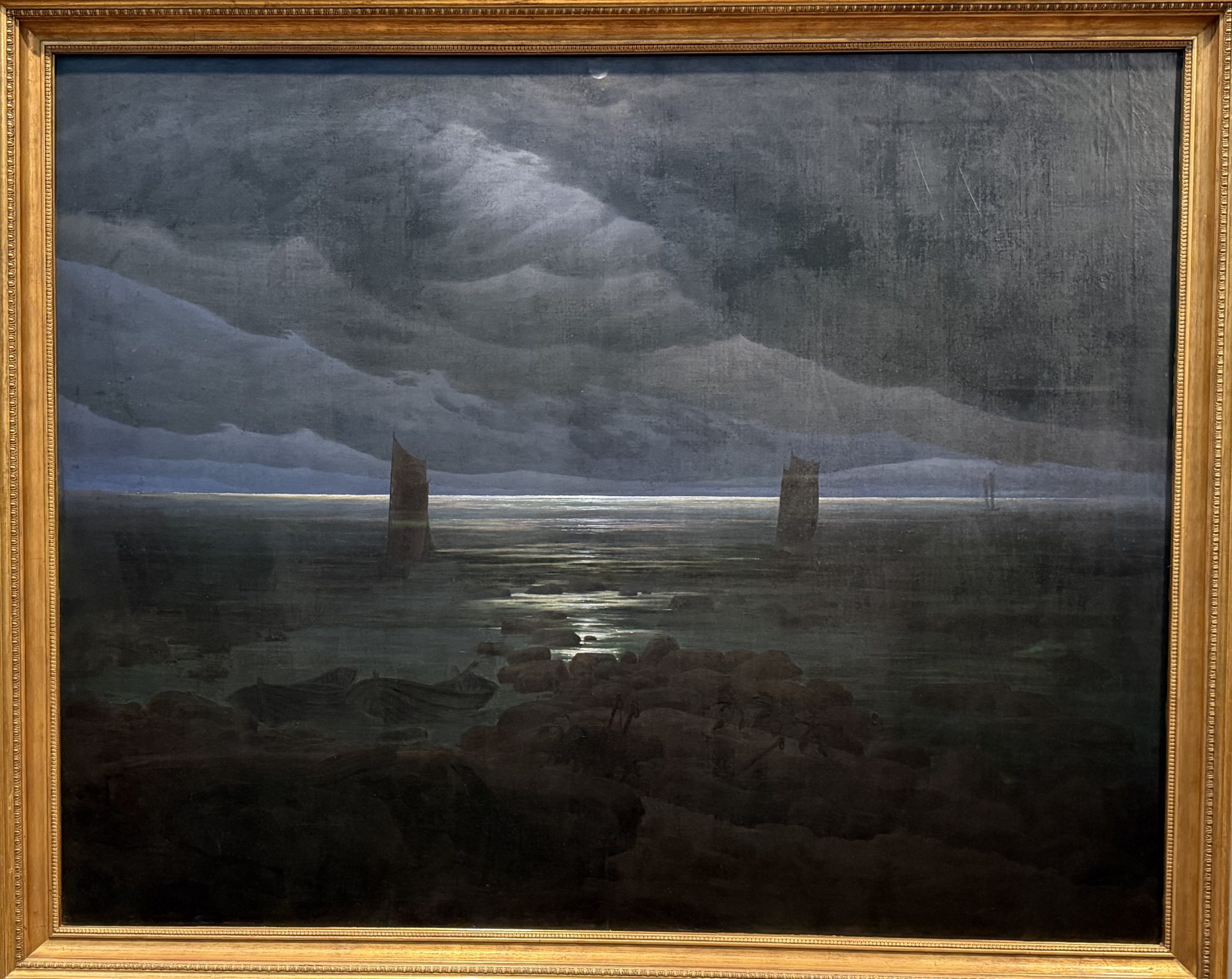
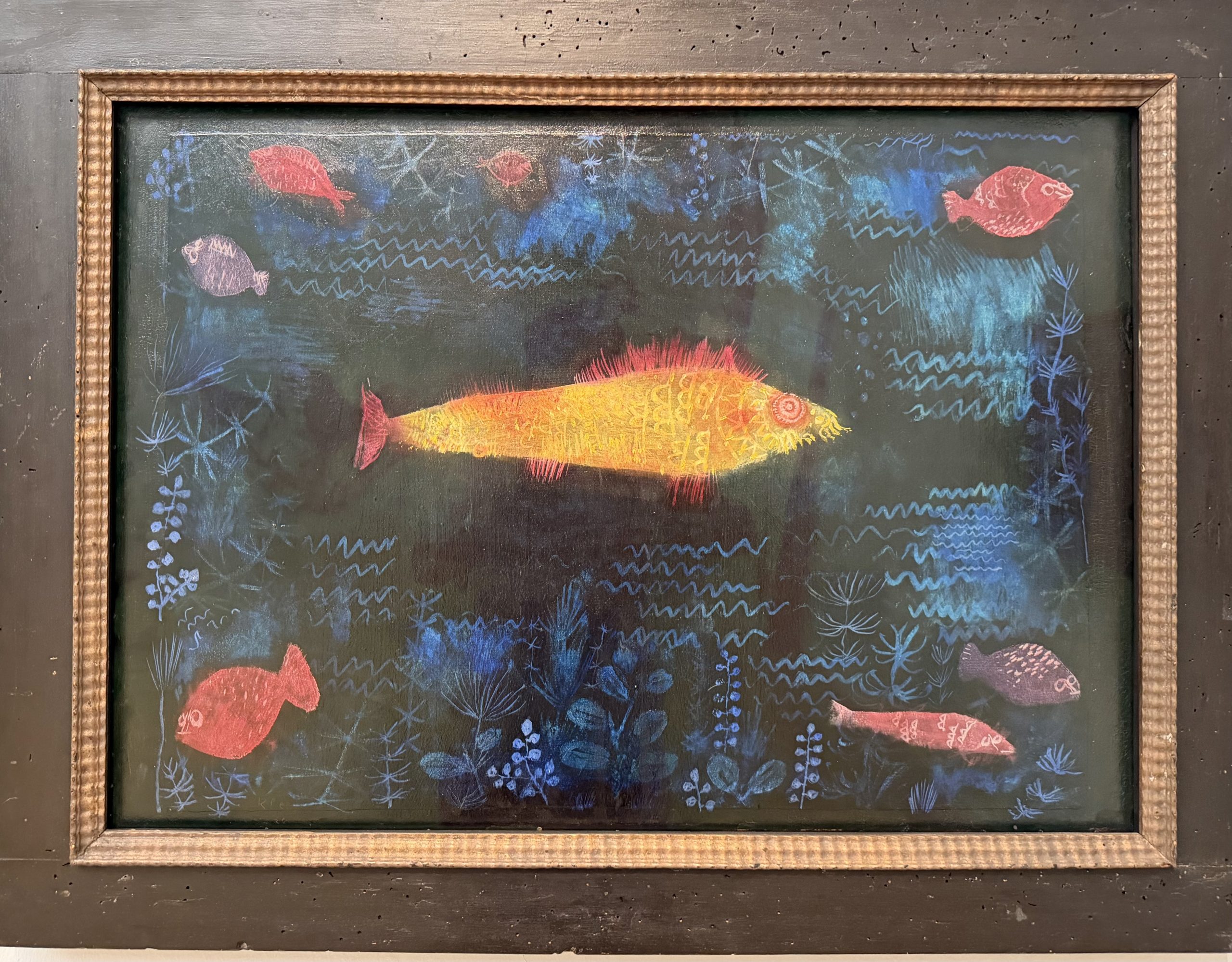
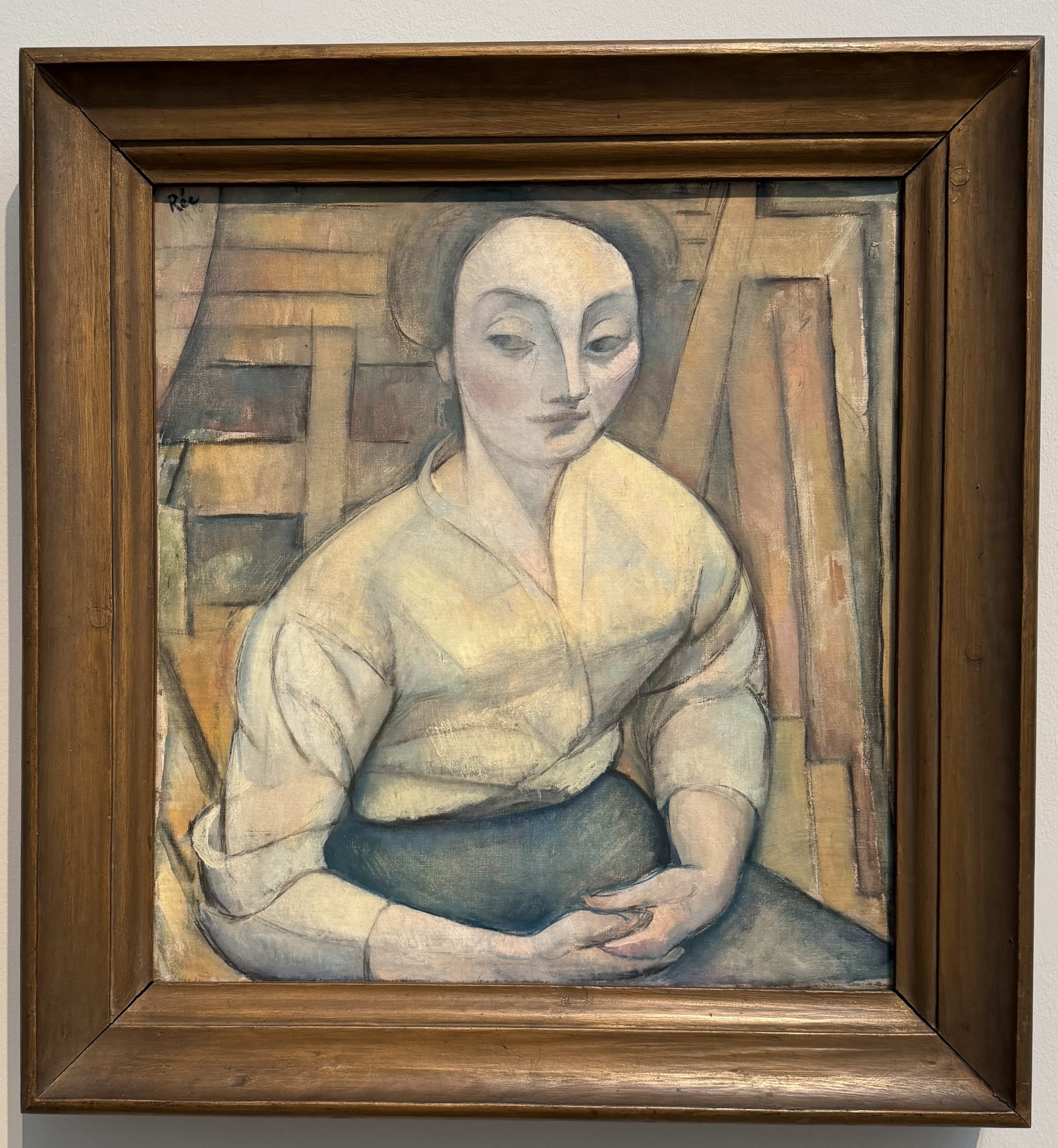
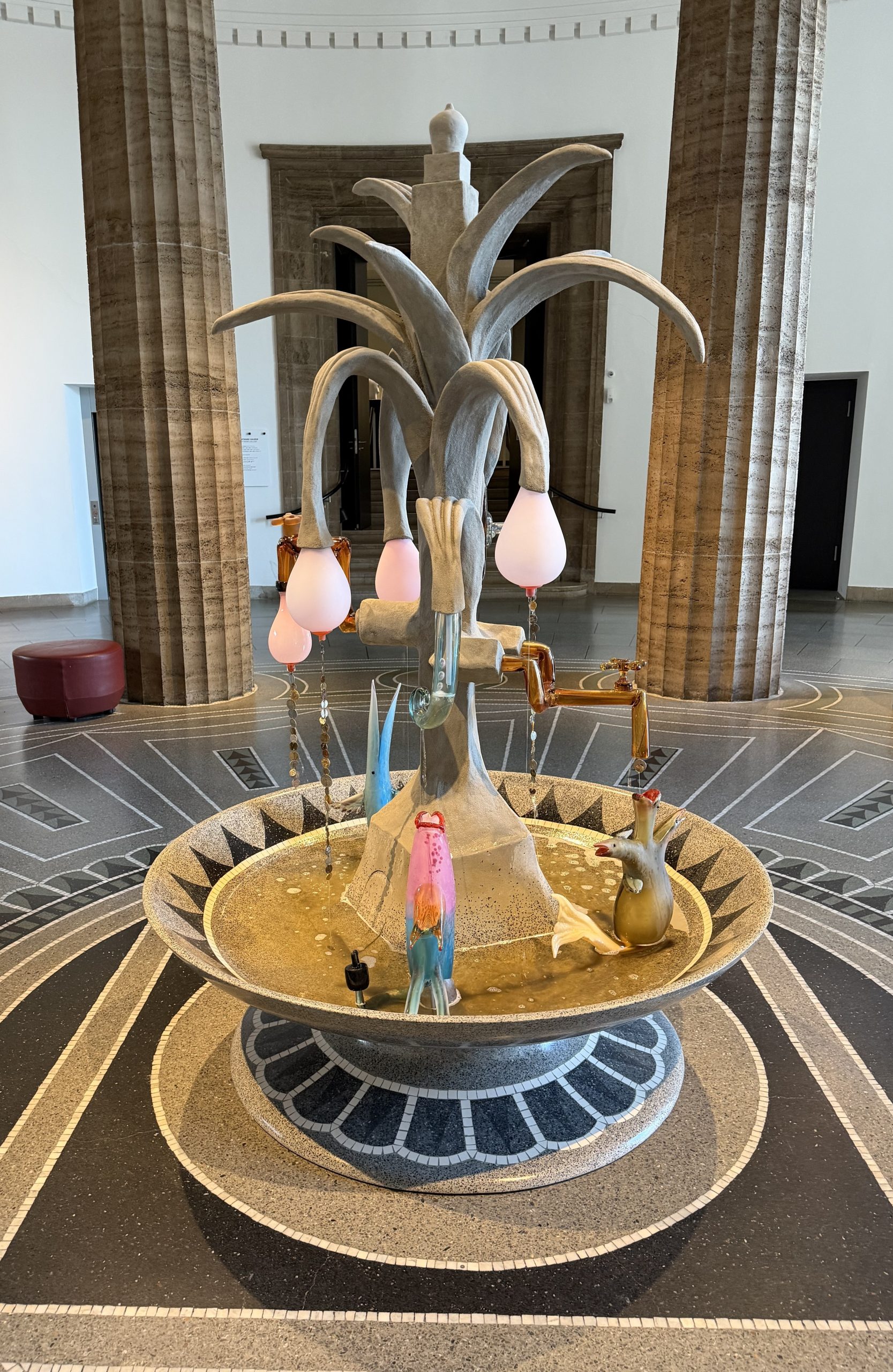
We all had fairly late breakfast, so we skipped lunch, but by about 1 pm, it was simply getting too warm to stay around the apartment. So we decided to trust the subway and the museums again to cool us down a little bit, just like we did when we were traveling. The subway cars (not the stations!) were actually a bit toasty, but once we got to our museum of the day, Hamburg’s big art museum, the Kunsthalle, we were in a very pleasantly air-conditioned environment. We started out by sitting at the museum café for almost an hour with cake and Fritz Cola (Germany’s answer to Coke) / café au lait. Then we looked at a couple of special exhibits, one that compared Edvard Munch and a much later twentieth-century female painter, Maria Lassnig from Austrial(1919-2014), whom I did not know at all, and one on contemporary, experimental photography. Then we looked for some old favorites in their permanent collection, which is comprehensive but doesn’t have much of a focus. I wanted to revisit some 19th and early 20th century works (Caspar David Friedrich and a female 20th century painter named Rée, which I discovered in the Kunsthalle a few years back with Andrea and Peter’s help). We also took a quick look at a new way of displaying the museum’s relatively small sculpture and relatively large (but boring) coin collection, but by this point, we were running out of energy, which is why we kept it short!
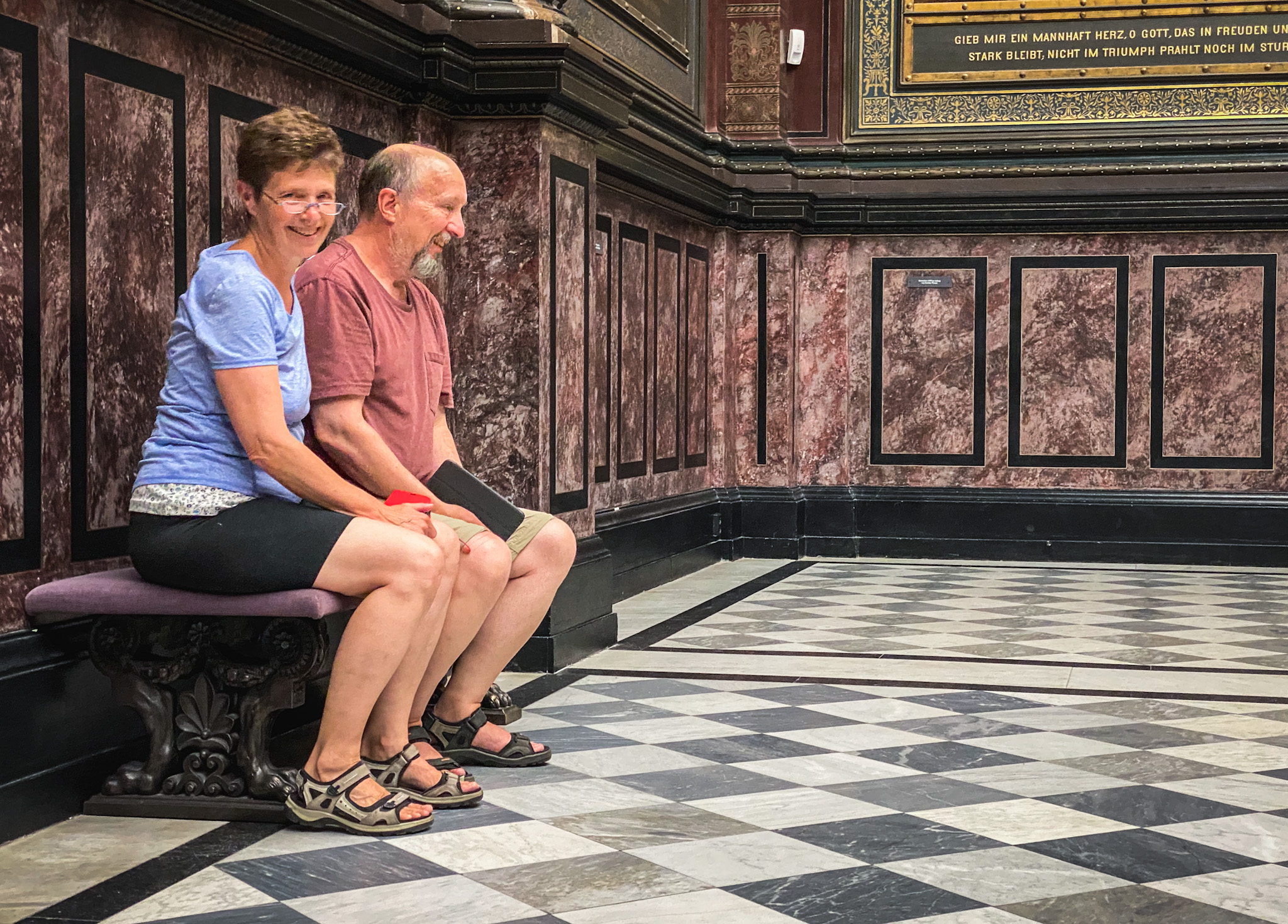
But the museum was also about to close (it was 5:45), so we headed back home. I made a quick salad while Andrea heated up some rolls and set the table, and we had a lovely German Abendbrot and also a dessert of the best supermarket ice cream the local REWE has to offer–Amerena cherry (only complaint: not enough Amerena cherries!–and a creamy sweet woodruff (Waldmeister) ice cream that Andrea, Peter, and I agree is the best Waldmeister ice cream we have ever had. Mark has no comparison since this is (as far as I know) a uniquely German flavor, and one that more often than not is horrible and simply just Green (there is a German jello that is Waldmeister flavor, and no matter what brand you buy, it is terrible). Then we did some household things (dishes, folding laundry, and unfortunately given the heat, Andrea had to do some ironing for a probationary work day tomorrow) and took showers. By nightfall, it looked like we might get more cooling thunderstorms; hopefully, the heat will break as promised.