These are mostly photos from 2019, when I spent a week in Florence retracing the steps of George Eliot and two other Victorian women who wrote about Renaissance art history, for my M.A. in art history. (Please request more photos or maps if there are specific Romola sites of interest.) Credit for our own photos goes to Mark, my spouse, who took them & geotagged them all. You can click on any image to see a larger version in a new window.
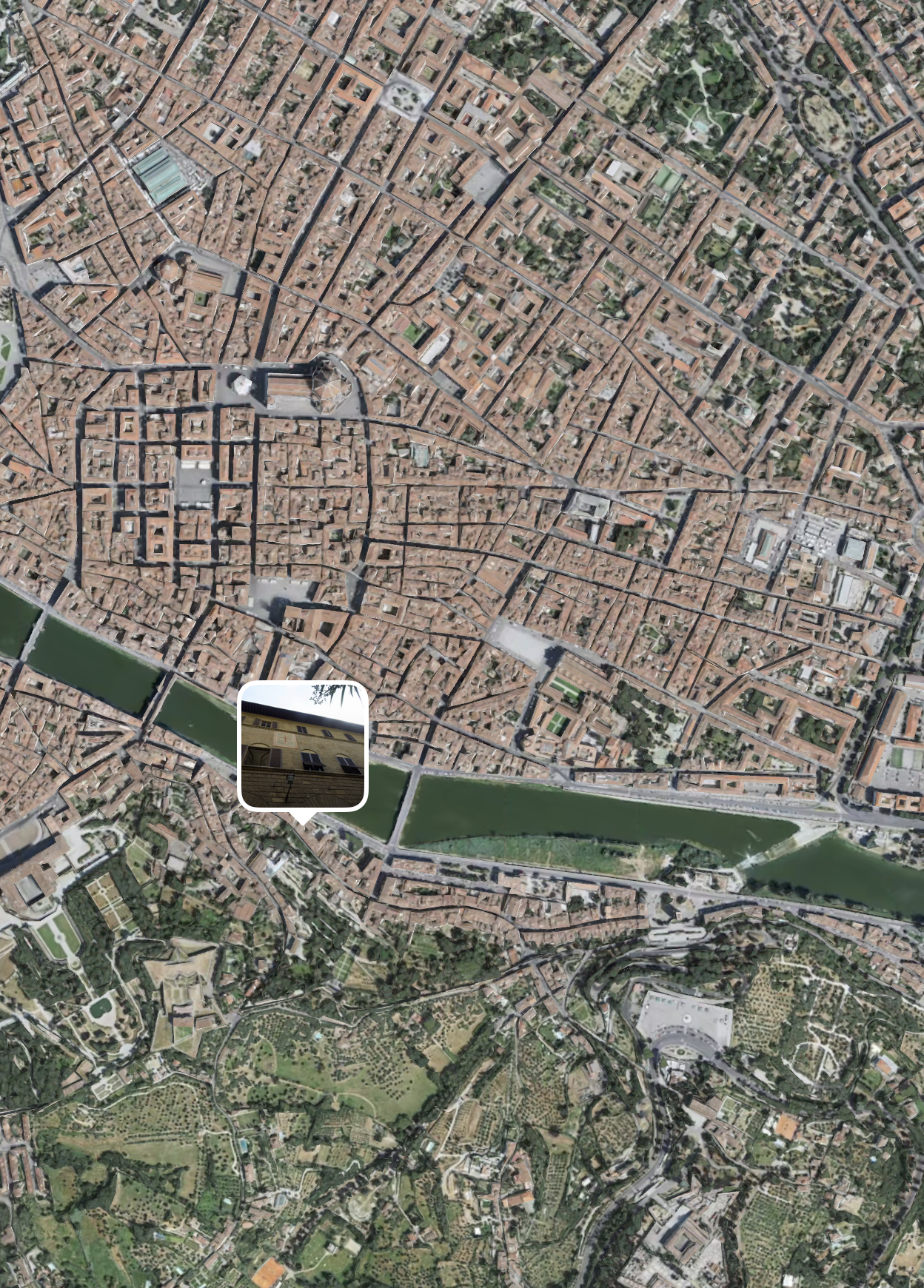
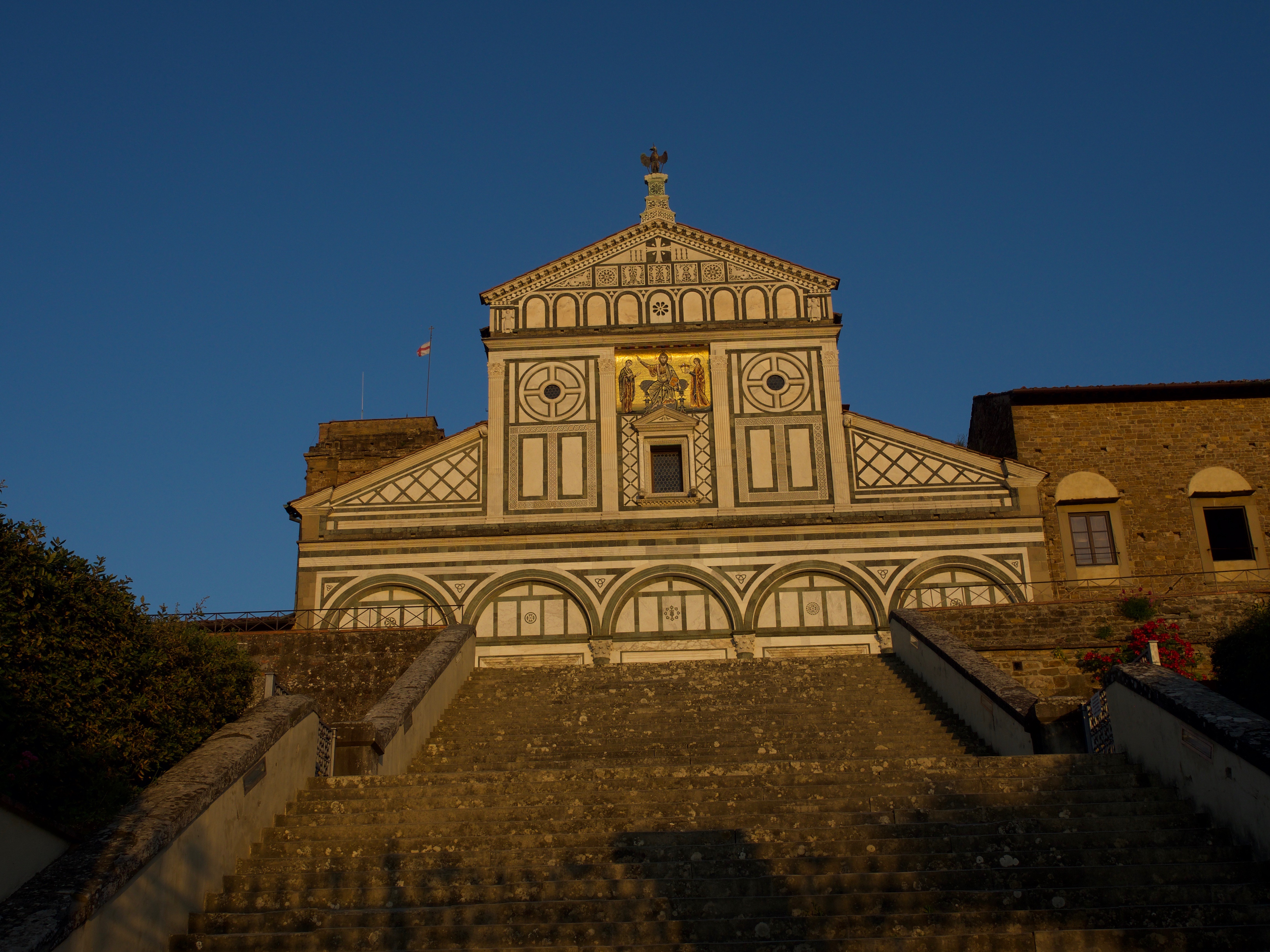
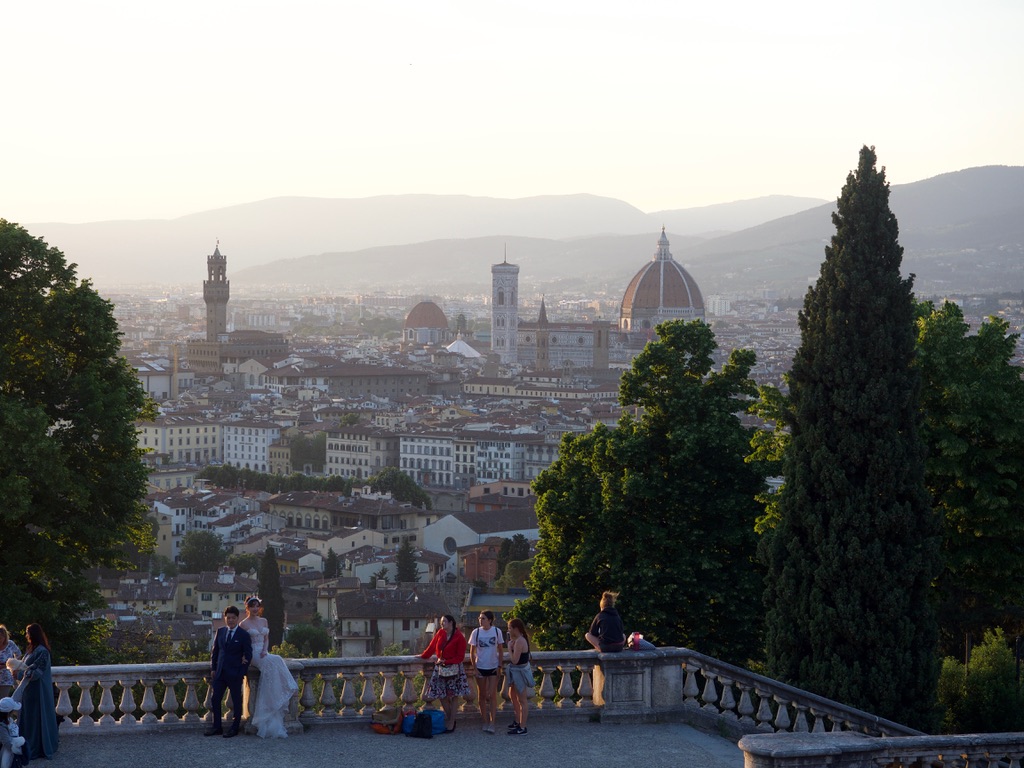
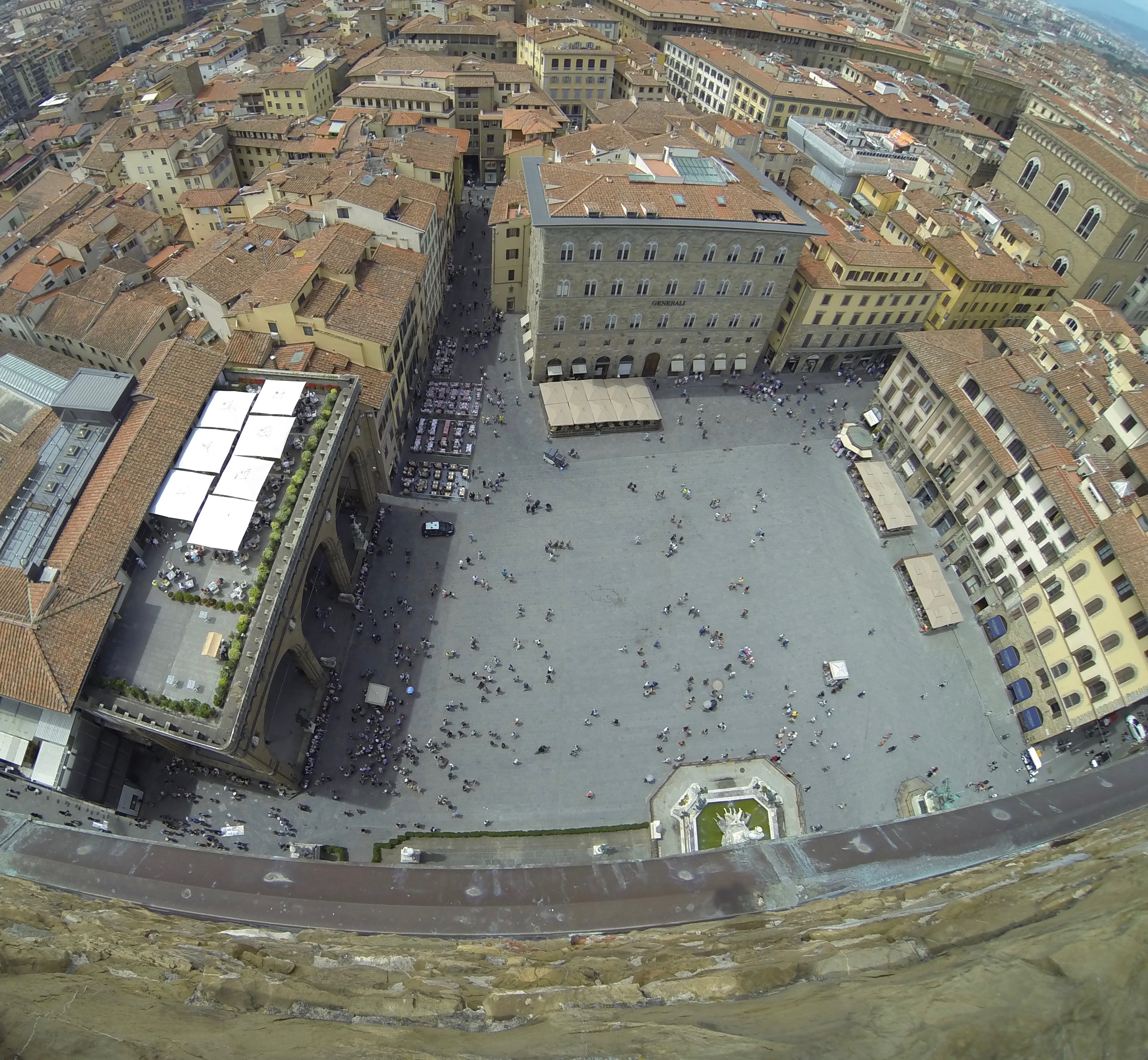
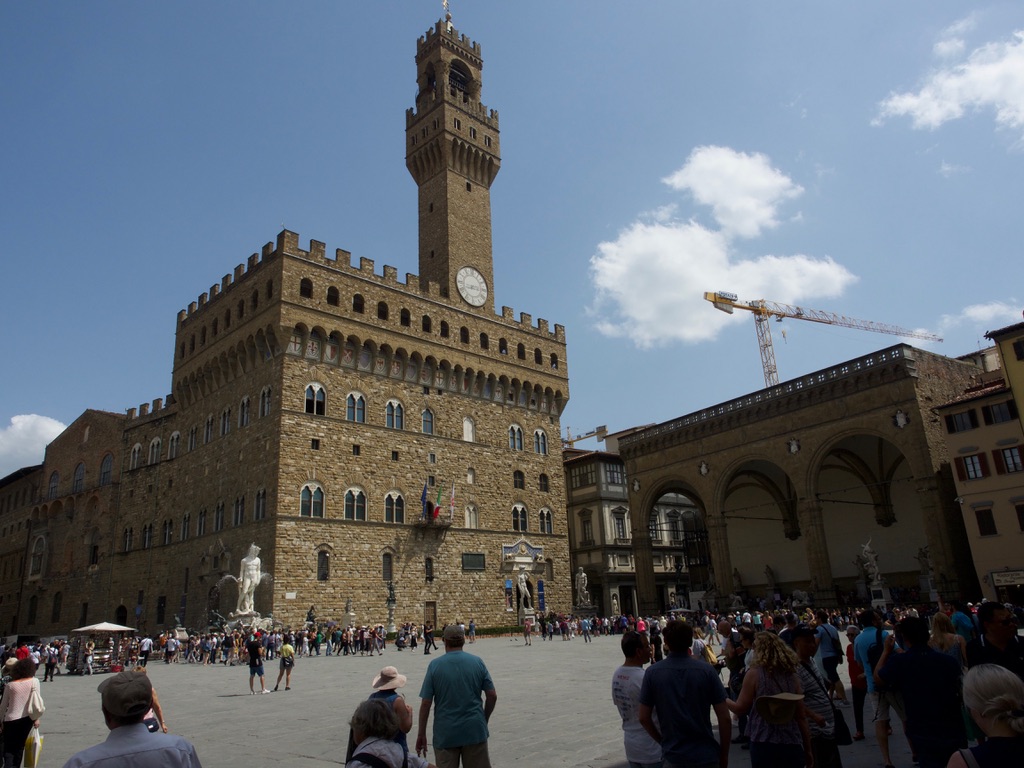
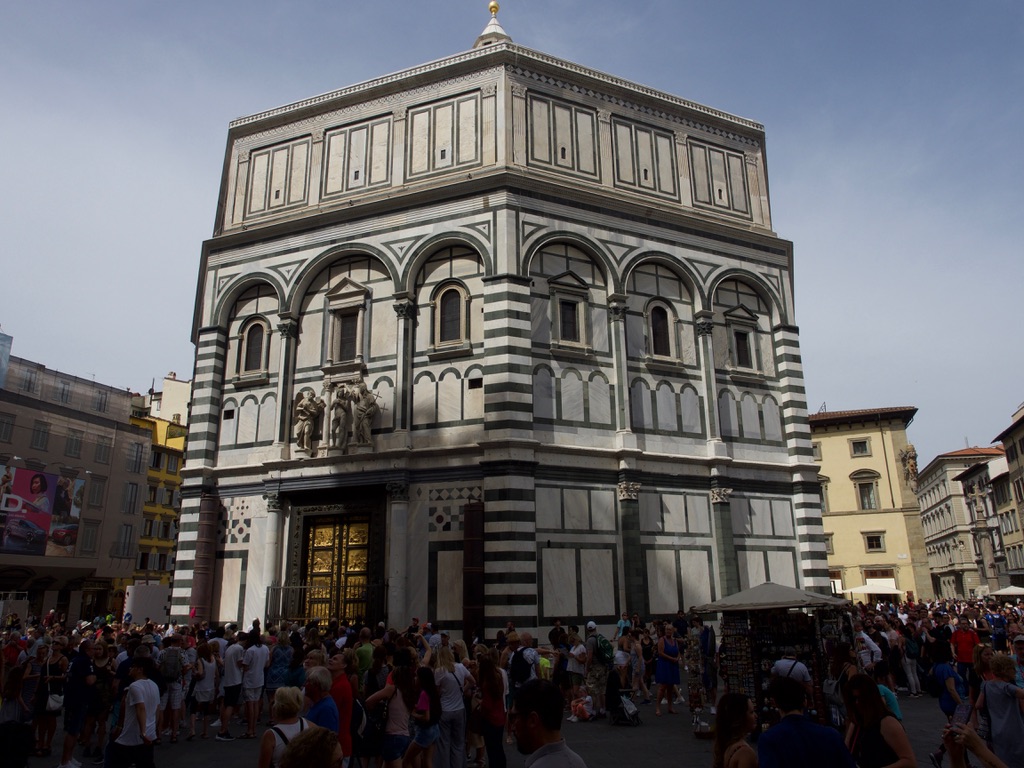
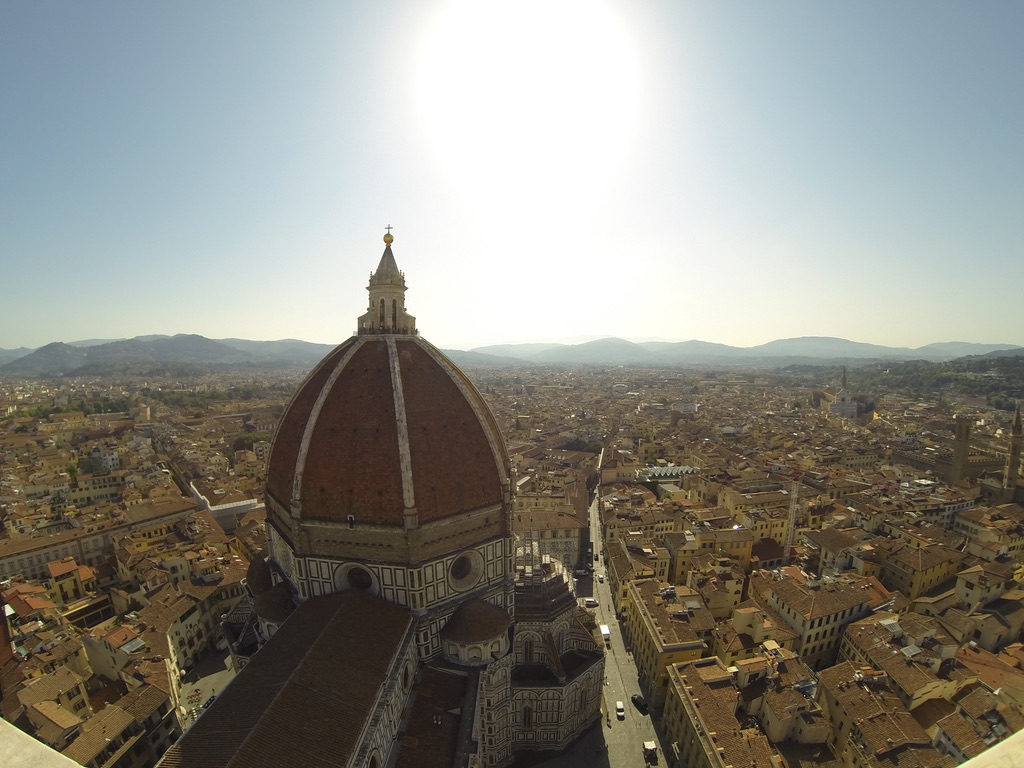
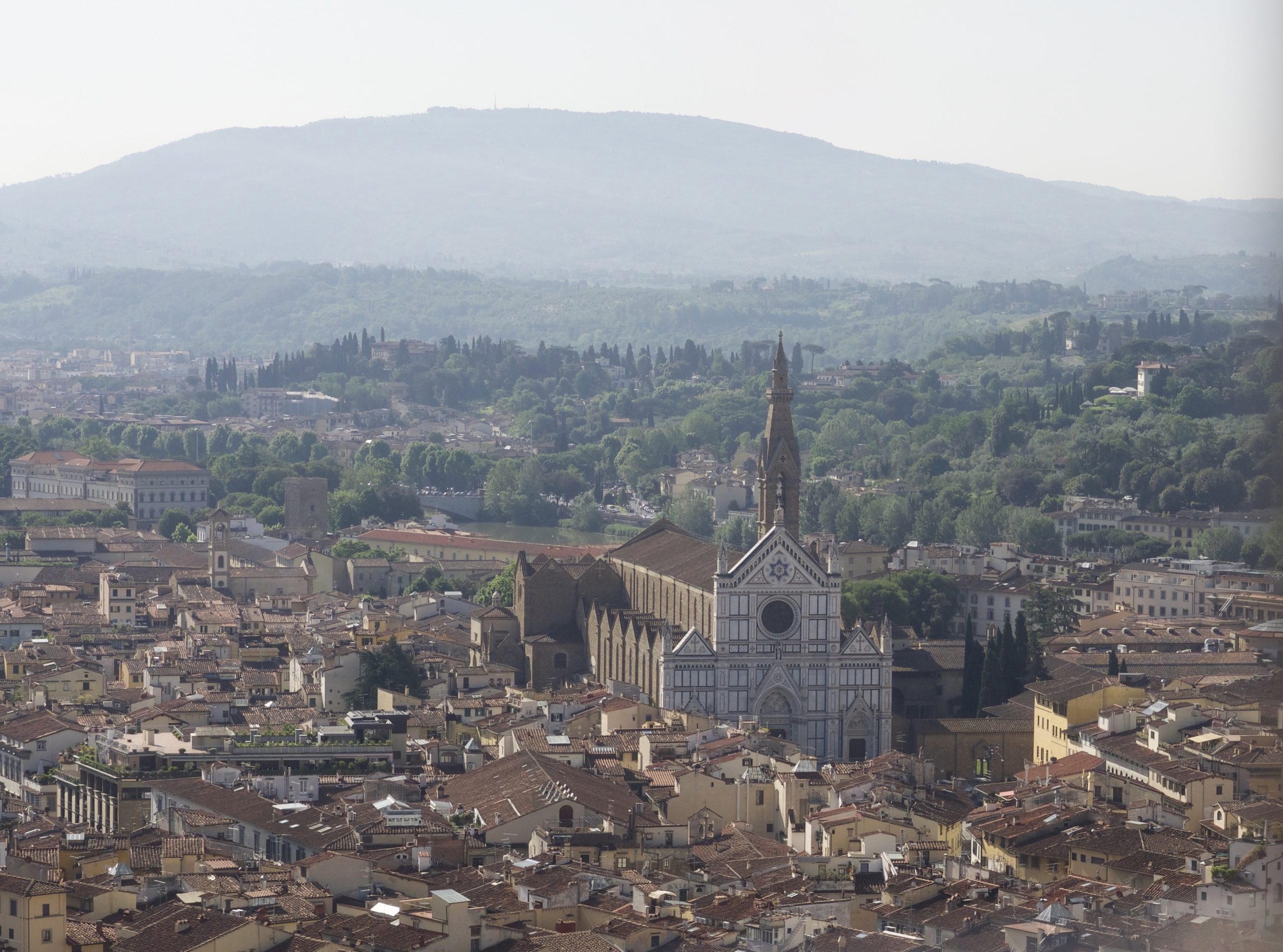
Satellite Map of old city center of Florence, with the approximate site of the Bardi home in the Via dei Bardi, on the other side of the Arno (Oltrarno), marked. The L shaped plaza is the Piazza della Signoria; straight north from that is the Duomo with the white octagonal baptistery on the west. Even further straight north is San Marco, behind the smaller rectangular plaza with the four dots on it. The other really large plaza to the West is in front of Santa Croce, where Romola gets betrothed. San Miniato al Monte on the other side of the Arno, from where the Shade of Lorenzo de ‘Medici sees Florence mostly unchanged in the 1860s (in the Proem)The view of Florence from San Miniato al Monte, with the Duomo and the Campanile on the right and the tower of the Palazzo Vecchio on the left. And with tourists (2019).The Piazza della Signoria with the Loggia dei ‘Lanzi (right) as seen from the tower of the Palazzo Vecchio, the “old palace” where the Senate met, the politically most significant public space in Florence. Before 1495, the only recorded sculpture in this space was Donatello’s version of the Marzocco, the Lion of Florence, which is mentioned several times in Romola with reference to the plaza. The Palazzo Vecchio (built 1299) as seen across the Piazza della Signoria. Many scenes in Romola are set here.The Baptistry (San Giovanni), with the famous doors by Ghiberti that Tito comments on (ahistorically) in Chapter 3, right next to… … the Florence Cathedral (Duoma, S. Maria del Fiore) as seen from Giotto’s Bell Tower (Campanile)Santa Croce (where Romola is betrothed), as seen from the Duomo, with the Arno behind it.
The Monastery of San Marco
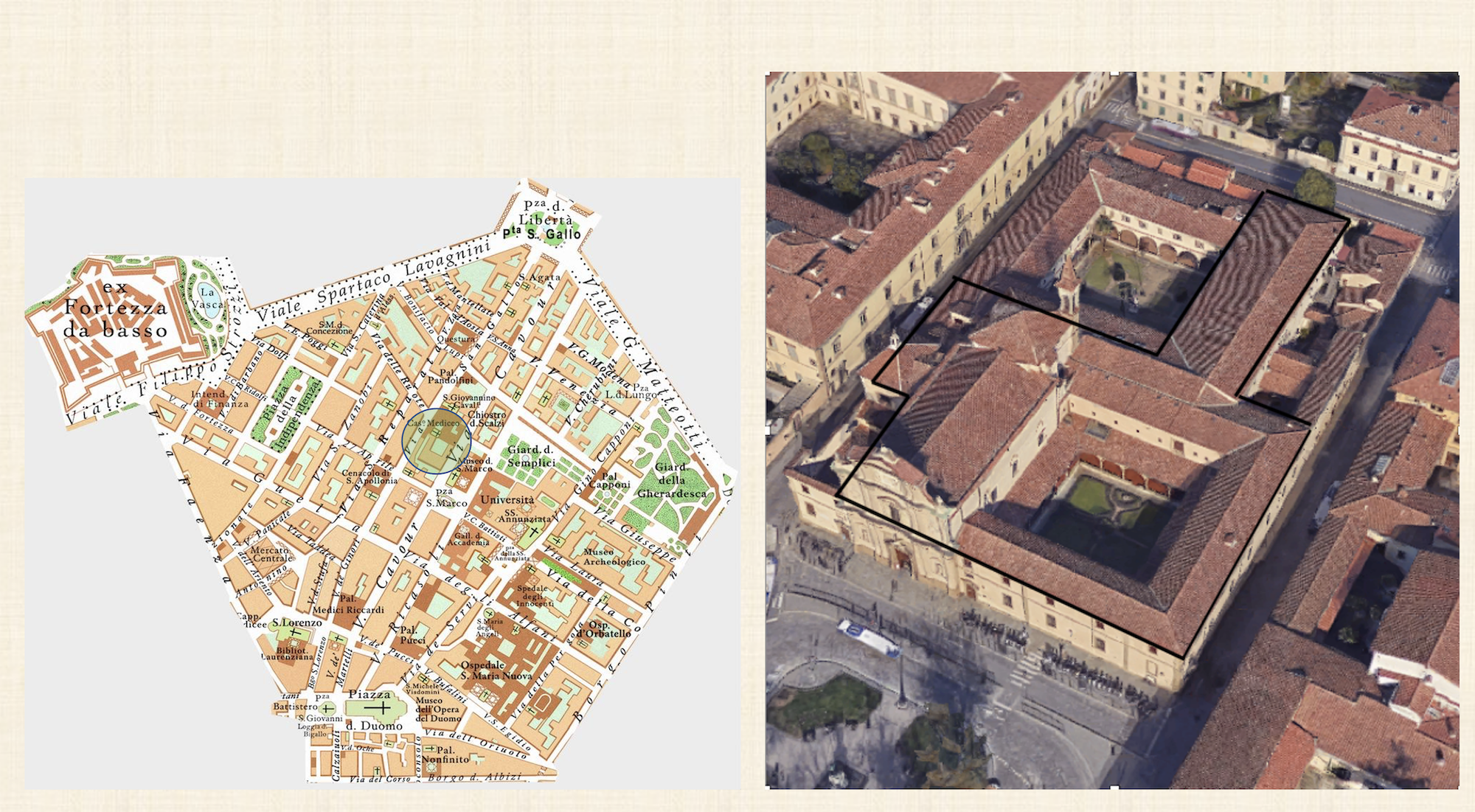
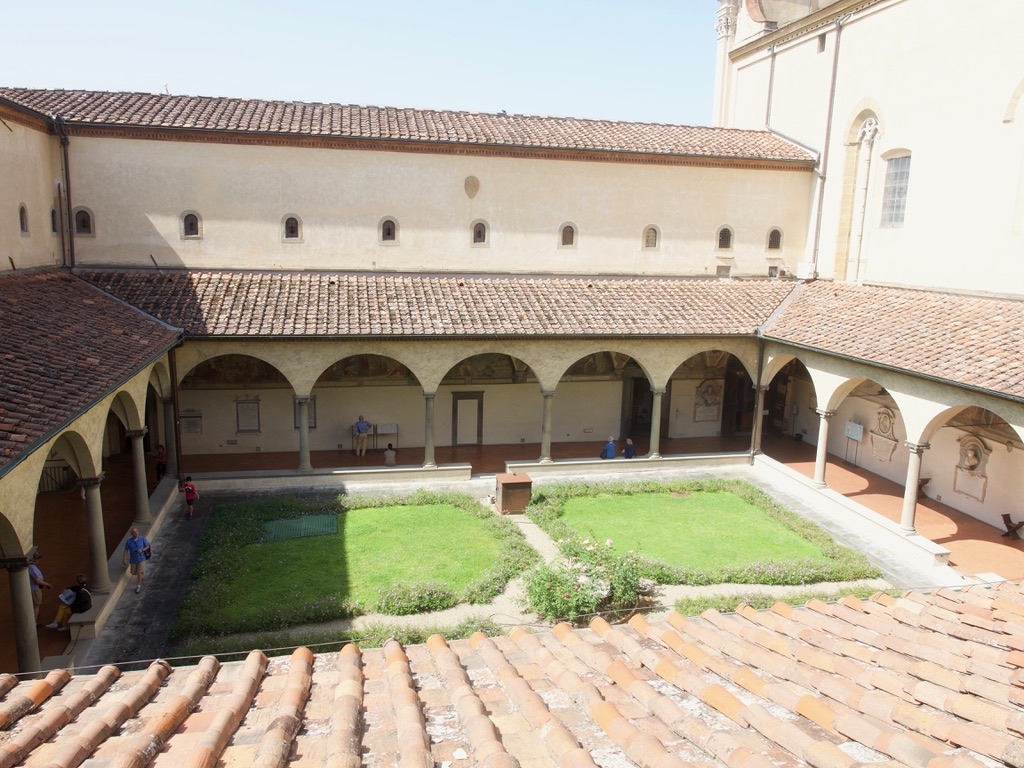
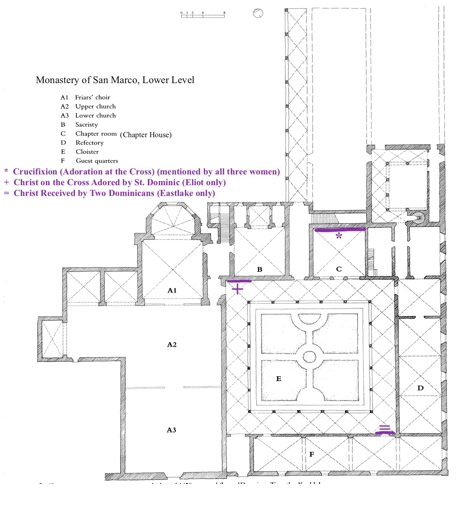
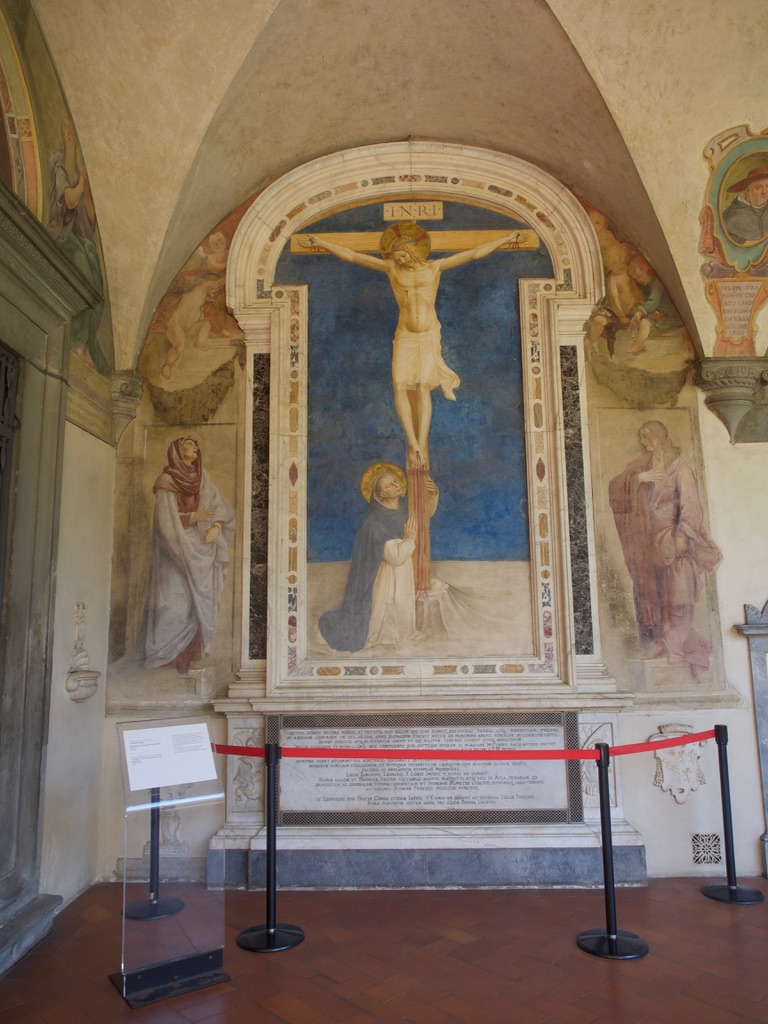
Location w/ relation to the Duomo (bottom left of map clipping) and bird’s eye view today. The Dominican monastery of San Marco (where Savonarola lives and where Dino / Fra Luca dies). View from the upper floor, which was off limits to women until 1869–as Eliot notes in her “Recollections of Italy” and in Romola at the beginning of Chapter 15. Plan of the first floor of San Marco, ca 1450, with Chapterhouse C with Crucifixion fresco by Fra Angelico marked as *. Original drawing by Timothy Koehle for Hood, Fra Angelico at San Marco, p. 3, with my purple additions.
Eliot in her “Recollections of Italy, 1860” (Journals 356-7):
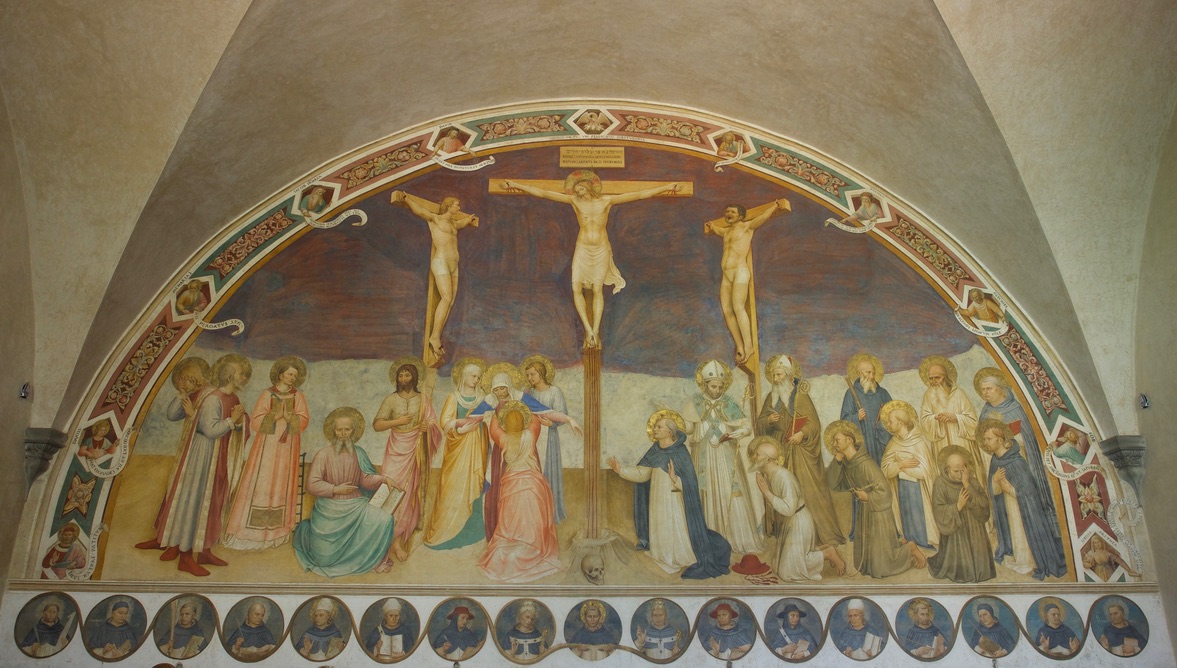
In the Chapter-house, now used as a guard room, is a large crucifixion, with the inimitable group of the fainting mother, upheld by St John and the younger Mary, and clasped round by the kneeling Magdalen. The group of adoring, sorrowing Saints on the right hand are admirable for earnest truthfulness of representation. The Christ in this fresco is not good, but there is a deeply impressive original Crucified Christ outside in the Cloisters: St. Dominick is clasping the cross and looking upward at the agonized Saviour, whose real pale, calmly enduring face is quite unlike any other Christ I have seen.
“Pale faces”: Fra Angelico’s Crucifixion in the Chapter House of San Marco, where Romola visits Dino / Fra Luca on his deathbed. The crucified Christ with Saint Dominic in the cloisters, admired by Eliot
Piero di Cosimo
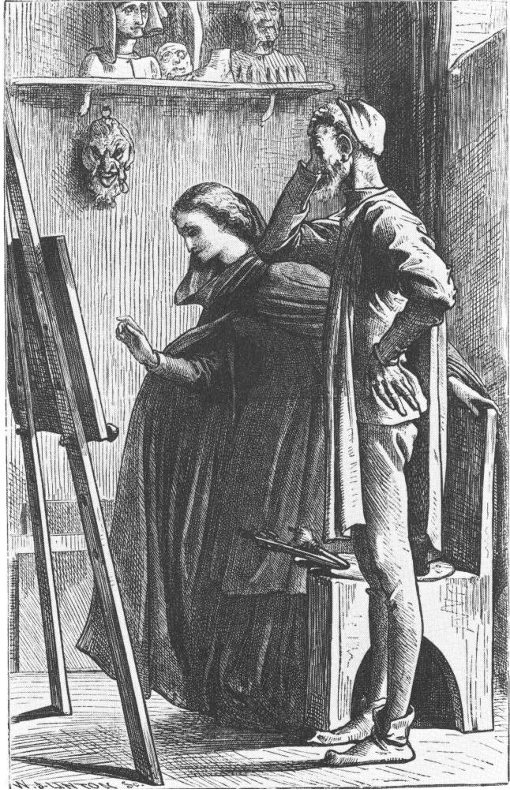
A Renaissance painter as imagined by the Victorians: Frederic Leighton. “The Painted Record,” 1862. Wood Engraving. To accompany Chapter 28 in the serialized publication of Romola in Cornhill Magazine. Credit: The Victorian Web.
Summary: Real painter (ca. 1462-ca. 1522), but with fictional studio location, fictional works, and anachronistic views on art. TL/DR from my research on Piero:
Eliot’s fictionalized portrait of Piero di Cosimo, a minor Florentine painter of the early Renaissance, is loosely based on Vasari‘s 1568 Lives of the Most Eminent Painters, Sculptors, and Architects, trans. Gaston du C. de Vere. He has a brief chapter on Piero emphasizing the strangeness of his art and his life (of which he only knew of by hearsay, likely deducing Piero’s conduct from the paintings he had seen). The first modern art critic to pay any attention to Piero was the connoisseur Giovanni Morelli in the 1870s, followed by the formalist art historian Robert Fry and the more historically oriented Erwin Panofsky in the early 20th century. Today, we know about ca. 50 paintings by him, with 18 that have mythological subjects from antiquity; the others are mostly religiously themed. A major exhibition at the National Gallery in DC and the Uffizi in Florence in 2015 was one of the few 21st century attempts to devote attention to Piero, spearheded by Dennis Geronimus, an art historian at NYU.
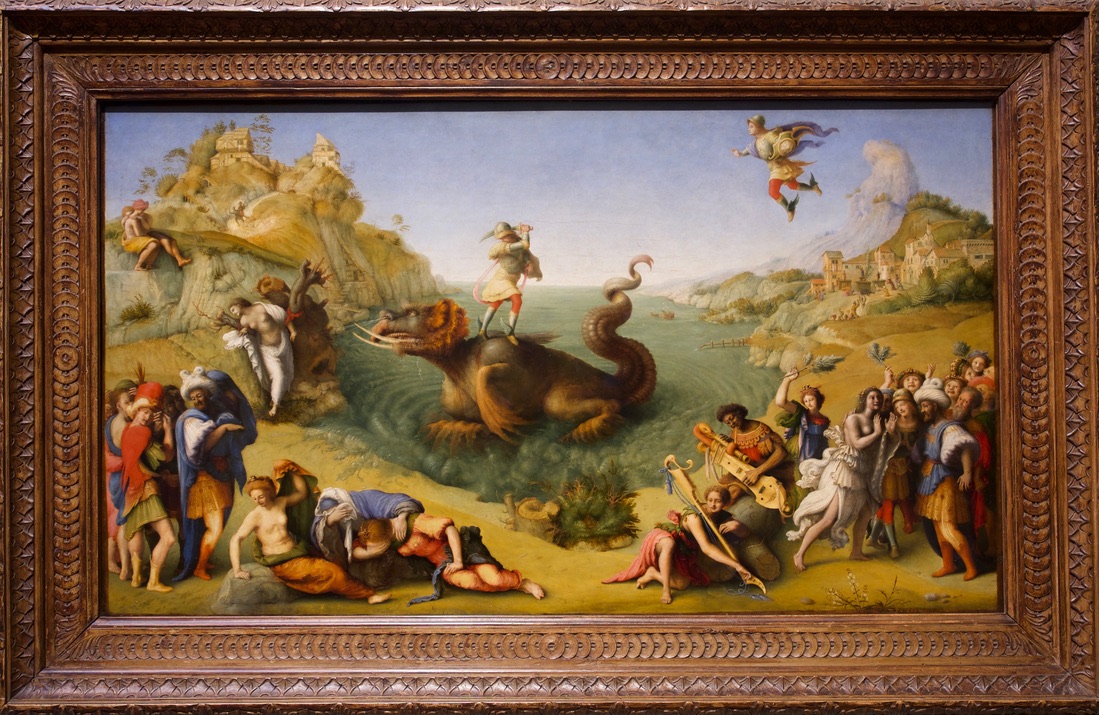
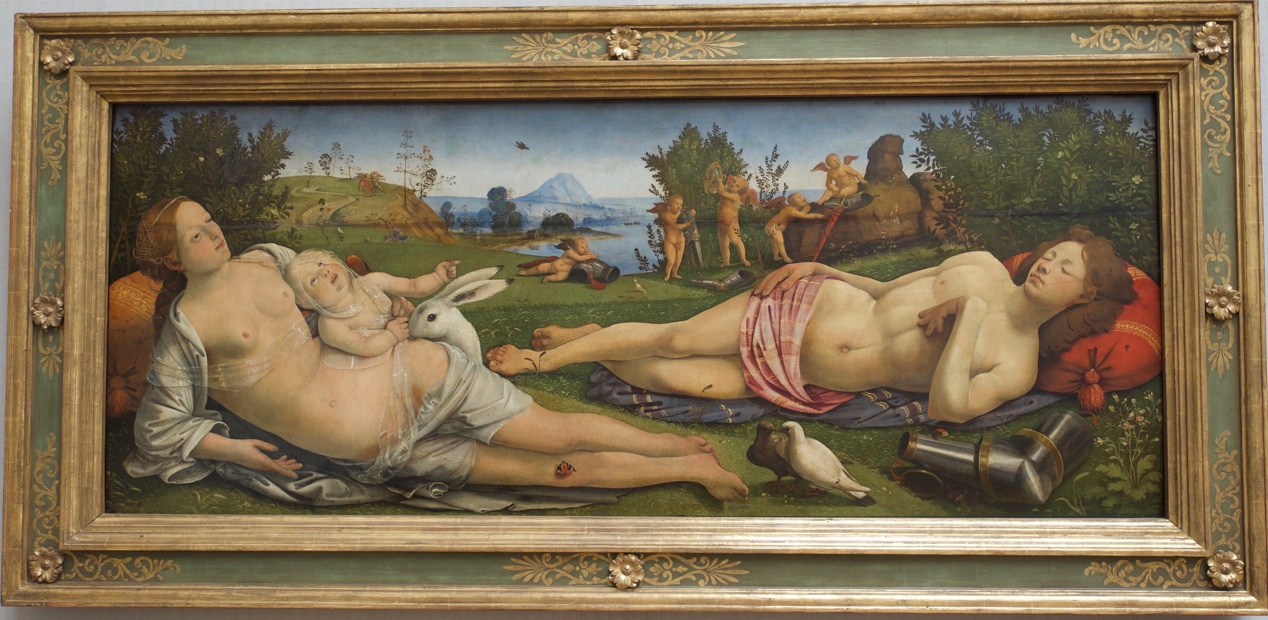
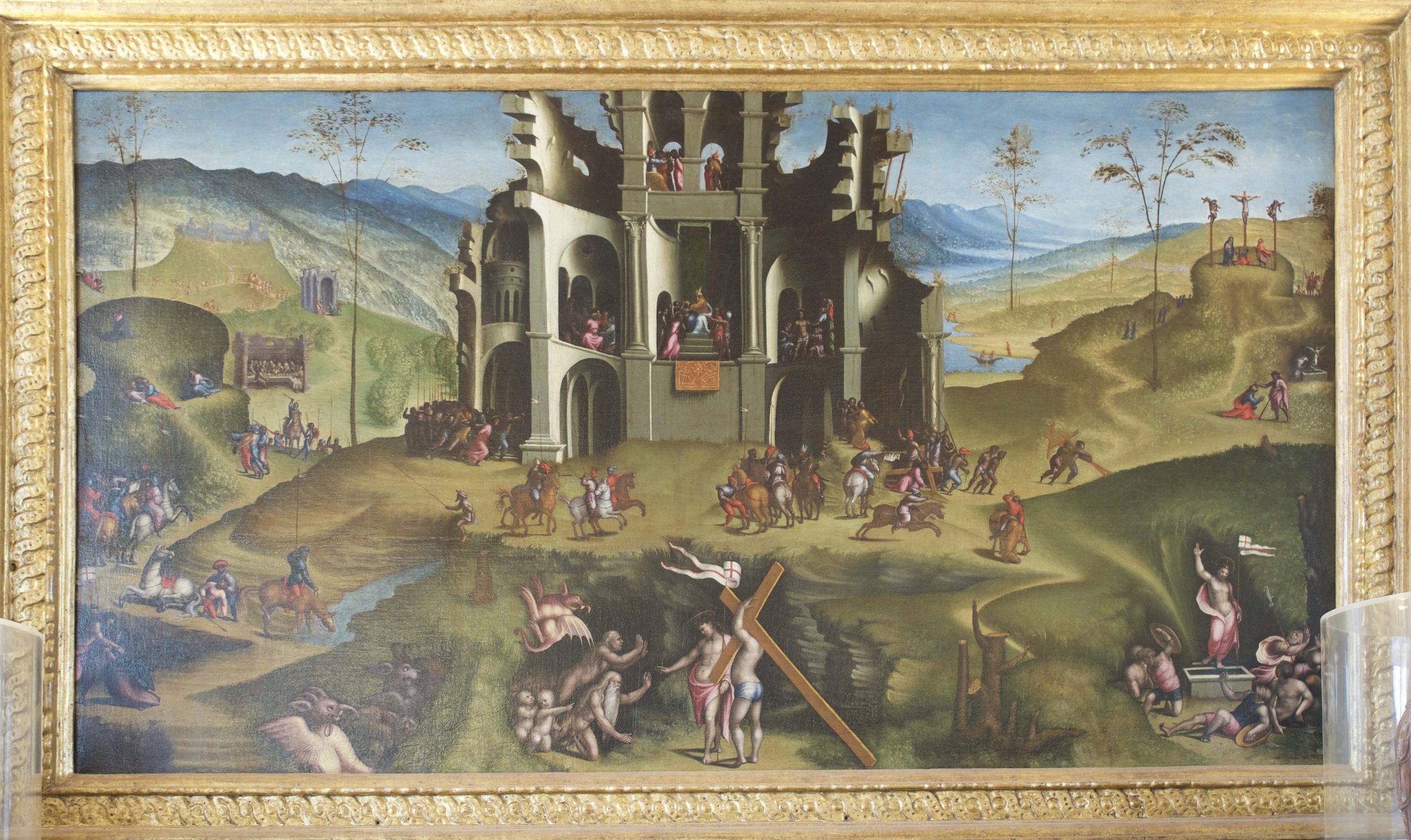
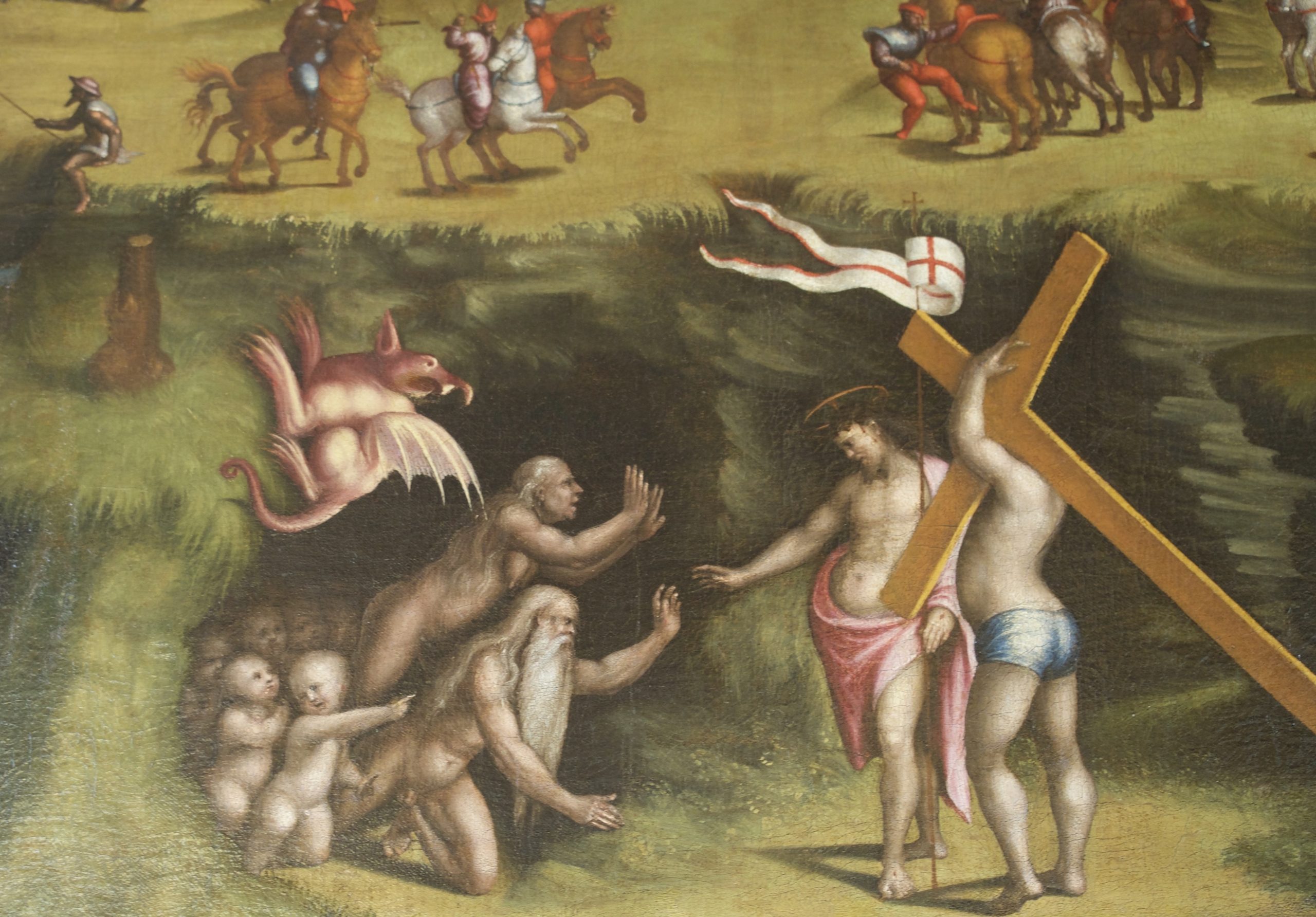
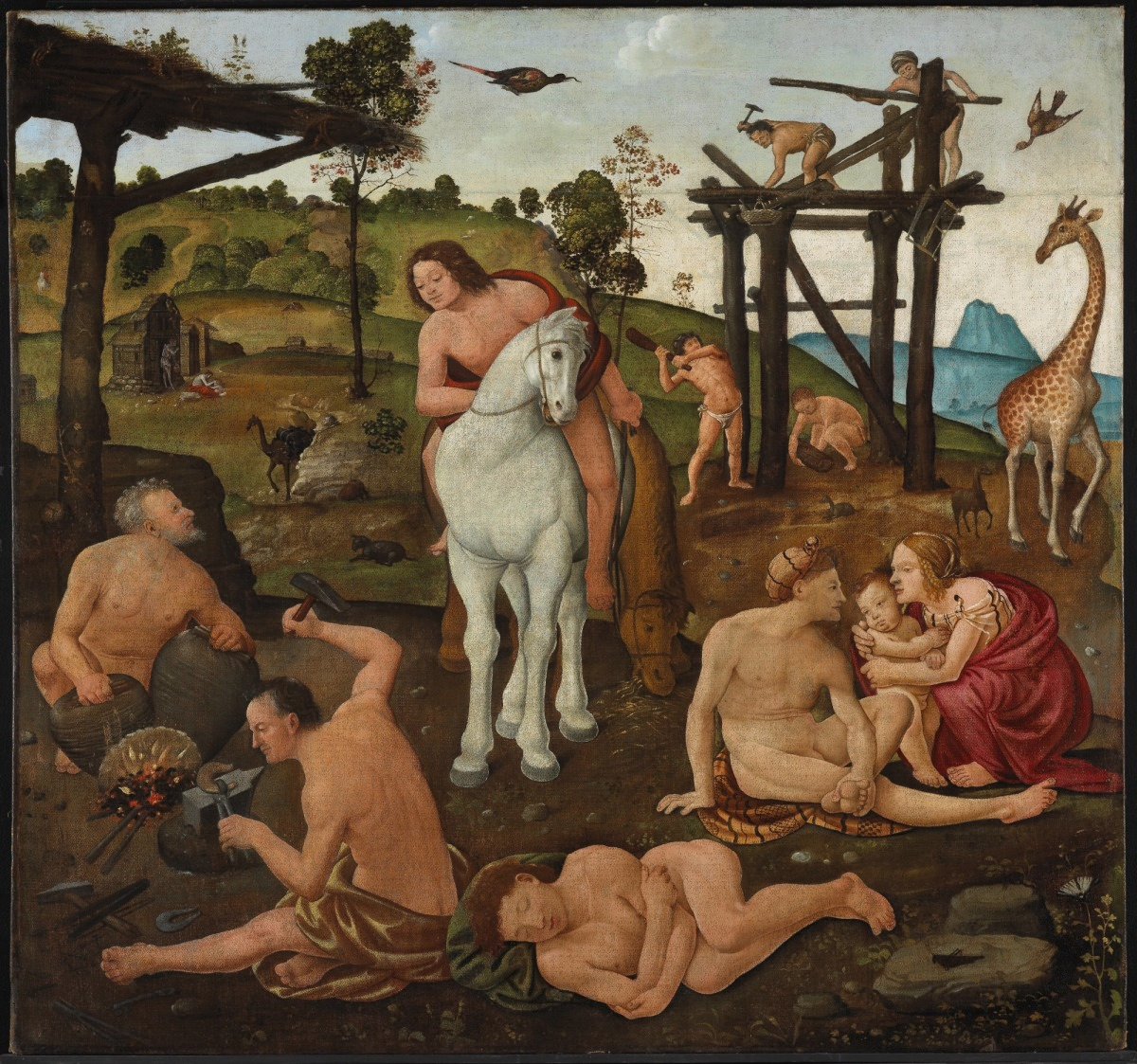
Piero di Cosimo, Perseus Freeing Andromeda, ca. 1510-1515, Uffizi Galleries. This painting was already on display in the Uffizi by 1859, and it is the most likely one of all his paintings to have been seen by Eliot. The monster is the BEST.The only painting by Piero mentioned in Romola that actually exists: Venus, Mars, and Cupid (ca. 1505) which she may have seen in Berlin in 1855 or 1858 (but there is no proof she did). Staatliche Museen zu Berlin. Piero di Cosimo, The Passion of Christ, now on display in the Palazzo Vecchio. It is not clear whether this was displayed anywhere in Florence in the 19th century, or whether Eliot saw it (or any other works by Piero) in the original. Illustrations of his pieces were rarely included in guidebooks, because he was such a minor painter.Detail from Piero’s Passion with the funky little creature that would have contributed to his reputation as a painter of the fantastical and grotesque. Piero di Cosimo, Vulcan and Aeolus, ca. 1490. National Gallery of Canada. Not my photo! https://www.gallery.ca/collection/artwork/vulcan-and-aeolus. It is extremely unlikely that Eliot saw this, but ask me about that GIRAFFE, which may have been drawn from life, because it really wandered around Florence when the Medici started their zoo.
Any other visuals needed? The Mercato area (where Tito first meets Tessa) is so different today that it makes little sense to include an image of what it looks like in the 21st century. Most other main sites are relatively unchanged since the 19th century and some since the 15th.