Today was our last full day in Prague, and also our hottest so far. Czechia is under an “orange” heat warning and as of tomorrow will be under a “red” warning, so the temperatures will still be rising, but the 95 F / 35 C today was plenty hot (elsewhere, it is even hotter, but the weather pattern is supposed to break Sunday night, thank goodness. There are reports of deaths from Spain and France, and a big music festival in France has prohibited alcohol consumption to curb the risk of heat strokes and other heat-related issues.) We approached the issue as we have in the past few days: exploring early in the day, staying on the shady side of streets, and using public transportation for longer stretches so that the walks don’t become too much. Today, that meant getting more cheap 24-hour tickets for the three of us who need them (although I made a mistake at the ticket machine and ALSO got three full-price tickets, and I am very mad at myself; we cannot return them but we can give them away and will try to do that. I have to keep telling myself that it was LESS to get the wrong tickets than any of our café meals).
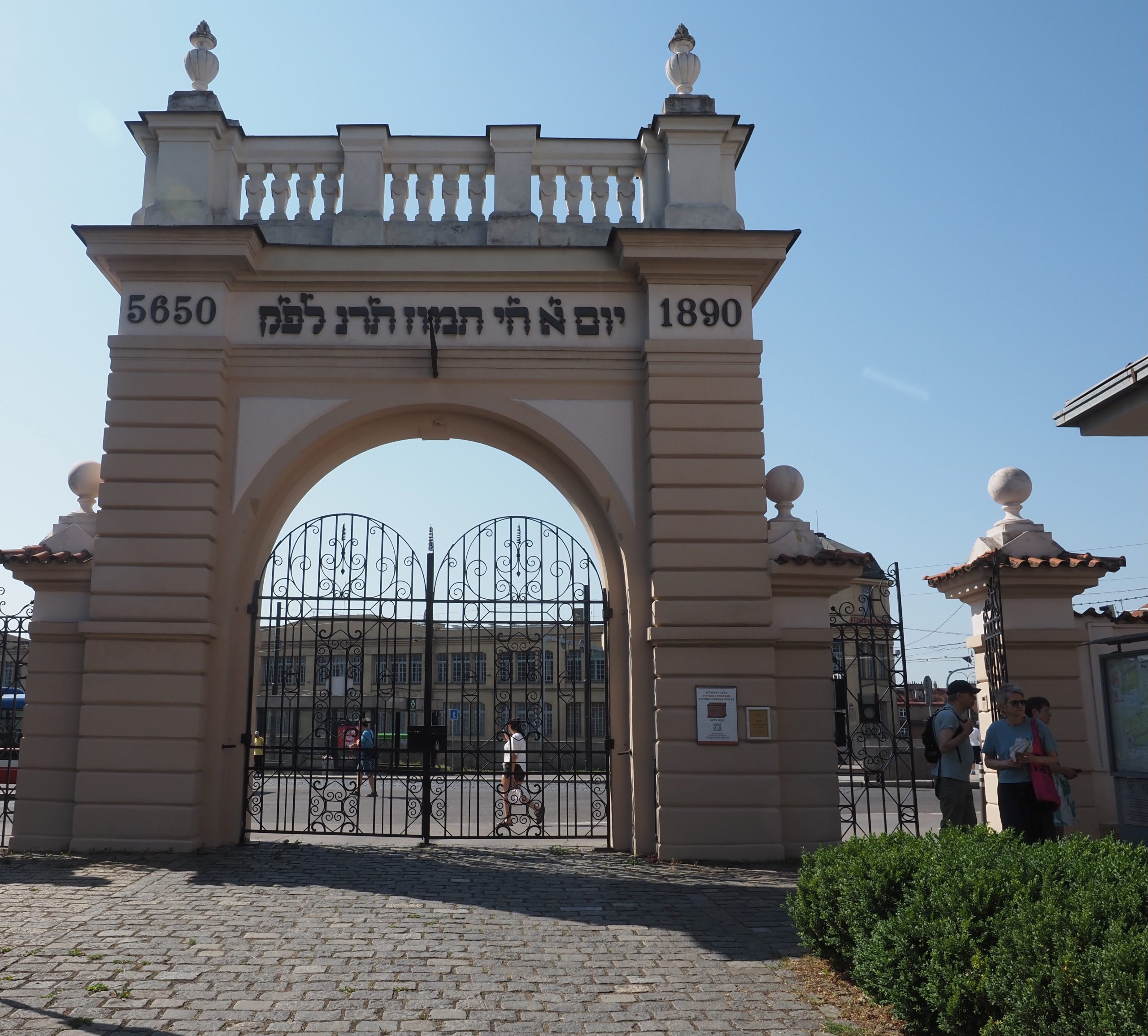
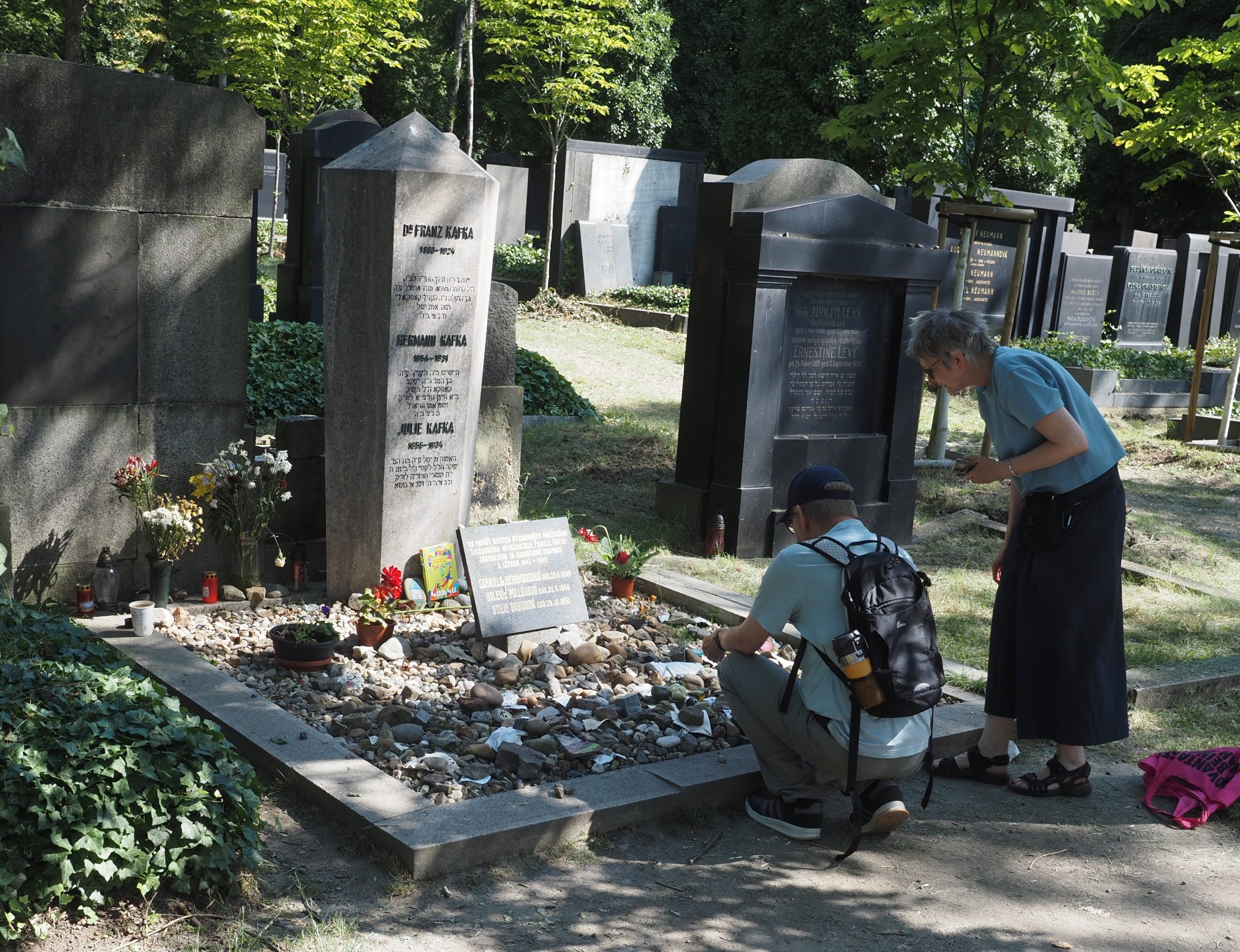
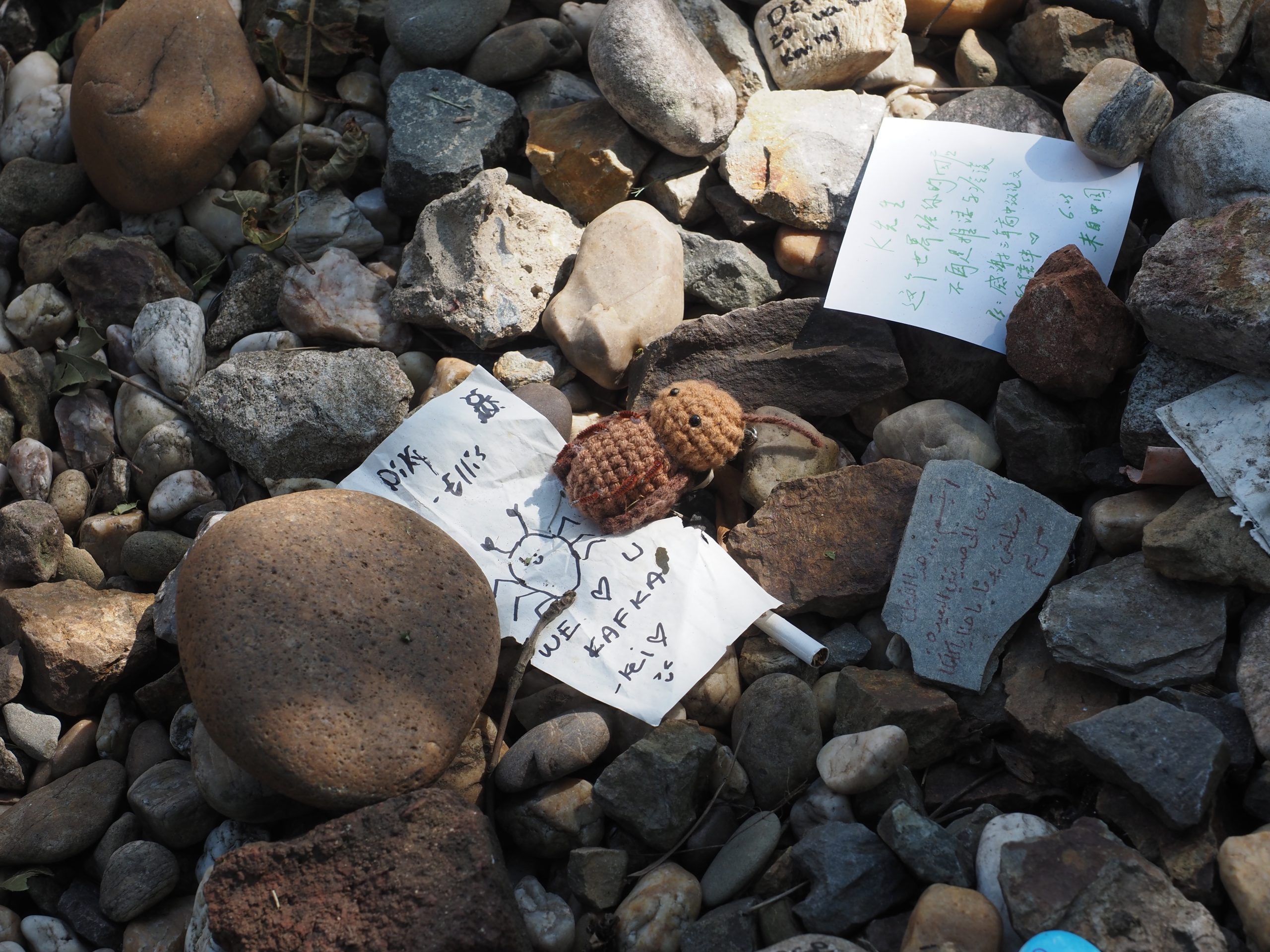
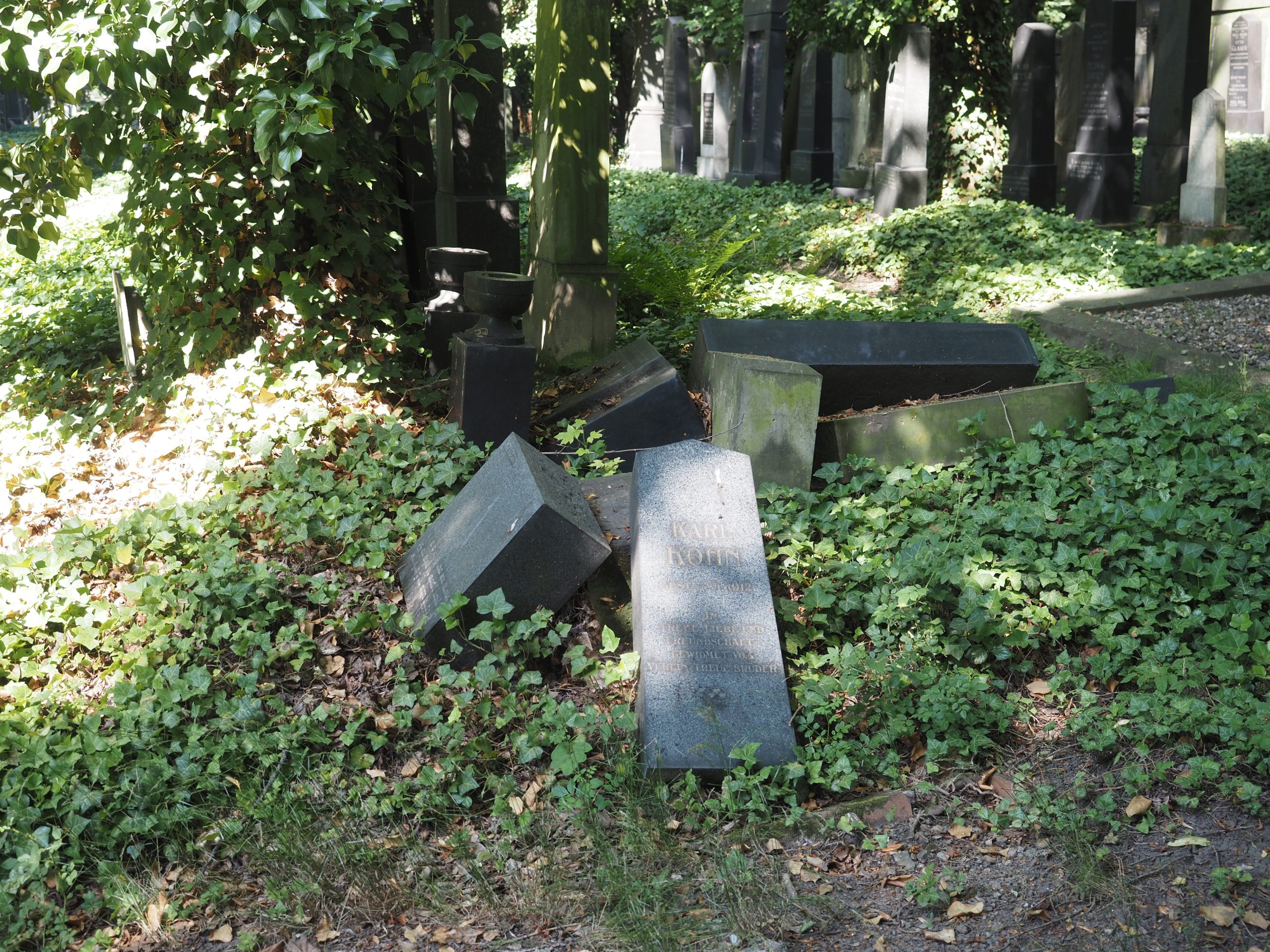
Once I was no longer upset about my ticket mistake, we headed for the New Jewish Cemetery (adjacent to Czechia’s huge largest cemetery), which was started in the 1890s and is very beautiful, but also a place of remembrance–one wall is dedicated to plaques honoring many individuals and some groups (artists and writers, for example) who died in concentration camps. We did visit the grave of Franz Kafka, which was our main reason for coming out to the cemetery, and then wandered among the mostly very simple gravestones, many of which are done in a subdued art nouveau style (no sculptures of people allowed, although there were some profile reliefs). Most of the non-Hebrew inscriptions are in Czech, but the oldest ones often in German, from Kafka’s time, when Czechs were nearly all bilingual and many were of German and Austrian ethnic origin. (Kafka and Smetana spoke mostly German.) Andrea asked about the various Jewish symbols (the Blessing Hands for the Priests / Cohens, the pitcher and cloth for the Levites / Levys etc) and I refreshed my partial knowledge to answer these.
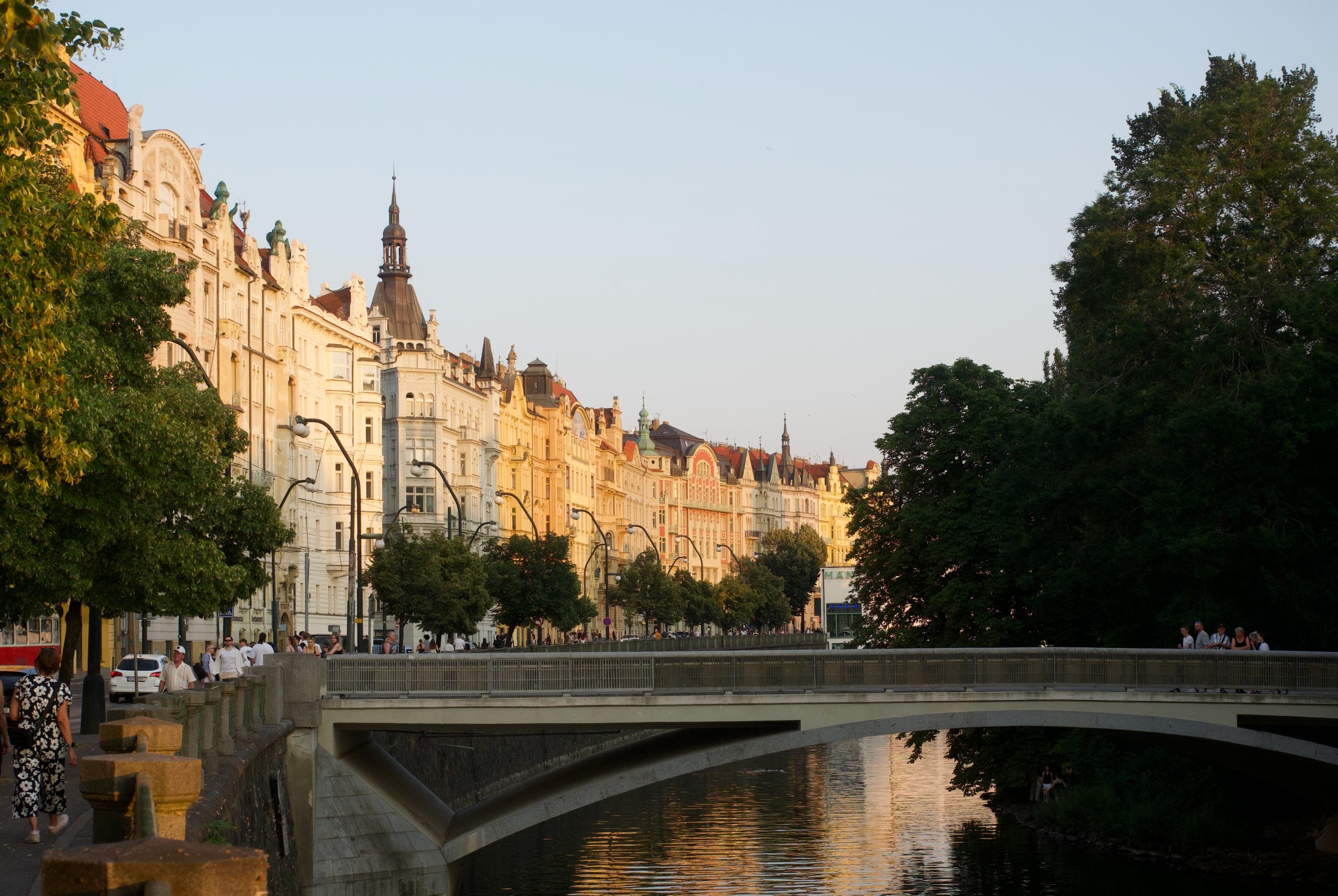
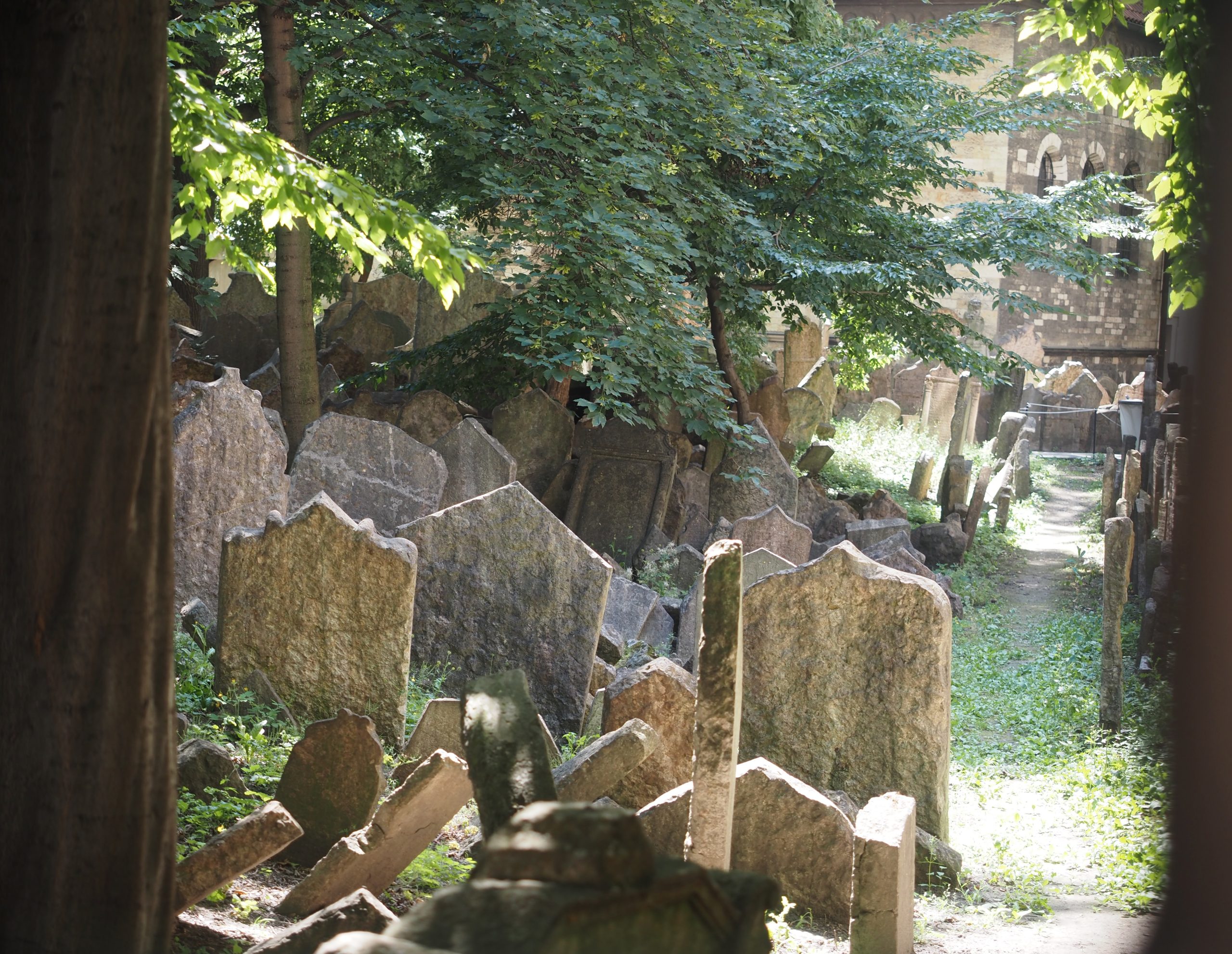
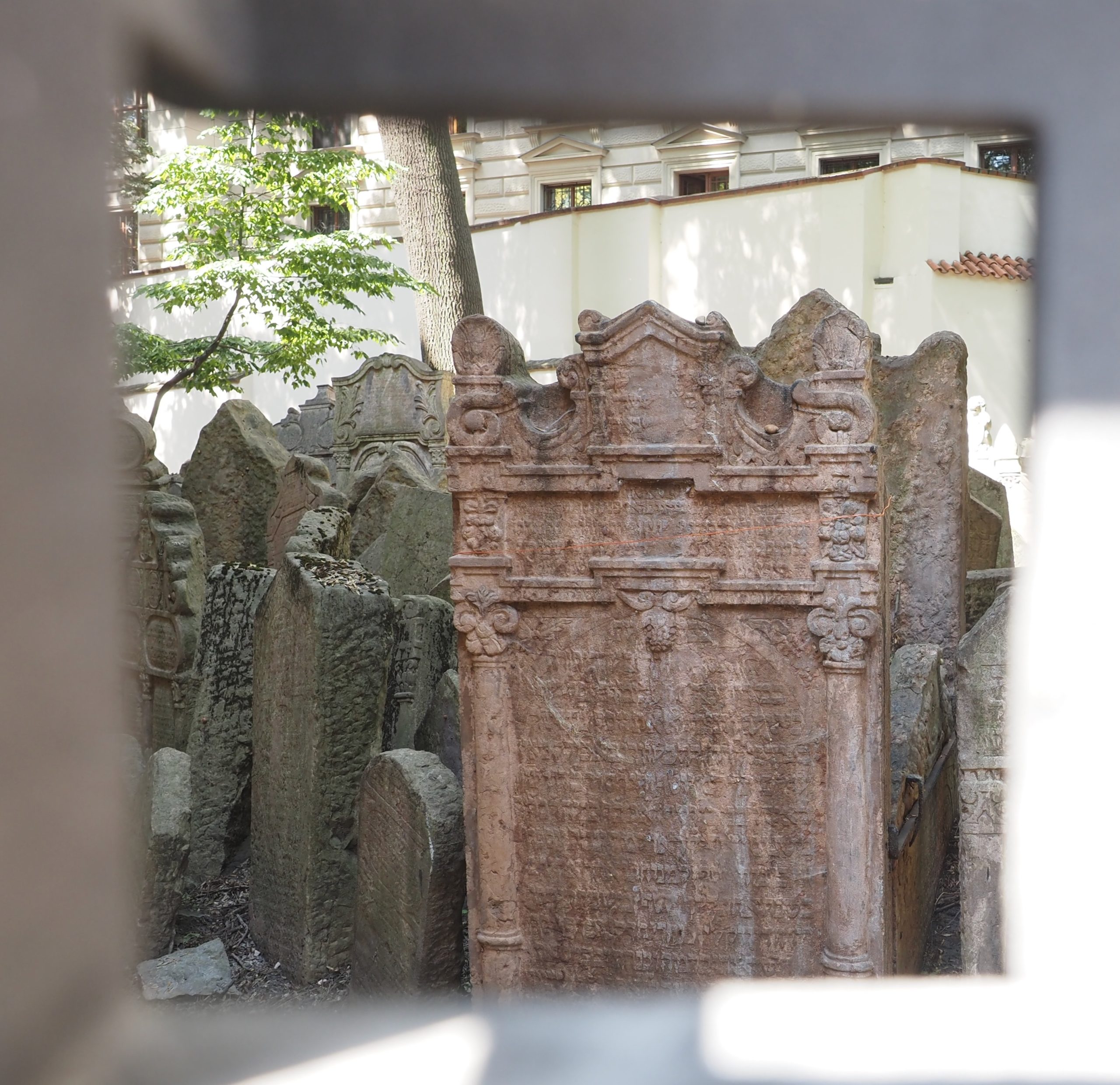
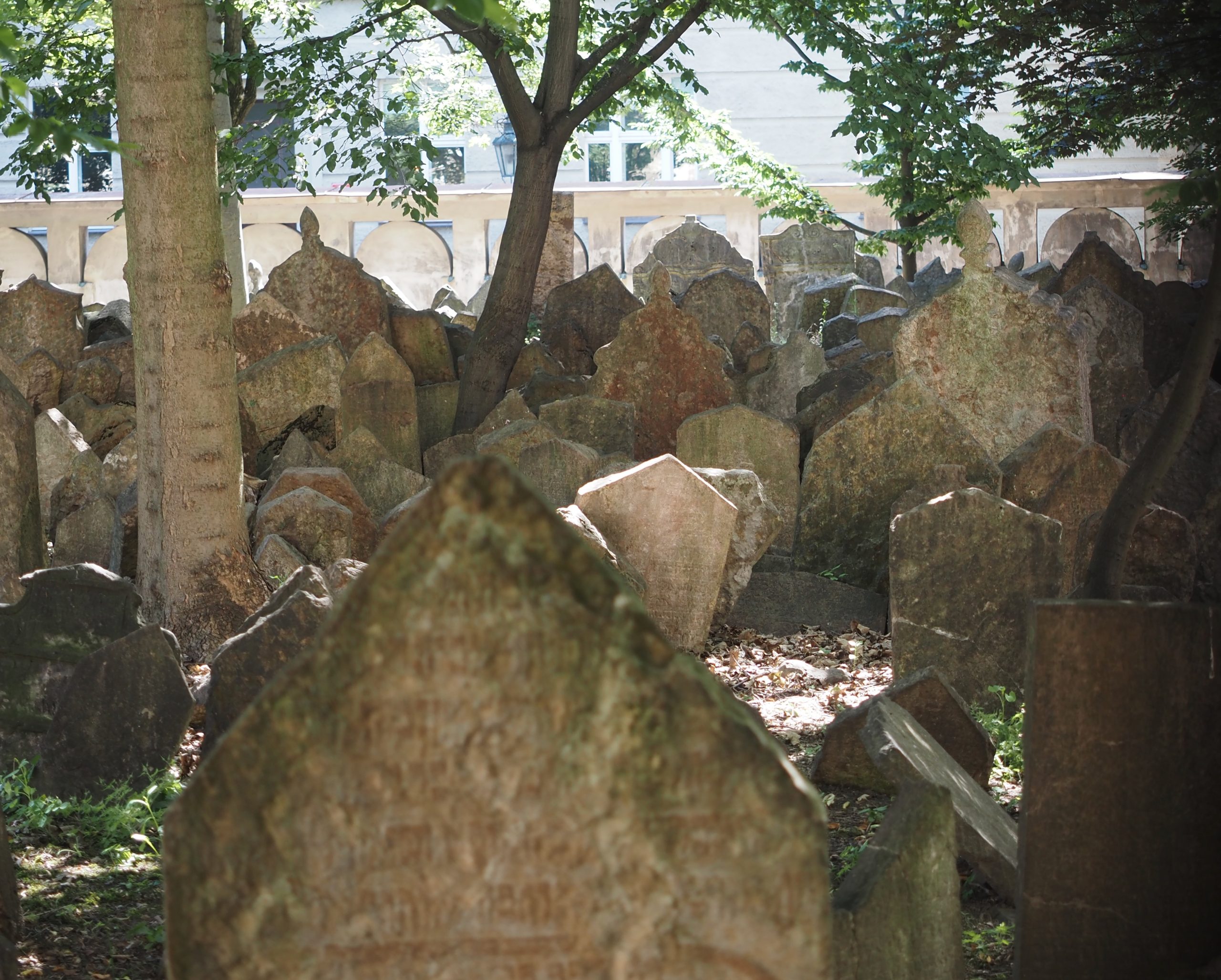
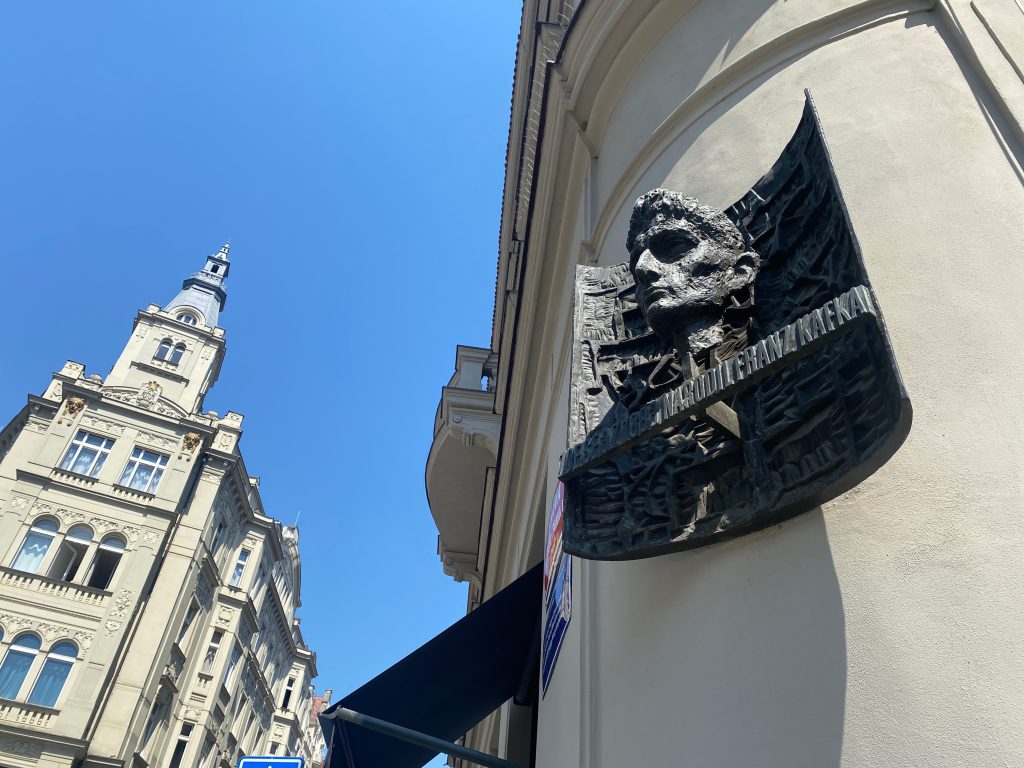
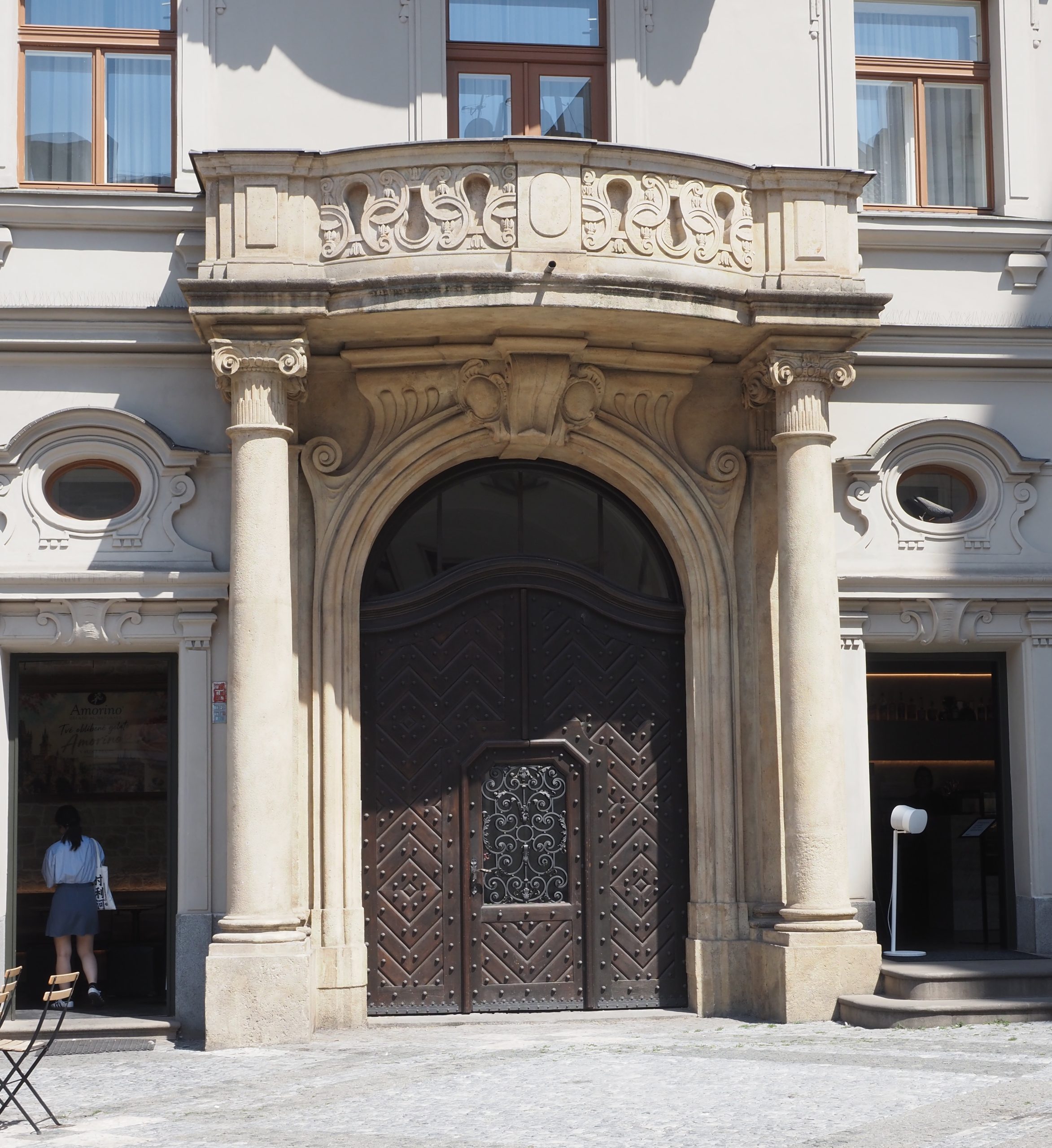
From the cemetery, we took the subway / Metro back to the old town area and emerged closest to the Old Jewish Cemetery and the Jewish quarter. We had visited it extensively 10 years ago, and we did not want to go on a tour or purchase tickets for five synagogues just to access the cemetery (the ticket is now a combination ticket for all), so we just walked around the outside and caught some glimpses through a couple of openings. We roamed around the beautiful Gründerzeit (late 19th century) quarter for a while and went to the house that replaced the one where Kafka was born and lived until he was two years old. It was a beautiful balance to having visited his final earthly remains. We saw a few memorial plaques and stumbling stones / Stolpersteine, but not as many as in Vienna or other cities we have visited. But of course there is also the large Holocaust memorial in the main synagogue by the cemetery, which we visited 10 years ago.
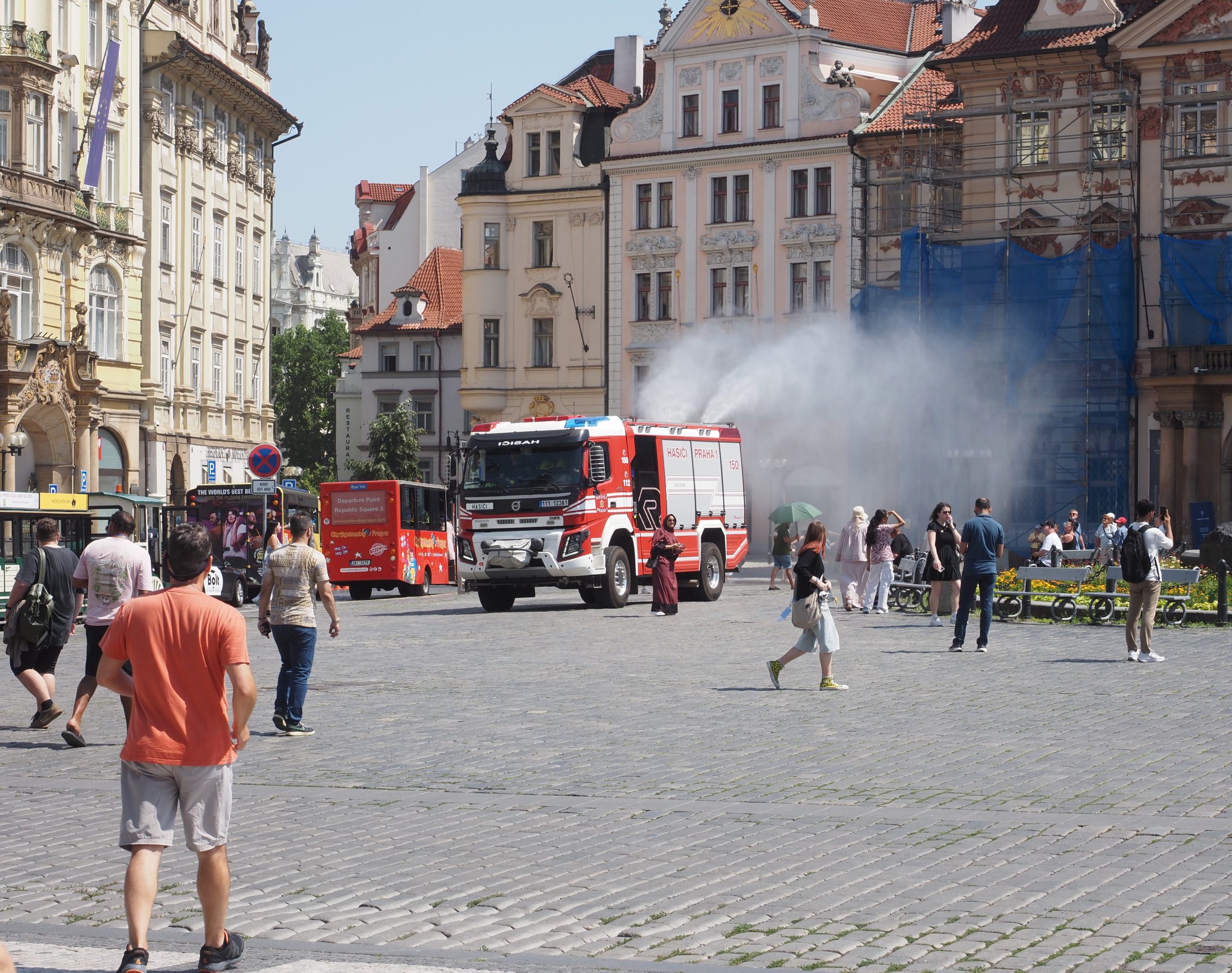
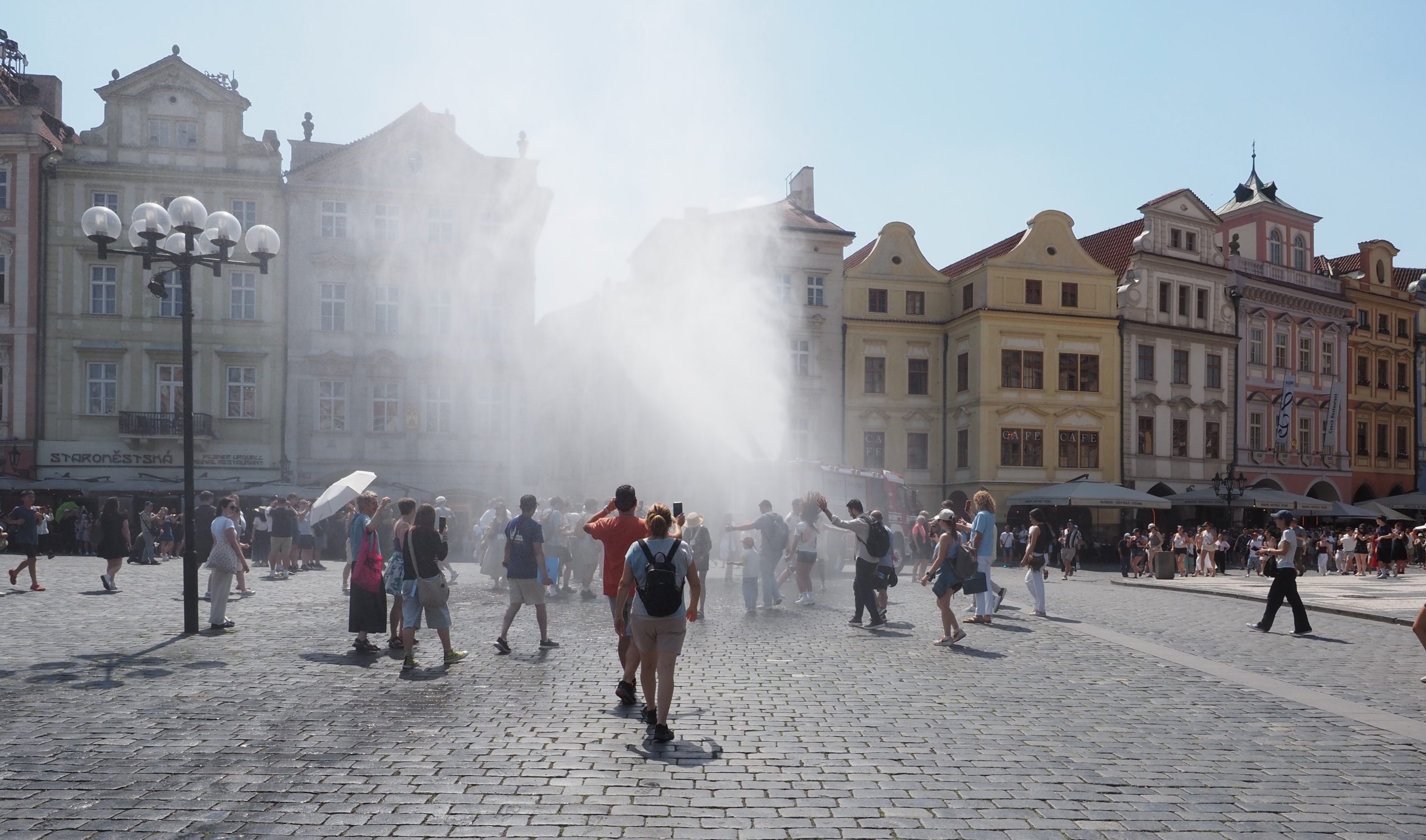
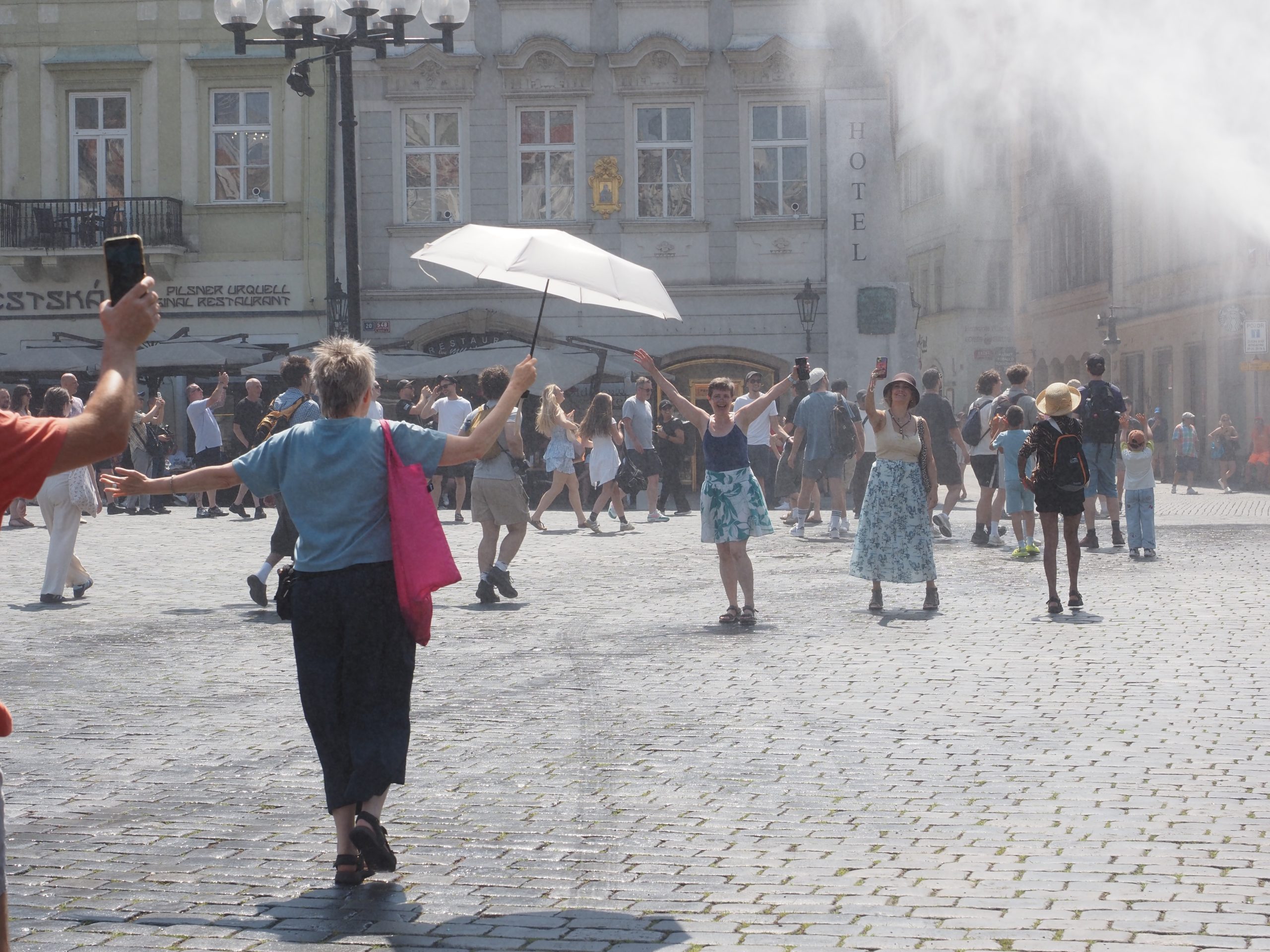
Then we had to cross the VERY HOT Old Town Square by the Old Town Hall/Astronomical Clock, but as luck would have it, right at the moment when a fire truck drove through it with a big water cannon and misted everyone. I have never seen tourists who were more delighted! The plaza was not as crowded as the other day, but we were not sure whether that was because of the heat or because of the rhythm of tourist travel, which sometimes has days where everyone sort of cycles in and out. The less touristy parts of town and the subway were actually quite crowded with throngs of young people and kids with their parents. Today was apparently the last day of school, and this is a festive occasion here, with dress-up, treats for the kids, and flower bouquets for the teachers. Graduates wear formal wear and sometimes sashes indicating that they have just graduated. Fun times!
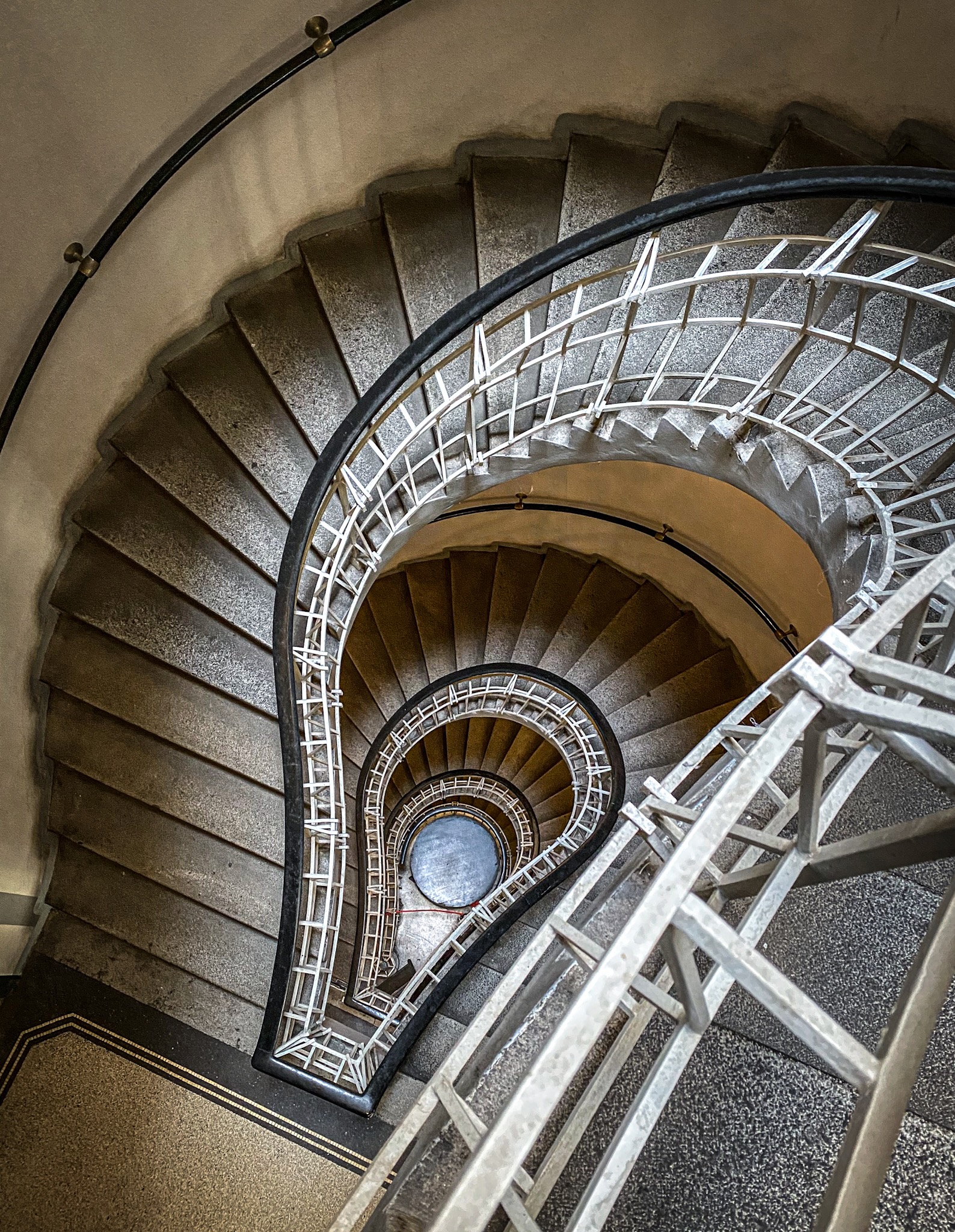
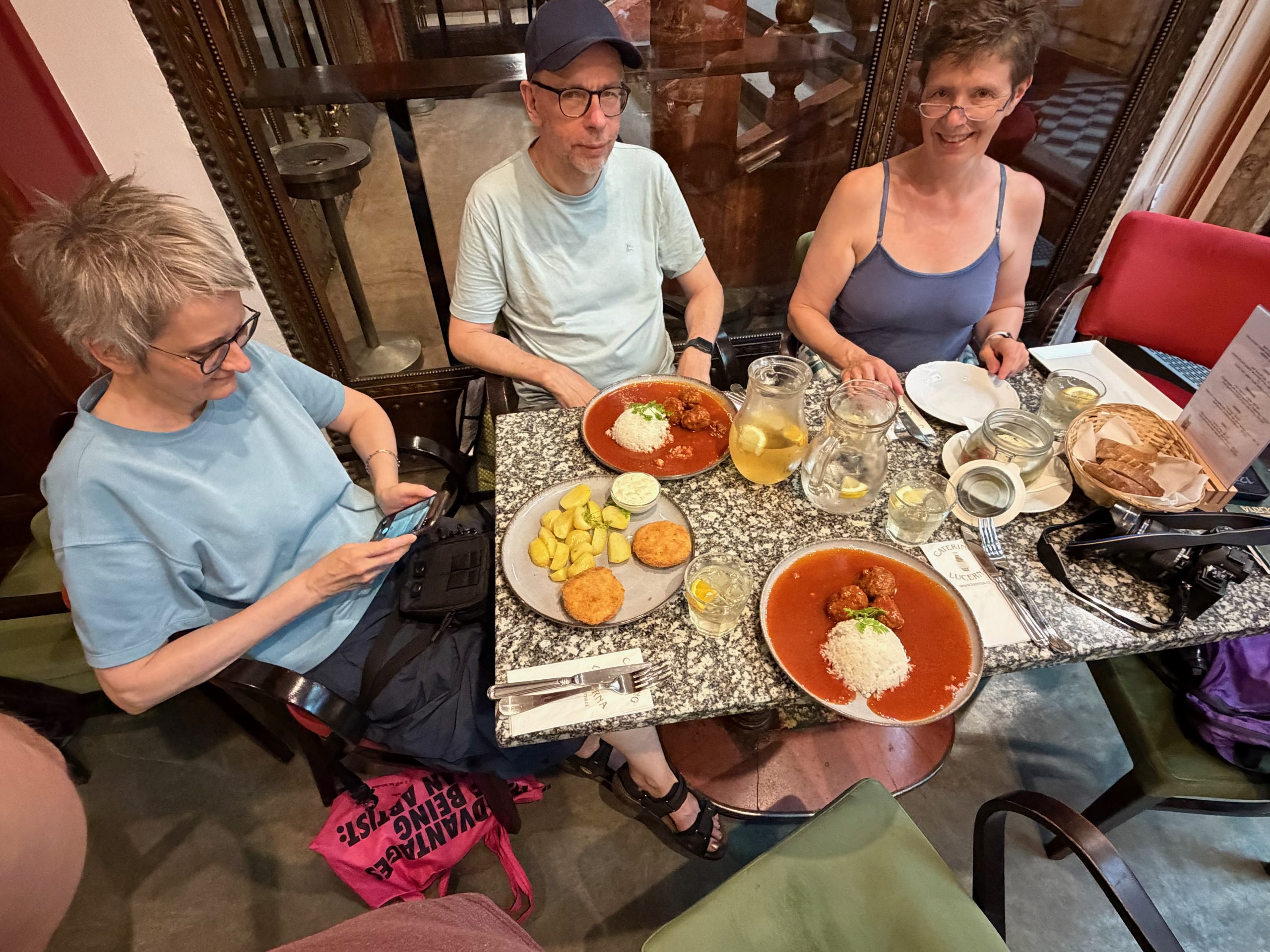
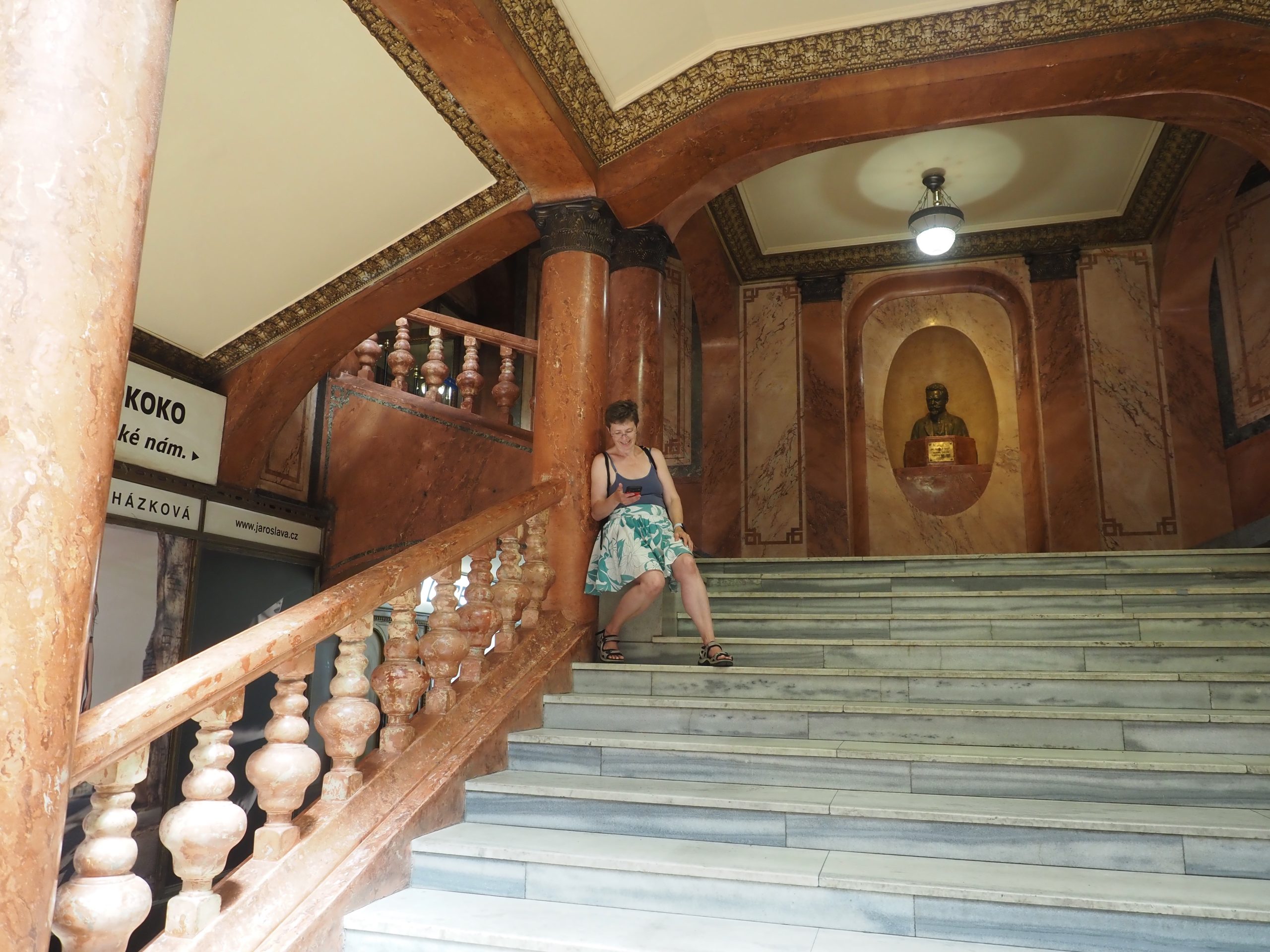
We checked out a famous café that Peter thought would be a good candidate for lunch, called the Grand Café Orient, full of Czech cubist decor (which is sort of a blend of cubism, art deco and Bauhaus design, but flavored with a dash of art nouveau), but decided that it wasn’t bearable either inside or outside under their umbrellas. So we headed back to the neighborhood near Wenceslaus Square and went back to the Café Lucerna by the movie theater, where we had eaten lovely bar food on Wednesday night. The lunch menu was super simple and had the classic Czech distinction that the only vegetables present were potatoes and pickled onions. But the fantastic ambiance and the cool indoor space made up for that, and they also had a great sparkling elderflower lemonade that we cut with more water, so it was really refreshing. They even offered us ICE CUBES in the jars (which is a first for Prague and Vienna).
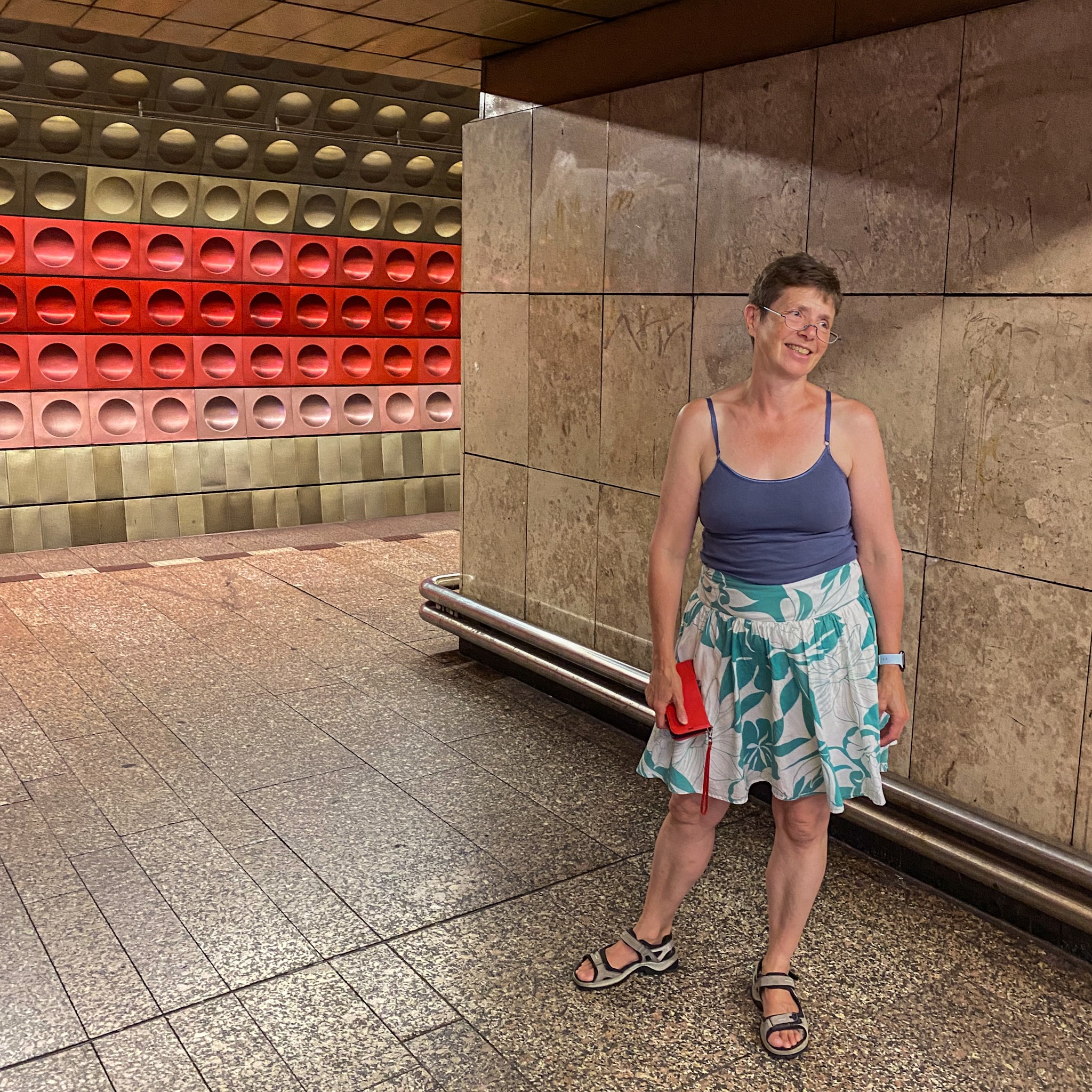
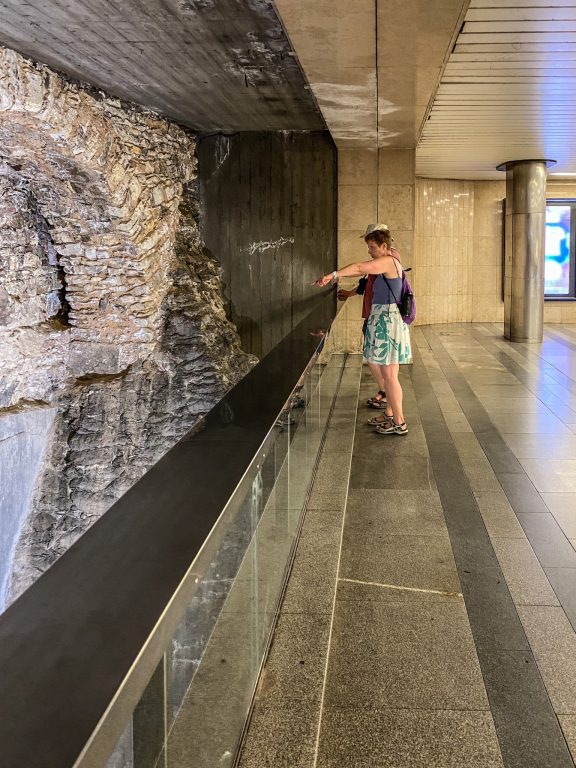
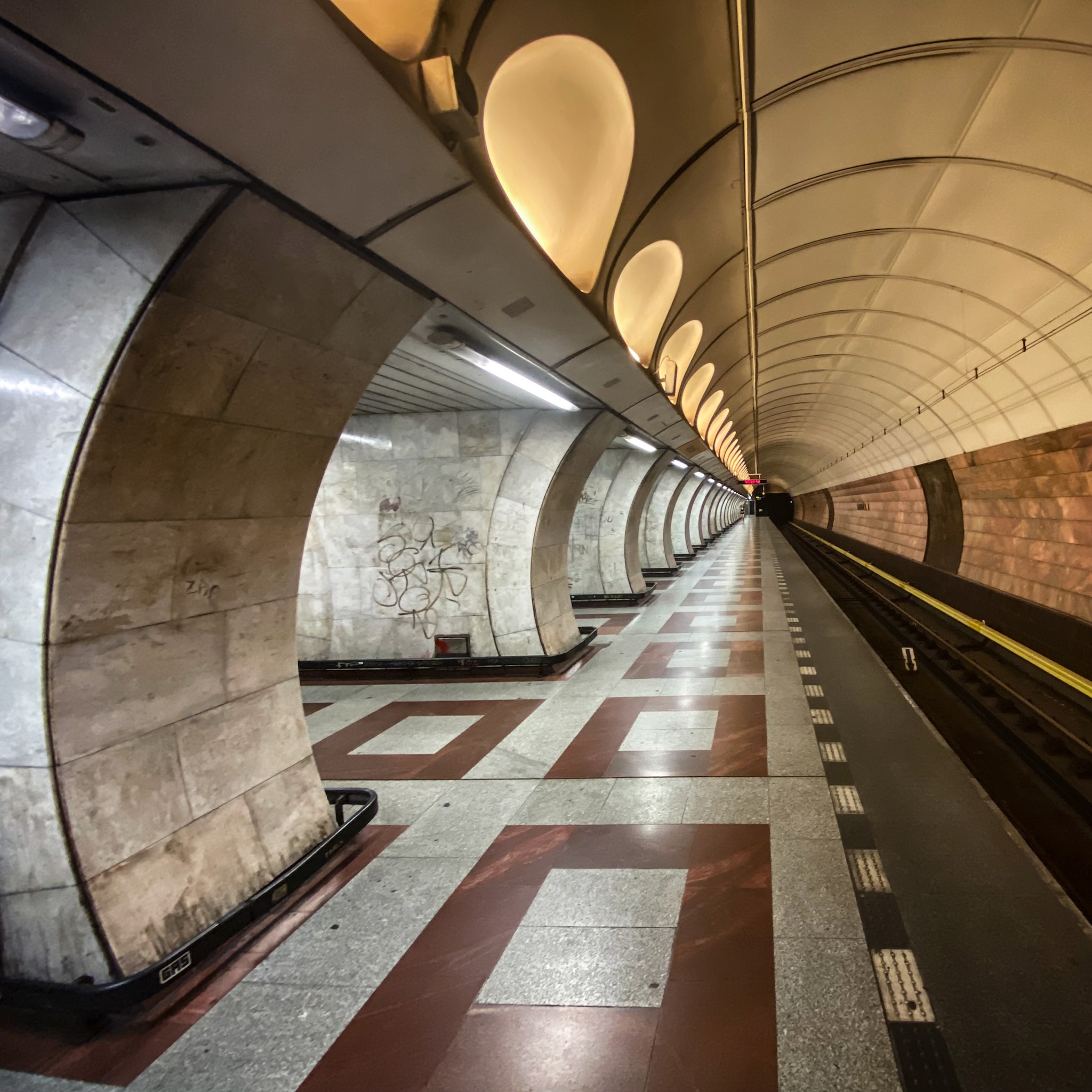
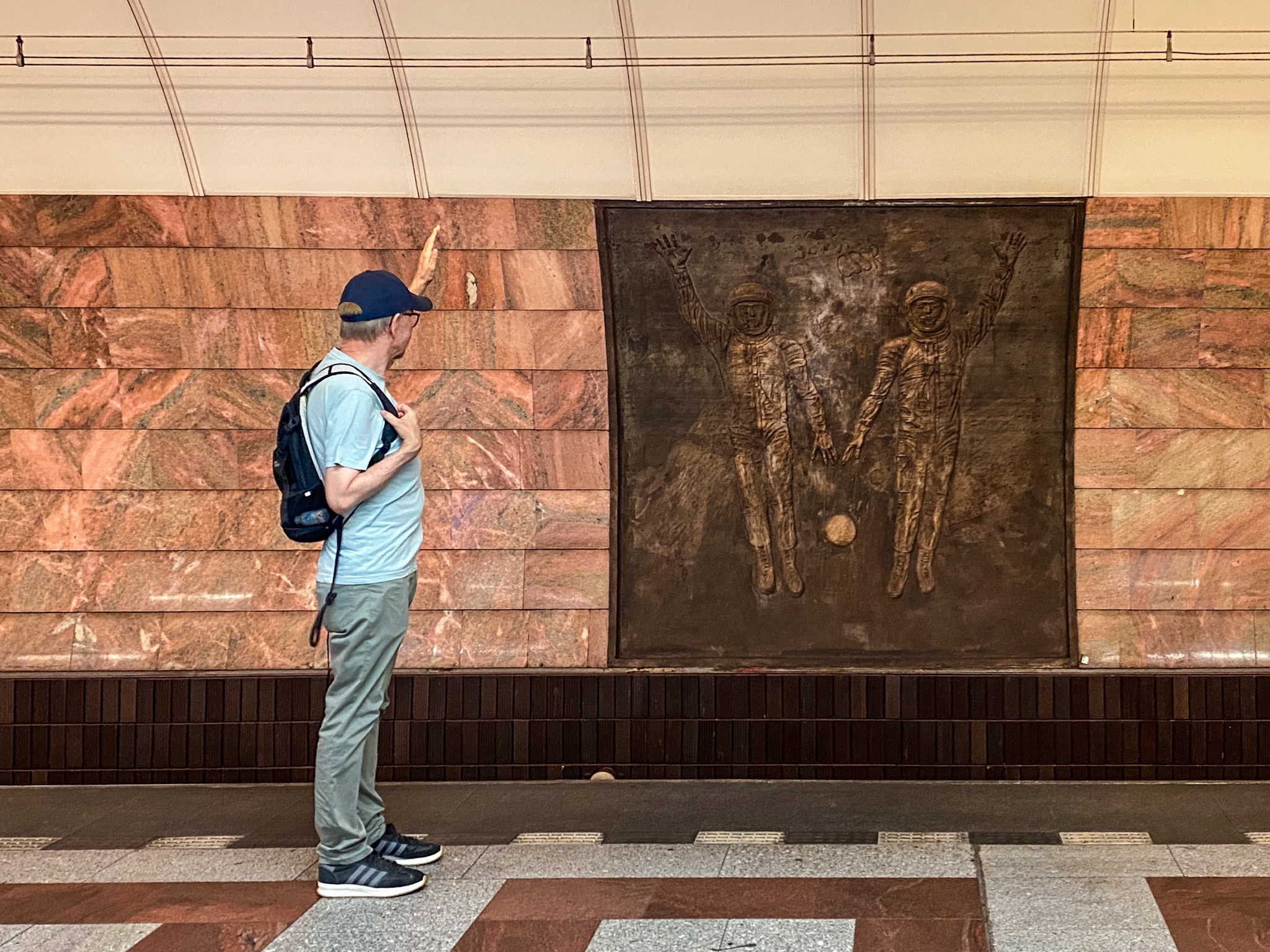
We also again explored the Metro stations at various time along the way. Můztek (“The Little Bridge”) station underneath Wenceslaus Square was fun because in addition to the beautiful 70s design of the platform walls, it also showed the fragments of the medieval bridge that was found here when the subway was built in the 1970s. We also found our way to Anděl (“Angel”) station, one of the very few places in Prague where there are still examples of the socialist art celebrating Russian-Czech relations that was ubiquitous in the past but has been mostly taken down. The entire station was built as a sign of Czech-USSR friendship and called “Moscow” before it was renamed after the end of the Cold War.
Around 3 pm, we headed back home; the apartment is now definitely no longer as cool as we’ve managed to keep it the last few days, but the fans and the fact that we had closed all curtains before we left helped a lot. We all napped for a while and stayed inside to ward off the worst of the heat. Then I ventured out for the last round of groceries we’ll need, and in a moment of inspiration got strawberries and ice cream, so that we could have iced coffee and strawberries with cookie crumbles for a pick-me-up. This was enthusiastically received, and although the ice cream was the cheap no-brand stuff that doesn’t hold water to the gelato we discovered here, it was still delicious to us. We stayed home for several hours to wait for the temperatures to drop just a little bit from the high of 95 F/ 35 C. We started our packing for tomorrow’s departure, and then used our time jointly sharing and editing our photos; Peter and Andrea have generously been sharing their photos, which are merrily mixed in here without credit!
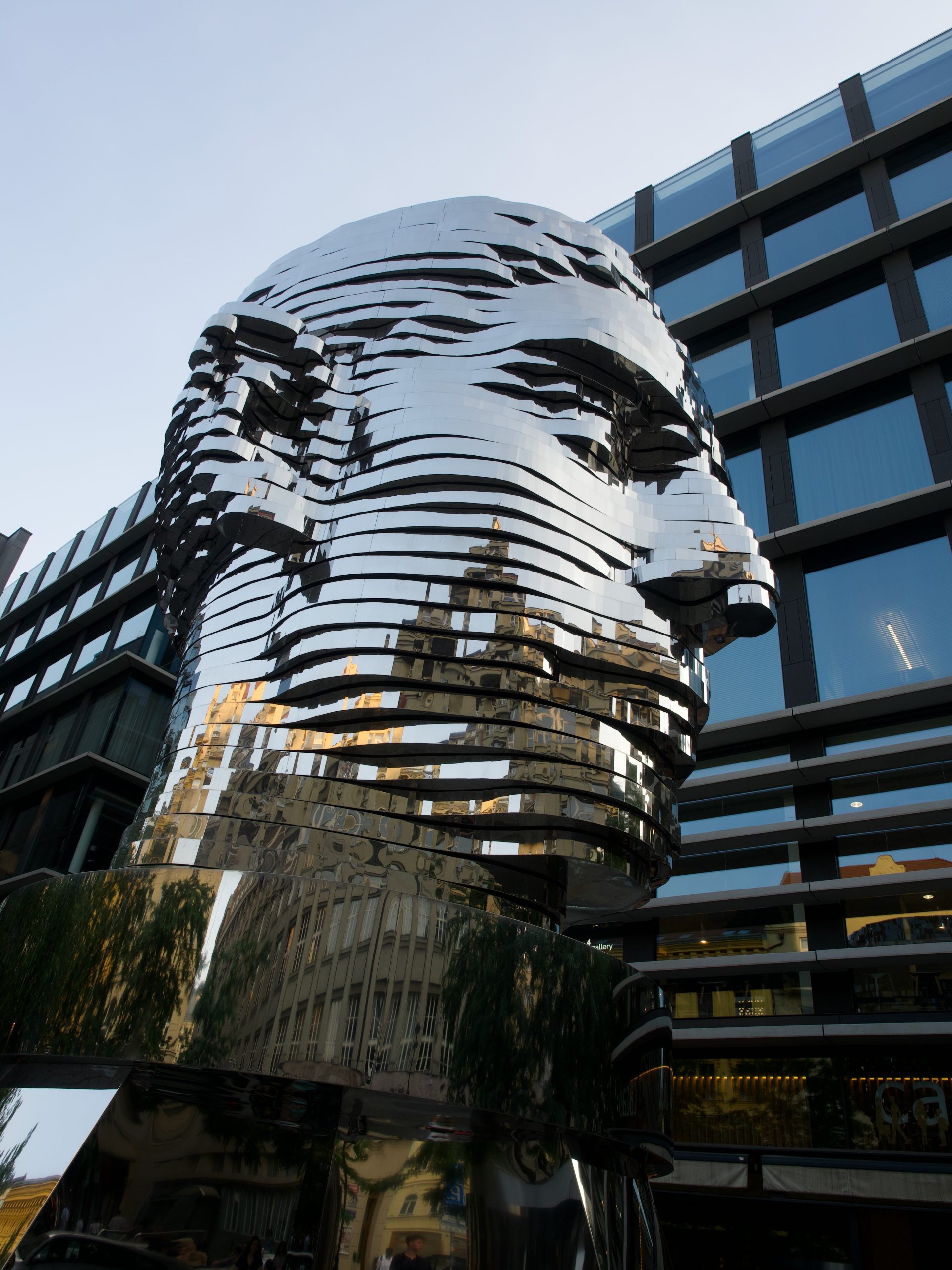
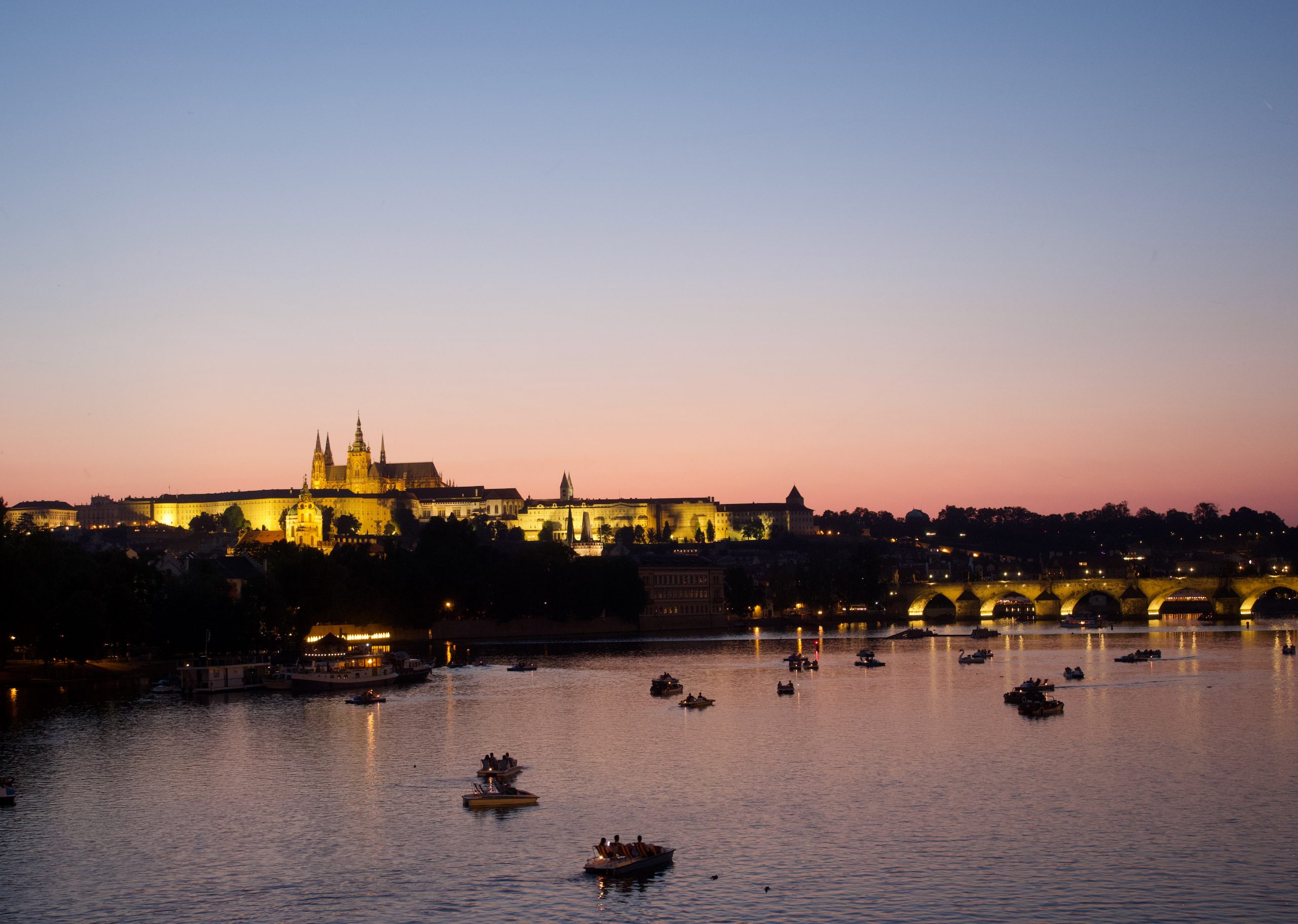
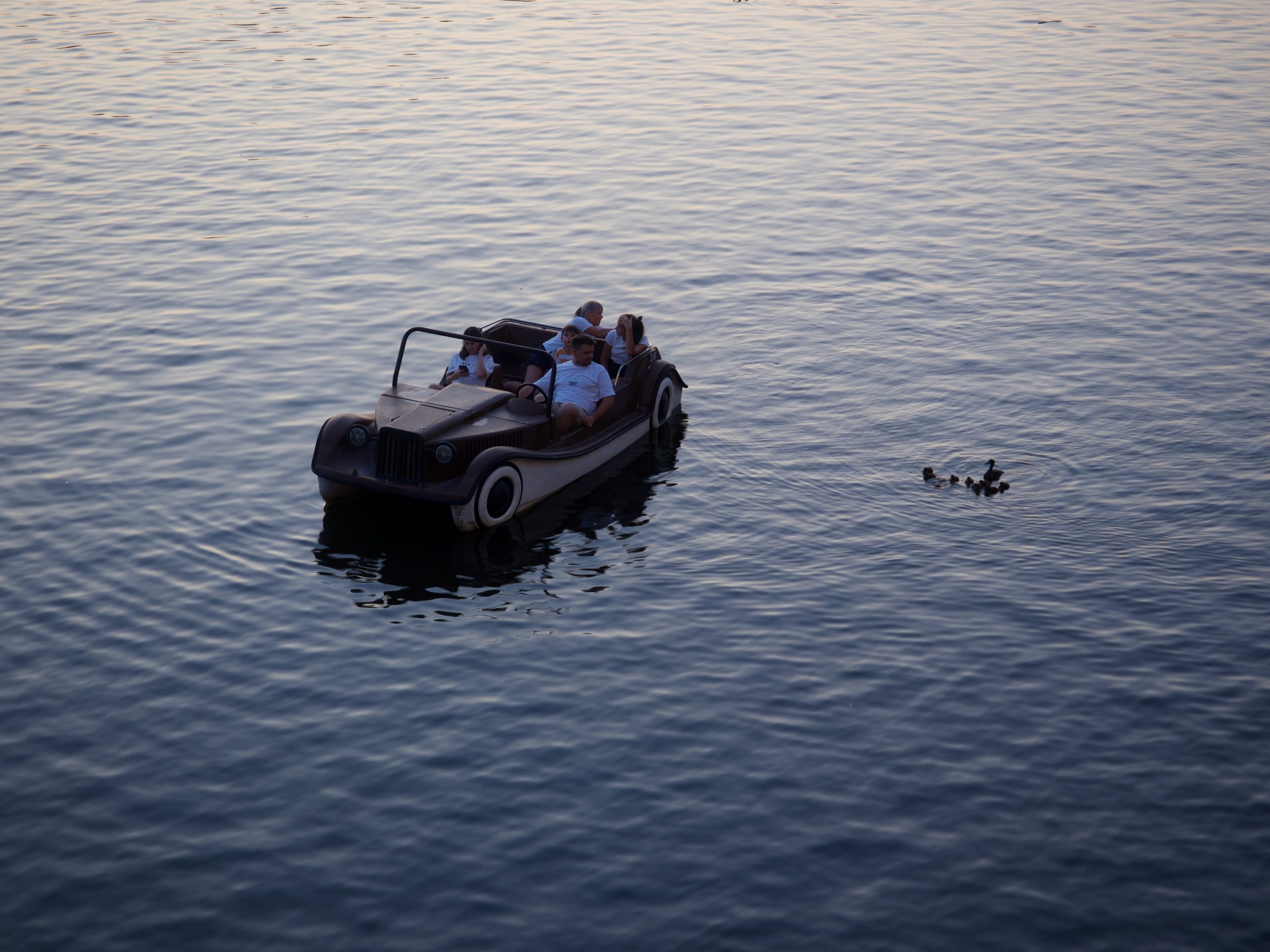
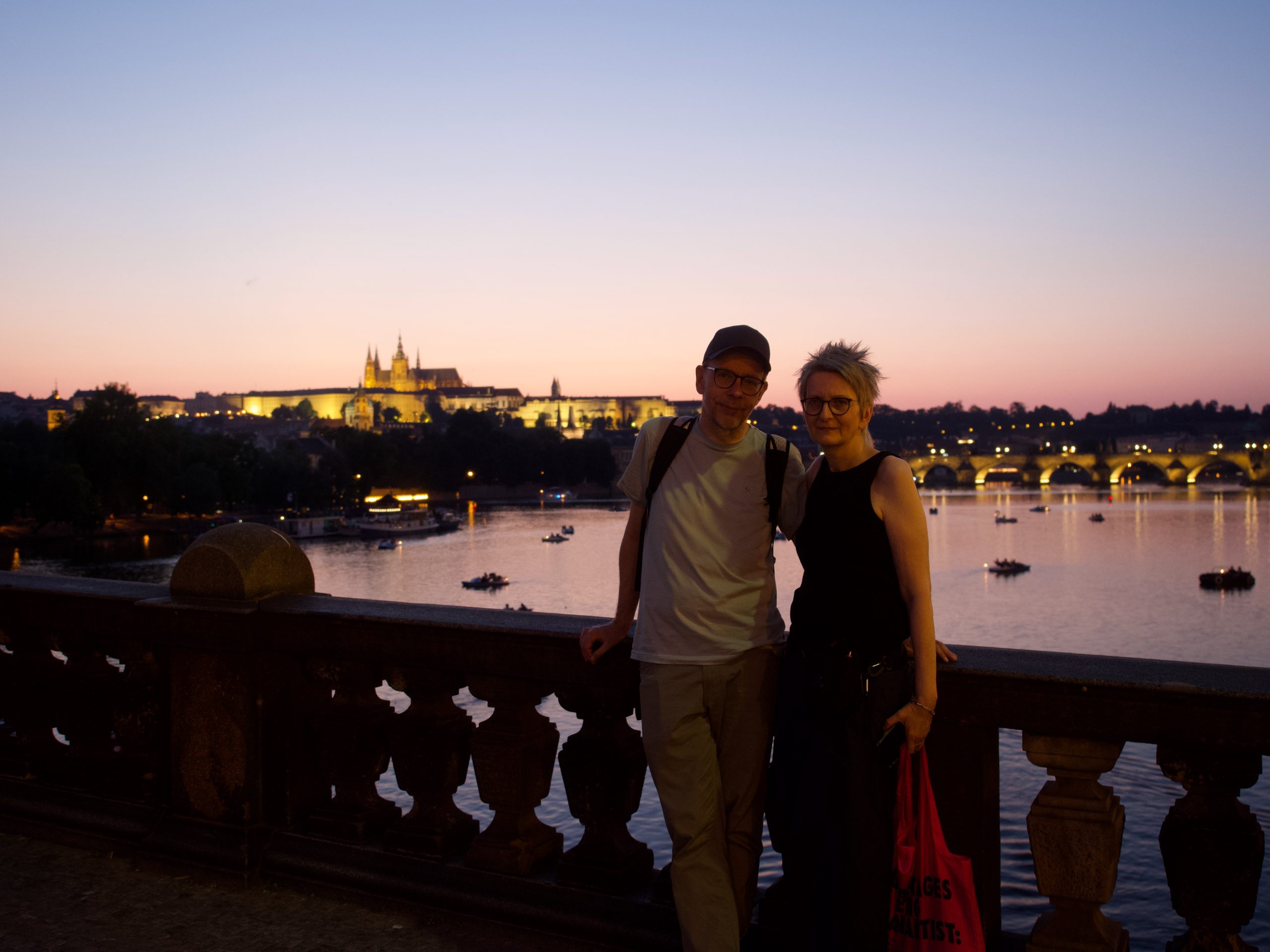
Just before 8 pm, we finally dared go out again, because we wanted to see the river and Prague Castle at nightfall one more time. After we had watched the famous kinetic “Head of Kafka” sculpture in motion (always on the hour, for fifteen minutes), we walked to the area just south of the Charles Bridge and explored a couple of the little islands that can be reached from this side of the river by bridges. Lots of happy people on the islands, but also in dozens if not hundreds of pedal boats on the river–a lovely atmosphere as the sun set and everyone was lingering on and around the bridges to wait for the Charles Bridge and the castle area across the river to be lit up. It was lovely–we joined the general fray and took lots of pictures. It’s amusing to try to guess how many cell phone and camera pictures of the illuminated Prague Castle are taken from this spot every night! We headed home about 10 pm (using the tram one more time, just to spare our feet more walking), grabbed some sandwiches at a fast-food baguette place (the staff had to hold on until 11 pm and they looked VERY tired after a long hot day), and after a very late dinner/snack, headed to bed around 11.